

112
51 base
standards
Chemical
standards
Analytical
chemical
standards
3 Traceability: Reference Materials
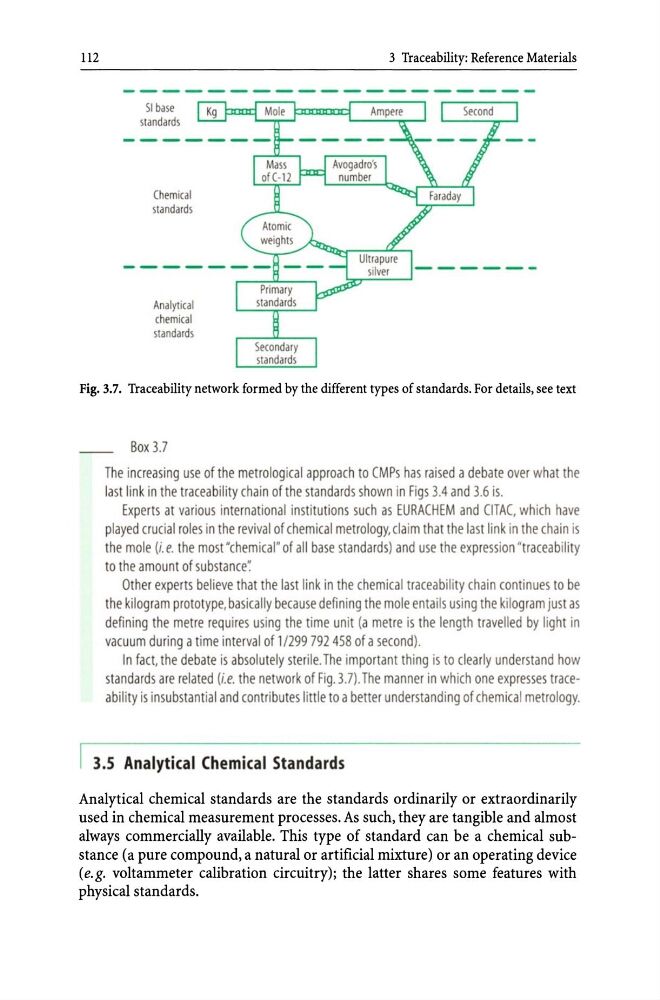
Fig. 3.7. Traceability network formed by the different types of standards. For details, see text
Box 3.7
The increasing use of the metrological approach to CMPs has raised a debate over what the
last link in the traceability chain of the standards shown in Figs 3.4 and 3.6 is.
Experts at various international institutions such as EURACHEM and ClTAC, which have
played crucial roles in the revival of chemical metrology, claim that the last link in the chain is
the mole (i. e. the most "chemical" of all base standards) and use the expression "traceability
to the amount of substance:
Other experts believe that the last link in the chemica l traceability chain continues to be
the kilogram prototype, basically because defining the mole entai ls using the kilogram just as
defining the metre requires using the time unit (a metre is the length travelled by light in
vacuum during a time interval of 1/299 792 458 of a second).
In fact, the debate is absolutely sterile. The important thing is to clearly understand how
standards are related (i.e. the network of Fig. 3.7). The manner in which one expresses traceability is insubstantial and contributes little to a better understanding of chemical metrology.
3.5 Analytical Chemical Standards
Analytical chemical standards are the standards ordinarily or extraordinarily
used in chemical measurement processes. As such, they are tangible and almost
always commercially available. This type of standard can be a chemical substance (a pure compound, a natural or artificial mixture) or an operating device
(e.g. voltammeter calibration circuitry); the latter shares some features with
physical standards.
51 base
standards
Chemical
standards
Analytical
chemical
standards
3 Traceability: Reference Materials
Fig. 3.7. Traceability network formed by the different types of standards. For details, see text
Box 3.7
The increasing use of the metrological approach to CMPs has raised a debate over what the
last link in the traceability chain of the standards shown in Figs 3.4 and 3.6 is.
Experts at various international institutions such as EURACHEM and ClTAC, which have
played crucial roles in the revival of chemical metrology, claim that the last link in the chain is
the mole (i. e. the most "chemical" of all base standards) and use the expression "traceability
to the amount of substance:
Other experts believe that the last link in the chemica l traceability chain continues to be
the kilogram prototype, basically because defining the mole entai ls using the kilogram just as
defining the metre requires using the time unit (a metre is the length travelled by light in
vacuum during a time interval of 1/299 792 458 of a second).
In fact, the debate is absolutely sterile. The important thing is to clearly understand how
standards are related (i.e. the network of Fig. 3.7). The manner in which one expresses traceability is insubstantial and contributes little to a better understanding of chemical metrology.
3.5 Analytical Chemical Standards
Analytical chemical standards are the standards ordinarily or extraordinarily
used in chemical measurement processes. As such, they are tangible and almost
always commercially available. This type of standard can be a chemical substance (a pure compound, a natural or artificial mixture) or an operating device
(e.g. voltammeter calibration circuitry); the latter shares some features with
physical standards.