

106
3 Traceability: Reference Materials
Preliminary operations
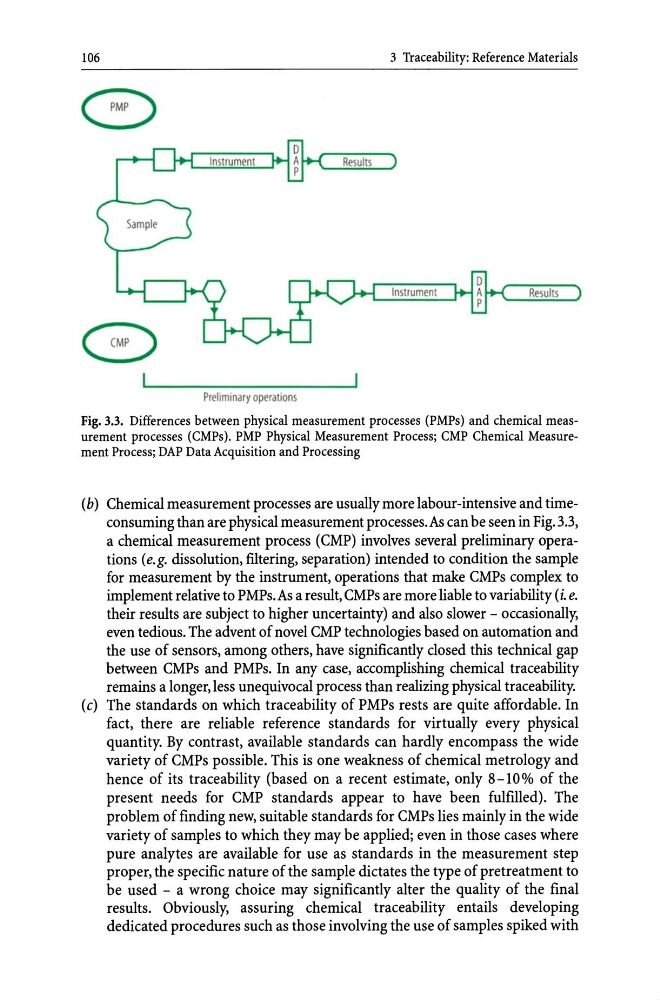
Fig. 3.3. Differences between physical measurement processes (PMPs) and chemical measurement processes (CMPs). PMP Physical Measurement Process; CMP Chemical Measurement Process; DAP Data Acquisition and Processing
(b) Chemical measurement processes are usually more labour-intensive and timeconsuming than are physical measurement processes. As can be seen in Fig. 3.3,
a chemical measurement process (CMP) involves several preliminary operations (e.g. dissolution, flltering, separation) intended to condition the sample
for measurement by the instrument, operations that make CMPs complex to
implement relative to PMPs. As a result, CMPs are more liable to variability (i. e.
their results are subject to higher uncertainty) and also slower - occasionally,
even tedious. The advent of novel CMP technologies based on automation and
the use of sensors, among others, have significantly closed this technical gap
between CMPs and PMPs. In any case, accomplishing chemical traceability
remains a longer, less unequivocal process than realizing physical traceability.
(c) The standards on which traceability of PMPs rests are quite affordable. In
fact, there are reliable reference standards for virtually every physical
quantity. By contrast, available standards can hardly encompass the wide
variety of CMPs possible. This is one weakness of chemical metrology and
hence of its traceability (based on a recent estimate, only 8 -10 % of the
present needs for CMP standards appear to have been fulfilled). The
problem of finding new, suitable standards for CMPs lies mainly in the wide
variety of samples to which they may be applied; even in those cases where
pure analytes are available for use as standards in the measurement step
proper, the specific nature of the sample dictates the type of pretreatment to
be used - a wrong choice may significantly alter the quality of the final
results. Obviously, assuring chemical traceability entails developing
dedicated procedures such as those involving the use of samples spiked with
3 Traceability: Reference Materials
Preliminary operations
Fig. 3.3. Differences between physical measurement processes (PMPs) and chemical measurement processes (CMPs). PMP Physical Measurement Process; CMP Chemical Measurement Process; DAP Data Acquisition and Processing
(b) Chemical measurement processes are usually more labour-intensive and timeconsuming than are physical measurement processes. As can be seen in Fig. 3.3,
a chemical measurement process (CMP) involves several preliminary operations (e.g. dissolution, flltering, separation) intended to condition the sample
for measurement by the instrument, operations that make CMPs complex to
implement relative to PMPs. As a result, CMPs are more liable to variability (i. e.
their results are subject to higher uncertainty) and also slower - occasionally,
even tedious. The advent of novel CMP technologies based on automation and
the use of sensors, among others, have significantly closed this technical gap
between CMPs and PMPs. In any case, accomplishing chemical traceability
remains a longer, less unequivocal process than realizing physical traceability.
(c) The standards on which traceability of PMPs rests are quite affordable. In
fact, there are reliable reference standards for virtually every physical
quantity. By contrast, available standards can hardly encompass the wide
variety of CMPs possible. This is one weakness of chemical metrology and
hence of its traceability (based on a recent estimate, only 8 -10 % of the
present needs for CMP standards appear to have been fulfilled). The
problem of finding new, suitable standards for CMPs lies mainly in the wide
variety of samples to which they may be applied; even in those cases where
pure analytes are available for use as standards in the measurement step
proper, the specific nature of the sample dictates the type of pretreatment to
be used - a wrong choice may significantly alter the quality of the final
results. Obviously, assuring chemical traceability entails developing
dedicated procedures such as those involving the use of samples spiked with