

84
2 Analytical Properties
Traceability
~I
0=0
I ....
1
Accuracy
Metrology
Uncertainty
I,
I 1.('1
Precision
( Reliability ) ~ I
Robustness
( Transferability ).--.
Productivity
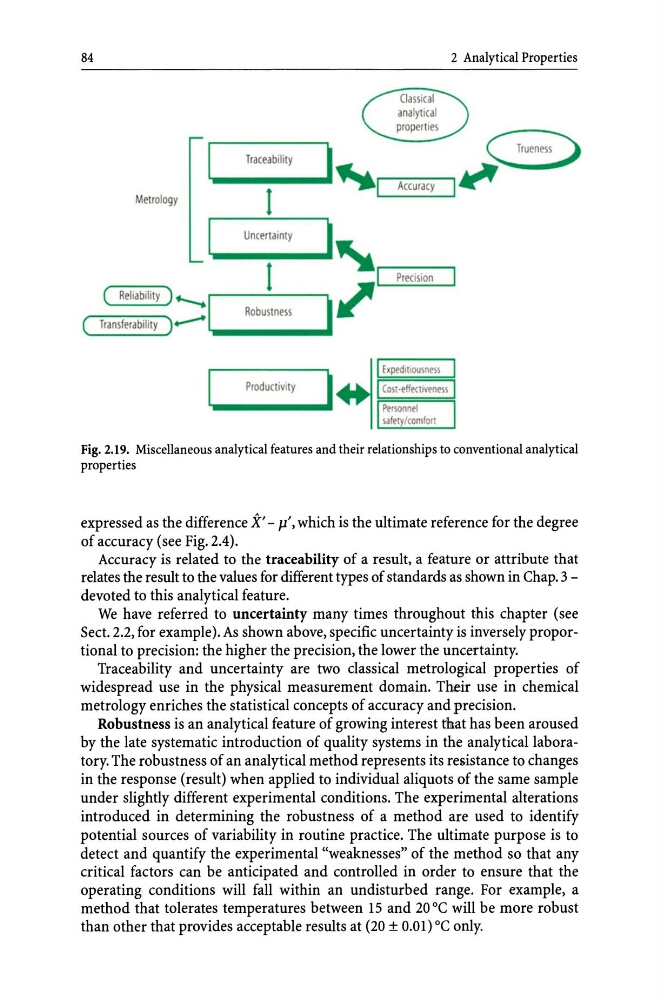
Fig. 2.19. Miscellaneous analytical features and their relationships to conventional analytical
properties
expressed as the difference Ie - p', which is the ultimate reference for the degree
of accuracy (see Fig. 2.4).
Accuracy is related to the traceability of a result, a feature or attribute that
relates the result to the values for different types of standards as shown in Chap. 3 -
devoted to this analytical feature.
We have referred to uncertainty many times throughout this chapter (see
Sect. 2.2, for example). As shown above, specific uncertainty is inversely proportional to precision: the higher the precision, the lower the uncertainty.
Traceability and uncertainty are two classical metrological properties of
widespread use in the physical measurement domain. Their use in chemical
metrology enriches the statistical concepts of accuracy and precision.
Robustness is an analytical feature of growing interest that has been aroused
by the late systematic introduction of quality systems in the analyticallaboratory. The robustness of an analytical method represents its resistance to changes
in the response (result) when applied to individual aliquotsofthe same sample
under slightly different experimental conditions. The experimental alterations
introduced in determining the robustness of a method are used to identify
potential sources of variability in routine practice. The ultimate purpose is to
detect and quantify the experimental "weaknesses" of the method so that any
critical factors can be anticipated and controlled in order to ensure that the
operating conditions will fall within an undisturbed range. For example, a
method that tolerates temperatures between IS and 20°C will be more robust
than other that provides acceptable results at (20 ± 0.01) °C only.
2 Analytical Properties
Traceability
~I
0=0
I ....
1
Accuracy
Metrology
Uncertainty
I,
I 1.('1
Precision
( Reliability ) ~ I
Robustness
( Transferability ).--.
Productivity
Fig. 2.19. Miscellaneous analytical features and their relationships to conventional analytical
properties
expressed as the difference Ie - p', which is the ultimate reference for the degree
of accuracy (see Fig. 2.4).
Accuracy is related to the traceability of a result, a feature or attribute that
relates the result to the values for different types of standards as shown in Chap. 3 -
devoted to this analytical feature.
We have referred to uncertainty many times throughout this chapter (see
Sect. 2.2, for example). As shown above, specific uncertainty is inversely proportional to precision: the higher the precision, the lower the uncertainty.
Traceability and uncertainty are two classical metrological properties of
widespread use in the physical measurement domain. Their use in chemical
metrology enriches the statistical concepts of accuracy and precision.
Robustness is an analytical feature of growing interest that has been aroused
by the late systematic introduction of quality systems in the analyticallaboratory. The robustness of an analytical method represents its resistance to changes
in the response (result) when applied to individual aliquotsofthe same sample
under slightly different experimental conditions. The experimental alterations
introduced in determining the robustness of a method are used to identify
potential sources of variability in routine practice. The ultimate purpose is to
detect and quantify the experimental "weaknesses" of the method so that any
critical factors can be anticipated and controlled in order to ensure that the
operating conditions will fall within an undisturbed range. For example, a
method that tolerates temperatures between IS and 20°C will be more robust
than other that provides acceptable results at (20 ± 0.01) °C only.