

New Developments in EnantioselectiveBrønsted Acid Catalysis
239
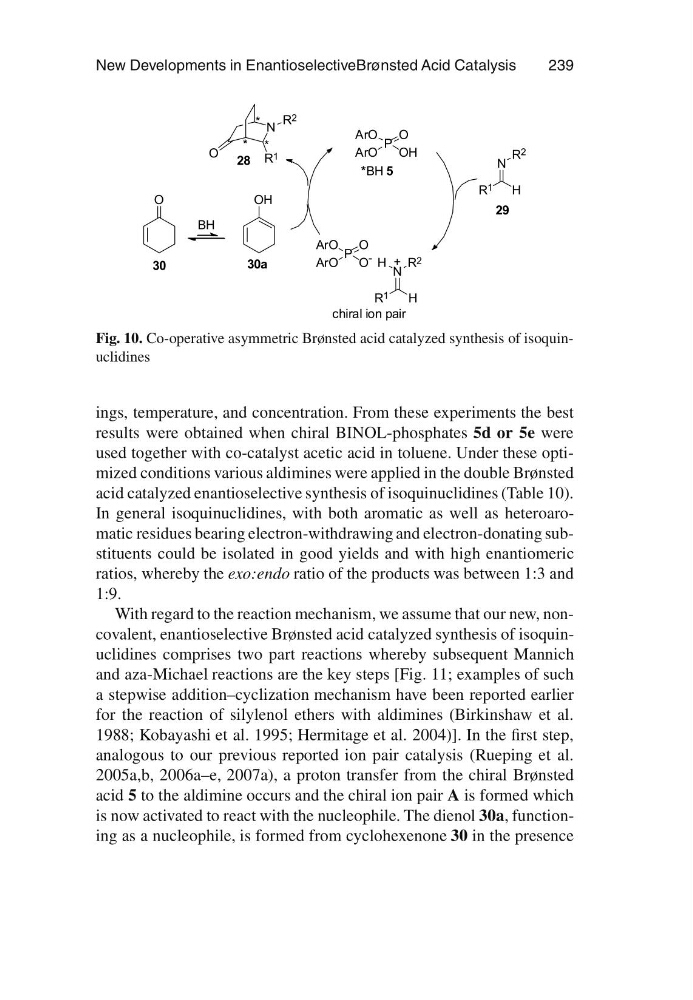
Fig. 10. Co-operative asymmetric Brønsted acid catalyzed synthesis of isoquinuclidines
ings, temperature, and concentration. From these experiments the best
results were obtained when chiral BINOL-phosphates 5d or 5e were
used together with co-catalyst acetic acid in toluene. Under these optimized conditions various aldimines were applied in the double Brønsted
acid catalyzed enantioselective synthesis of isoquinuclidines (Table 10).
In general isoquinuclidines, with both aromatic as well as heteroaromatic residues bearing electron-withdrawing and electron-donating substituents could be isolated in good yields and with high enantiomeric
ratios, whereby the exo:endo ratio of the products was between 1:3 and
1:9.
With regard to the reaction mechanism, we assume that our new, noncovalent, enantioselective Brønsted acid catalyzed synthesis of isoquinuclidines comprises two part reactions whereby subsequent Mannich
and aza-Michael reactions are the key steps [Fig. 11; examples of such
a stepwise addition–cyclization mechanism have been reported earlier
for the reaction of silylenol ethers with aldimines (Birkinshaw et al.
1988; Kobayashi et al. 1995; Hermitage et al. 2004)]. In the first step,
analogous to our previous reported ion pair catalysis (Rueping et al.
2005a,b, 2006a–e, 2007a), a proton transfer from the chiral Brønsted
acid 5 to the aldimine occurs and the chiral ion pair A is formed which
is now activated to react with the nucleophile. The dienol 30a, functioning as a nucleophile, is formed from cyclohexenone 30 in the presence