

New Developments in EnantioselectiveBrønsted Acid Catalysis
211
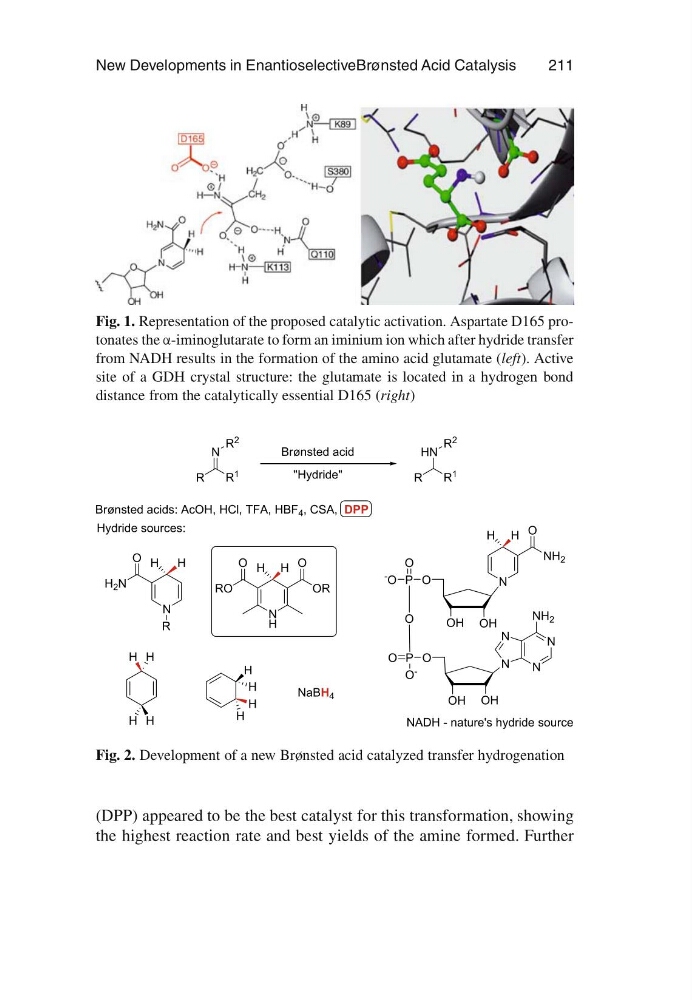
Fig. 1. Representation of the proposed catalytic activation. Aspartate D165 protonates the α-iminoglutarate to form an iminium ion which after hydride transfer
from NADH results in the formation of the amino acid glutamate (left). Active
site of a GDH crystal structure: the glutamate is located in a hydrogen bond
distance from the catalytically essential D165 (right)
Fig. 2. Development of a new Brønsted acid catalyzed transfer hydrogenation
(DPP) appeared to be the best catalyst for this transformation, showing
the highest reaction rate and best yields of the amine formed. Further