

NHCs – Highly Versatile Organocatalysts
193
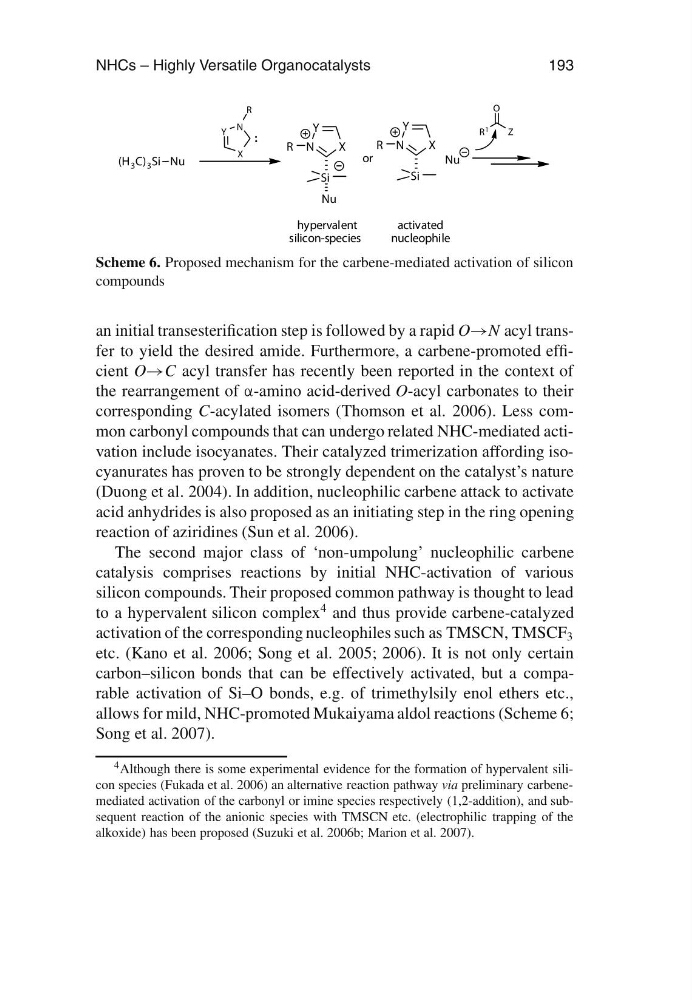
Scheme 6. Proposed mechanism for the carbene-mediated activation of silicon
compounds
an initial transesterification step is followed by a rapid O→N acyl transfer to yield the desired amide. Furthermore, a carbene-promoted efficient O→C acyl transfer has recently been reported in the context of
the rearrangement of α-amino acid-derived O-acyl carbonates to their
corresponding C-acylated isomers (Thomson et al. 2006). Less common carbonyl compounds that can undergo related NHC-mediated activation include isocyanates. Their catalyzed trimerization affording isocyanurates has proven to be strongly dependent on the catalyst’s nature
(Duong et al. 2004). In addition, nucleophilic carbene attack to activate
acid anhydrides is also proposed as an initiating step in the ring opening
reaction of aziridines (Sun et al. 2006).
The second major class of ‘non-umpolung’ nucleophilic carbene
catalysis comprises reactions by initial NHC-activation of various
silicon compounds. Their proposed common pathway is thought to lead
to a hypervalent silicon complex
4 and thus provide carbene-catalyzed
activation of the corresponding nucleophiles such as TMSCN, TMSCF 3
etc. (Kano et al. 2006; Song et al. 2005; 2006). It is not only certain
carbon–silicon bonds that can be effectively activated, but a comparable activation of Si–O bonds, e.g. of trimethylsily enol ethers etc.,
allows for mild, NHC-promoted Mukaiyama aldol reactions (Scheme 6;
Song et al. 2007).
4 Although there is some experimental evidence for the formation of hypervalent silicon species (Fukada et al. 2006) an alternative reaction pathway via preliminary carbenemediated activation of the carbonyl or imine species respectively (1,2-addition), and subsequent reaction of the anionic species with TMSCN etc. (electrophilic trapping of the
alkoxide) has been proposed (Suzuki et al. 2006b; Marion et al. 2007).