

Nucleophilic Carbenes as Organocatalysts
173
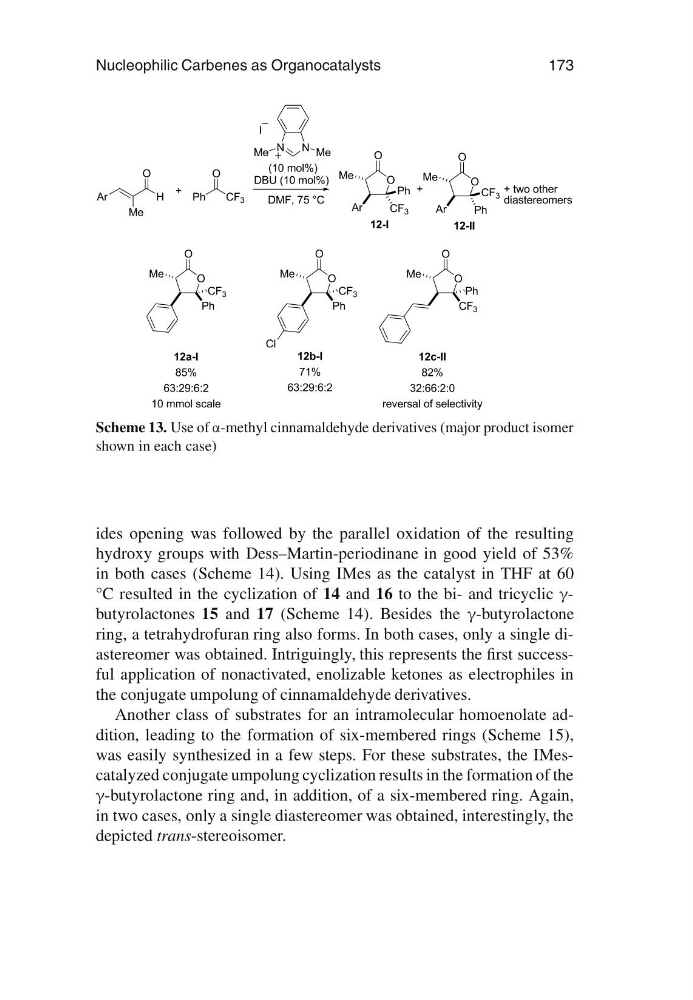
Scheme 13. Use of α-methyl cinnamaldehyde derivatives (major product isomer
shown in each case)
ides opening was followed by the parallel oxidation of the resulting
hydroxy groups with Dess–Martin-periodinane in good yield of 53%
in both cases (Scheme 14). Using IMes as the catalyst in THF at 60
°C resulted in the cyclization of 14 and 16 to the bi- and tricyclic γbutyrolactones 15 and 17 (Scheme 14). Besides the γ-butyrolactone
ring, a tetrahydrofuran ring also forms. In both cases, only a single diastereomer was obtained. Intriguingly, this represents the first successful application of nonactivated, enolizable ketones as electrophiles in
the conjugate umpolung of cinnamaldehyde derivatives.
Another class of substrates for an intramolecular homoenolate addition, leading to the formation of six-membered rings (Scheme 15),
was easily synthesized in a few steps. For these substrates, the IMescatalyzed conjugate umpolung cyclization results in the formation of the
γ-butyrolactone ring and, in addition, of a six-membered ring. Again,
in two cases, only a single diastereomer was obtained, interestingly, the
depicted trans-stereoisomer.