

168
F. Glorius, K. Hirano
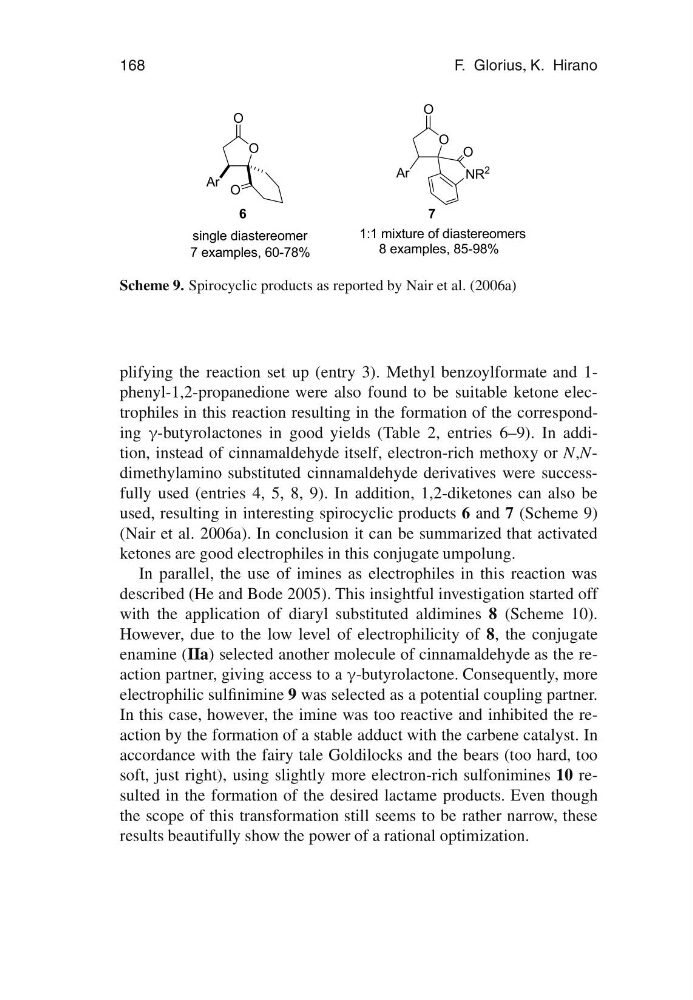
Scheme 9. Spirocyclic products as reported by Nair et al. (2006a)
plifying the reaction set up (entry 3). Methyl benzoylformate and 1phenyl-1,2-propanedione were also found to be suitable ketone electrophiles in this reaction resulting in the formation of the corresponding γ-butyrolactones in good yields (Table 2, entries 6–9). In addition, instead of cinnamaldehyde itself, electron-rich methoxy or N,Ndimethylamino substituted cinnamaldehyde derivatives were successfully used (entries 4, 5, 8, 9). In addition, 1,2-diketones can also be
used, resulting in interesting spirocyclic products 6 and 7 (Scheme 9)
(Nair et al. 2006a). In conclusion it can be summarized that activated
ketones are good electrophiles in this conjugate umpolung.
In parallel, the use of imines as electrophiles in this reaction was
described (He and Bode 2005). This insightful investigation started off
with the application of diaryl substituted aldimines 8 (Scheme 10).
However, due to the low level of electrophilicity of 8, the conjugate
enamine (IIa) selected another molecule of cinnamaldehyde as the reaction partner, giving access to a γ-butyrolactone. Consequently, more
electrophilic sulfinimine 9 was selected as a potential coupling partner.
In this case, however, the imine was too reactive and inhibited the reaction by the formation of a stable adduct with the carbene catalyst. In
accordance with the fairy tale Goldilocks and the bears (too hard, too
soft, just right), using slightly more electron-rich sulfonimines 10 resulted in the formation of the desired lactame products. Even though
the scope of this transformation still seems to be rather narrow, these
results beautifully show the power of a rational optimization.