

166
F. Glorius, K. Hirano
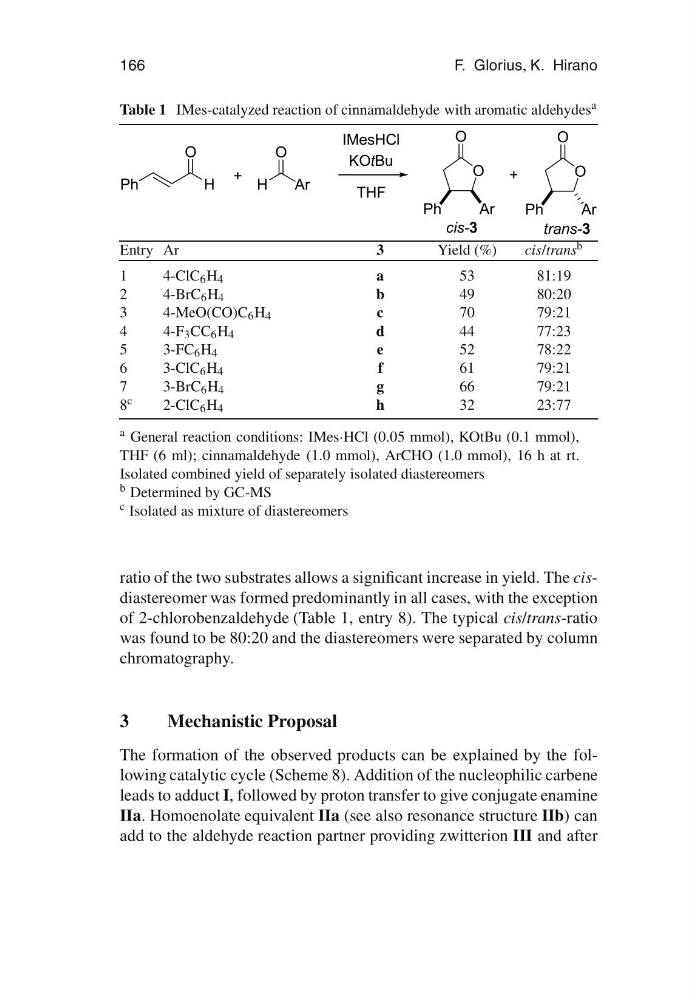
Table 1 IMes-catalyzed reaction of cinnamaldehyde with aromatic aldehydes a
Entry Ar
3
Yield (%)
cis/trans b
1
4-ClC 6 H 4
a
53
81:19
2
4-BrC 6 H 4
b
49
80:20
3
4-MeO(CO)C 6 H 4
c
70
79:21
4
4-F 3 CC 6 H 4
d
44
77:23
5
3-FC 6 H 4
e
52
78:22
6
3-ClC 6 H 4
f
61
79:21
7
3-BrC 6 H 4
g
66
79:21
8 c
2-ClC 6 H 4
h
32
23:77
a General reaction conditions: IMes·HCl (0.05 mmol), KOtBu (0.1 mmol),
THF (6 ml); cinnamaldehyde (1.0 mmol), ArCHO (1.0 mmol), 16 h at rt.
Isolated combined yield of separately isolated diastereomers
b Determined by GC-MS
c Isolated as mixture of diastereomers
ratio of the two substrates allows a significant increase in yield. The cisdiastereomer was formed predominantly in all cases, with the exception
of 2-chlorobenzaldehyde (Table 1, entry 8). The typical cis/trans-ratio
was found to be 80:20 and the diastereomers were separated by column
chromatography.
3
Mechanistic Proposal
The formation of the observed products can be explained by the following catalytic cycle (Scheme 8). Addition of the nucleophilic carbene
leads to adduct I, followed by proton transfer to give conjugate enamine
IIa. Homoenolate equivalent IIa (see also resonance structure IIb) can
add to the aldehyde reaction partner providing zwitterion III and after