

160
F. Glorius, K. Hirano
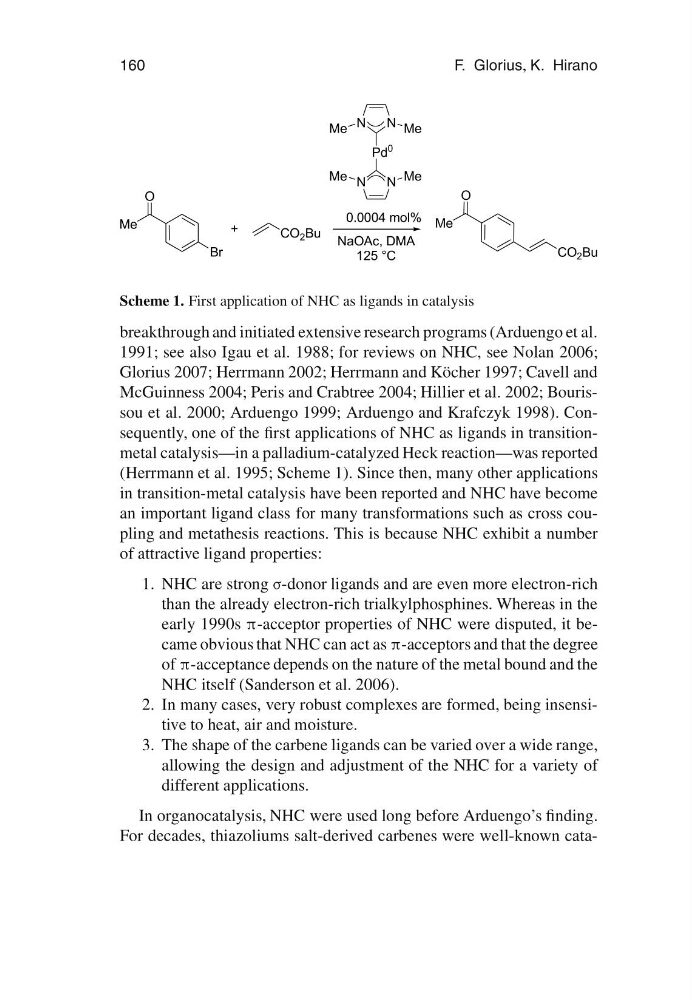
Scheme 1. First application of NHC as ligands in catalysis
breakthrough and initiated extensive research programs (Arduengo et al.
1991; see also Igau et al. 1988; for reviews on NHC, see Nolan 2006;
Glorius 2007; Herrmann 2002; Herrmann and Köcher 1997; Cavell and
McGuinness 2004; Peris and Crabtree 2004; Hillier et al. 2002; Bourissou et al. 2000; Arduengo 1999; Arduengo and Krafczyk 1998). Consequently, one of the first applications of NHC as ligands in transitionmetal catalysis—in a palladium-catalyzed Heck reaction—was reported
(Herrmann et al. 1995; Scheme 1). Since then, many other applications
in transition-metal catalysis have been reported and NHC have become
an important ligand class for many transformations such as cross coupling and metathesis reactions. This is because NHC exhibit a number
of attractive ligand properties:
1. NHC are strong σ-donor ligands and are even more electron-rich
than the already electron-rich trialkylphosphines. Whereas in the
early 1990s π-acceptor properties of NHC were disputed, it became obvious that NHC can act as π-acceptors and that the degree
of π-acceptance depends on the nature of the metal bound and the
NHC itself (Sanderson et al. 2006).
2. In many cases, very robust complexes are formed, being insensitive to heat, air and moisture.
3. The shape of the carbene ligands can be varied over a wide range,
allowing the design and adjustment of the NHC for a variety of
different applications.
In organocatalysis, NHC were used long before Arduengo’s finding.
For decades, thiazoliums salt-derived carbenes were well-known cata-