

150
H. Gröger
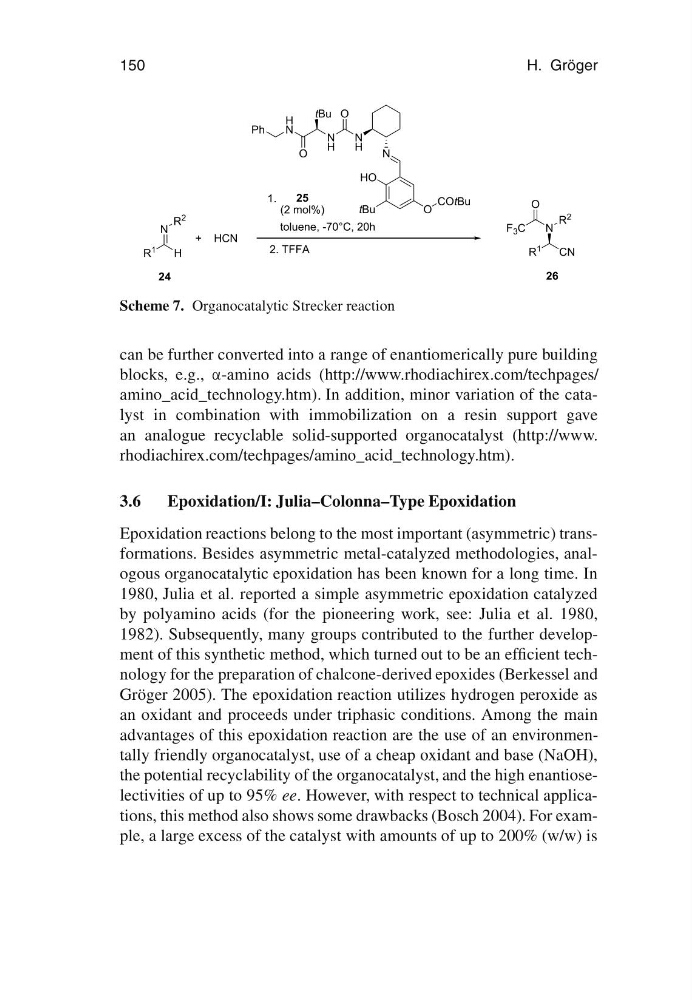
Scheme 7. Organocatalytic Strecker reaction
can be further converted into a range of enantiomerically pure building
blocks, e.g., α-amino acids (http://www.rhodiachirex.com/techpages/
amino_acid_technology.htm). In addition, minor variation of the catalyst in combination with immobilization on a resin support gave
an analogue recyclable solid-supported organocatalyst (http://www.
rhodiachirex.com/techpages/amino_acid_technology.htm).
3.6
Epoxidation/I: Julia–Colonna–Type Epoxidation
Epoxidation reactions belong to the most important (asymmetric) transformations. Besides asymmetric metal-catalyzed methodologies, analogous organocatalytic epoxidation has been known for a long time. In
1980, Julia et al. reported a simple asymmetric epoxidation catalyzed
by polyamino acids (for the pioneering work, see: Julia et al. 1980,
1982). Subsequently, many groups contributed to the further development of this synthetic method, which turned out to be an efficient technology for the preparation of chalcone-derived epoxides (Berkessel and
Gröger 2005). The epoxidation reaction utilizes hydrogen peroxide as
an oxidant and proceeds under triphasic conditions. Among the main
advantages of this epoxidation reaction are the use of an environmentally friendly organocatalyst, use of a cheap oxidant and base (NaOH),
the potential recyclability of the organocatalyst, and the high enantioselectivities of up to 95% ee. However, with respect to technical applications, this method also shows some drawbacks (Bosch 2004). For example, a large excess of the catalyst with amounts of up to 200% (w/w) is