

Biomimetic Organocatalytic C–C-Bond Formations
99
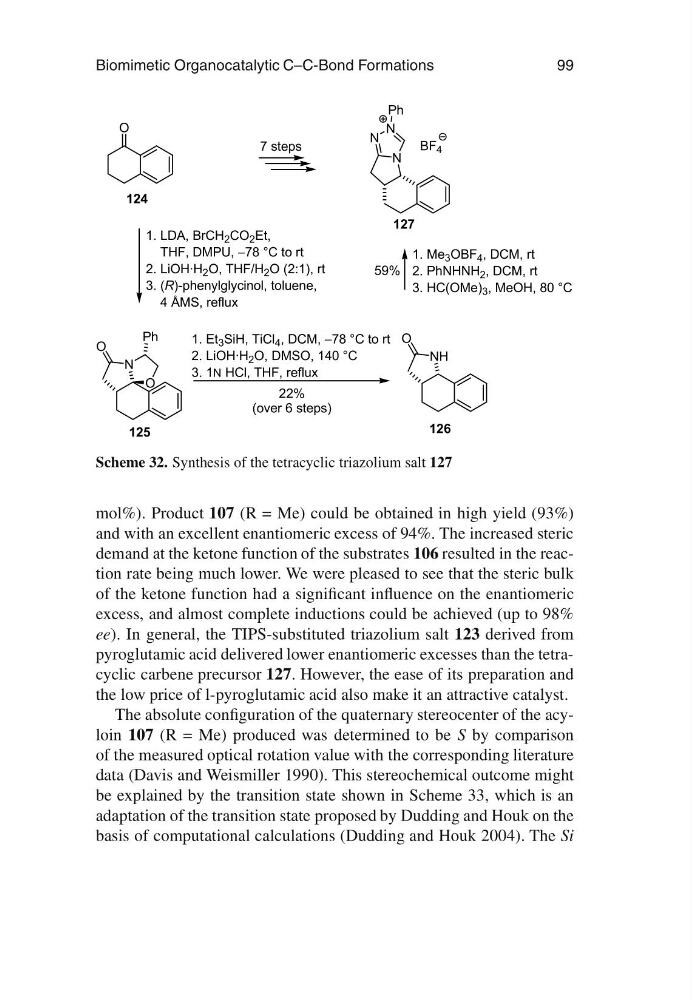
Scheme 32. Synthesis of the tetracyclic triazolium salt 127
mol%). Product 107 (R = Me) could be obtained in high yield (93%)
and with an excellent enantiomeric excess of 94%. The increased steric
demand at the ketone function of the substrates 106 resulted in the reaction rate being much lower. We were pleased to see that the steric bulk
of the ketone function had a significant influence on the enantiomeric
excess, and almost complete inductions could be achieved (up to 98%
ee). In general, the TIPS-substituted triazolium salt 123 derived from
pyroglutamic acid delivered lower enantiomeric excesses than the tetracyclic carbene precursor 127. However, the ease of its preparation and
the low price of l-pyroglutamic acid also make it an attractive catalyst.
The absolute configuration of the quaternary stereocenter of the acyloin 107 (R = Me) produced was determined to be S by comparison
of the measured optical rotation value with the corresponding literature
data (Davis and Weismiller 1990). This stereochemical outcome might
be explained by the transition state shown in Scheme 33, which is an
adaptation of the transition state proposed by Dudding and Houk on the
basis of computational calculations (Dudding and Houk 2004). The Si
99
Scheme 32. Synthesis of the tetracyclic triazolium salt 127
mol%). Product 107 (R = Me) could be obtained in high yield (93%)
and with an excellent enantiomeric excess of 94%. The increased steric
demand at the ketone function of the substrates 106 resulted in the reaction rate being much lower. We were pleased to see that the steric bulk
of the ketone function had a significant influence on the enantiomeric
excess, and almost complete inductions could be achieved (up to 98%
ee). In general, the TIPS-substituted triazolium salt 123 derived from
pyroglutamic acid delivered lower enantiomeric excesses than the tetracyclic carbene precursor 127. However, the ease of its preparation and
the low price of l-pyroglutamic acid also make it an attractive catalyst.
The absolute configuration of the quaternary stereocenter of the acyloin 107 (R = Me) produced was determined to be S by comparison
of the measured optical rotation value with the corresponding literature
data (Davis and Weismiller 1990). This stereochemical outcome might
be explained by the transition state shown in Scheme 33, which is an
adaptation of the transition state proposed by Dudding and Houk on the
basis of computational calculations (Dudding and Houk 2004). The Si