

New Concepts for Organocatalysis
19
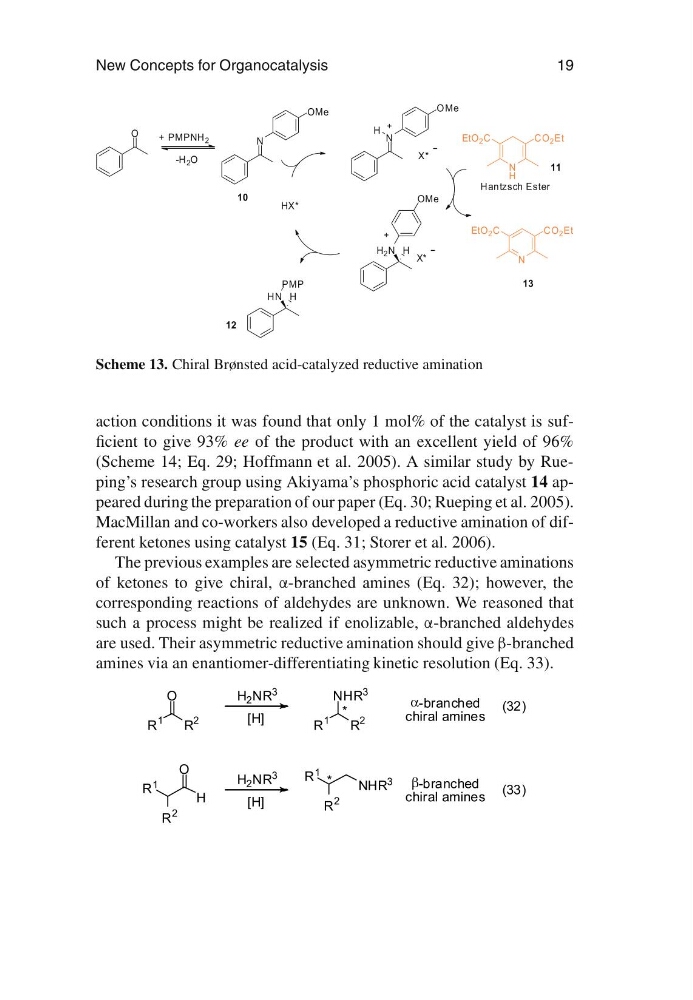
Scheme 13. Chiral Brønsted acid-catalyzed reductive amination
action conditions it was found that only 1 mol% of the catalyst is sufficient to give 93% ee of the product with an excellent yield of 96%
(Scheme 14; Eq. 29; Hoffmann et al. 2005). A similar study by Rueping’s research group using Akiyama’s phosphoric acid catalyst 14 appeared during the preparation of our paper (Eq. 30; Rueping et al. 2005).
MacMillan and co-workers also developed a reductive amination of different ketones using catalyst 15 (Eq. 31; Storer et al. 2006).
The previous examples are selected asymmetric reductive aminations
of ketones to give chiral, α-branched amines (Eq. 32); however, the
corresponding reactions of aldehydes are unknown. We reasoned that
such a process might be realized if enolizable, α-branched aldehydes
are used. Their asymmetric reductive amination should give β-branched
amines via an enantiomer-differentiating kinetic resolution (Eq. 33).
19
Scheme 13. Chiral Brønsted acid-catalyzed reductive amination
action conditions it was found that only 1 mol% of the catalyst is sufficient to give 93% ee of the product with an excellent yield of 96%
(Scheme 14; Eq. 29; Hoffmann et al. 2005). A similar study by Rueping’s research group using Akiyama’s phosphoric acid catalyst 14 appeared during the preparation of our paper (Eq. 30; Rueping et al. 2005).
MacMillan and co-workers also developed a reductive amination of different ketones using catalyst 15 (Eq. 31; Storer et al. 2006).
The previous examples are selected asymmetric reductive aminations
of ketones to give chiral, α-branched amines (Eq. 32); however, the
corresponding reactions of aldehydes are unknown. We reasoned that
such a process might be realized if enolizable, α-branched aldehydes
are used. Their asymmetric reductive amination should give β-branched
amines via an enantiomer-differentiating kinetic resolution (Eq. 33).