

New Concepts for Organocatalysis
9
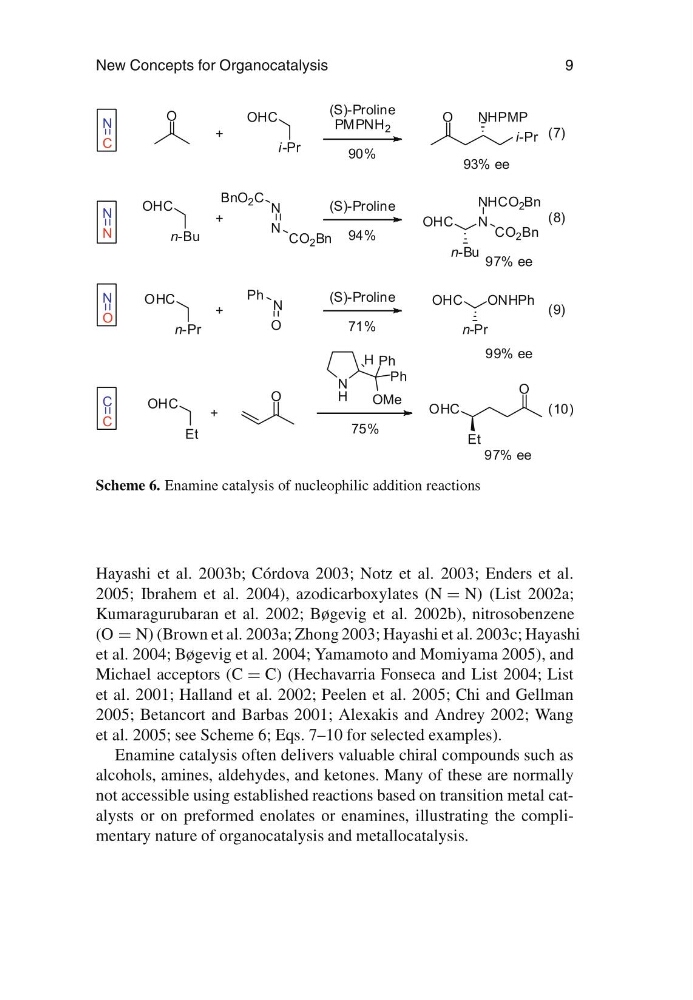
Scheme 6. Enamine catalysis of nucleophilic addition reactions
Hayashi et al. 2003b; Córdova 2003; Notz et al. 2003; Enders et al.
2005; Ibrahem et al. 2004), azodicarboxylates (N = N) (List 2002a;
Kumaragurubaran et al. 2002; Bøgevig et al. 2002b), nitrosobenzene
(O = N) (Brown et al. 2003a; Zhong 2003; Hayashi et al. 2003c; Hayashi
et al. 2004; Bøgevig et al. 2004; Yamamoto and Momiyama 2005), and
Michael acceptors (C = C) (Hechavarria Fonseca and List 2004; List
et al. 2001; Halland et al. 2002; Peelen et al. 2005; Chi and Gellman
2005; Betancort and Barbas 2001; Alexakis and Andrey 2002; Wang
et al. 2005; see Scheme 6; Eqs. 7–10 for selected examples).
Enamine catalysis often delivers valuable chiral compounds such as
alcohols, amines, aldehydes, and ketones. Many of these are normally
not accessible using established reactions based on transition metal catalysts or on preformed enolates or enamines, illustrating the complimentary nature of organocatalysis and metallocatalysis.
9
Scheme 6. Enamine catalysis of nucleophilic addition reactions
Hayashi et al. 2003b; Córdova 2003; Notz et al. 2003; Enders et al.
2005; Ibrahem et al. 2004), azodicarboxylates (N = N) (List 2002a;
Kumaragurubaran et al. 2002; Bøgevig et al. 2002b), nitrosobenzene
(O = N) (Brown et al. 2003a; Zhong 2003; Hayashi et al. 2003c; Hayashi
et al. 2004; Bøgevig et al. 2004; Yamamoto and Momiyama 2005), and
Michael acceptors (C = C) (Hechavarria Fonseca and List 2004; List
et al. 2001; Halland et al. 2002; Peelen et al. 2005; Chi and Gellman
2005; Betancort and Barbas 2001; Alexakis and Andrey 2002; Wang
et al. 2005; see Scheme 6; Eqs. 7–10 for selected examples).
Enamine catalysis often delivers valuable chiral compounds such as
alcohols, amines, aldehydes, and ketones. Many of these are normally
not accessible using established reactions based on transition metal catalysts or on preformed enolates or enamines, illustrating the complimentary nature of organocatalysis and metallocatalysis.