

New Concepts for Organocatalysis
5
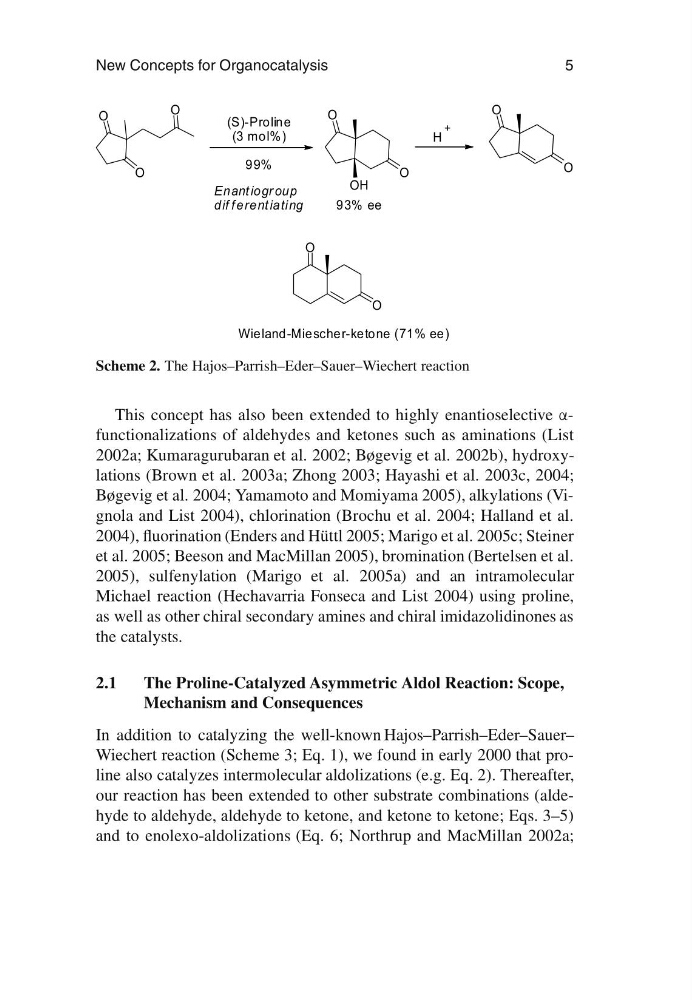
Scheme 2. The Hajos–Parrish–Eder–Sauer–Wiechert reaction
This concept has also been extended to highly enantioselective αfunctionalizations of aldehydes and ketones such as aminations (List
2002a; Kumaragurubaran et al. 2002; Bøgevig et al. 2002b), hydroxylations (Brown et al. 2003a; Zhong 2003; Hayashi et al. 2003c, 2004;
Bøgevig et al. 2004; Yamamoto and Momiyama 2005), alkylations (Vignola and List 2004), chlorination (Brochu et al. 2004; Halland et al.
2004), fluorination (Enders and Hüttl 2005; Marigo et al. 2005c; Steiner
et al. 2005; Beeson and MacMillan 2005), bromination (Bertelsen et al.
2005), sulfenylation (Marigo et al. 2005a) and an intramolecular
Michael reaction (Hechavarria Fonseca and List 2004) using proline,
as well as other chiral secondary amines and chiral imidazolidinones as
the catalysts.
2.1
The Proline-Catalyzed Asymmetric Aldol Reaction: Scope,
Mechanism and Consequences
In addition to catalyzing the well-known Hajos–Parrish–Eder–Sauer–
Wiechert reaction (Scheme 3; Eq. 1), we found in early 2000 that proline also catalyzes intermolecular aldolizations (e.g. Eq. 2). Thereafter,
our reaction has been extended to other substrate combinations (aldehyde to aldehyde, aldehyde to ketone, and ketone to ketone; Eqs. 3–5)
and to enolexo-aldolizations (Eq. 6; Northrup and MacMillan 2002a;
5
Scheme 2. The Hajos–Parrish–Eder–Sauer–Wiechert reaction
This concept has also been extended to highly enantioselective αfunctionalizations of aldehydes and ketones such as aminations (List
2002a; Kumaragurubaran et al. 2002; Bøgevig et al. 2002b), hydroxylations (Brown et al. 2003a; Zhong 2003; Hayashi et al. 2003c, 2004;
Bøgevig et al. 2004; Yamamoto and Momiyama 2005), alkylations (Vignola and List 2004), chlorination (Brochu et al. 2004; Halland et al.
2004), fluorination (Enders and Hüttl 2005; Marigo et al. 2005c; Steiner
et al. 2005; Beeson and MacMillan 2005), bromination (Bertelsen et al.
2005), sulfenylation (Marigo et al. 2005a) and an intramolecular
Michael reaction (Hechavarria Fonseca and List 2004) using proline,
as well as other chiral secondary amines and chiral imidazolidinones as
the catalysts.
2.1
The Proline-Catalyzed Asymmetric Aldol Reaction: Scope,
Mechanism and Consequences
In addition to catalyzing the well-known Hajos–Parrish–Eder–Sauer–
Wiechert reaction (Scheme 3; Eq. 1), we found in early 2000 that proline also catalyzes intermolecular aldolizations (e.g. Eq. 2). Thereafter,
our reaction has been extended to other substrate combinations (aldehyde to aldehyde, aldehyde to ketone, and ketone to ketone; Eqs. 3–5)
and to enolexo-aldolizations (Eq. 6; Northrup and MacMillan 2002a;