

50
Lipid class
Structure
Name
Aliphatic
n-Nonadecane
hydrocarbons ~
Polycyclic
aromatic
hydrocarbons
Wax esters
Sterol esters
Short-chain
esters
Phenanthrene
Hexadecyl palmitate
HC~
2 ,
o,c~
11
o
Cholesteryl palmitate
~
o,c~
11
o
H3C,
Methyl palmitate
o,c~
11
o
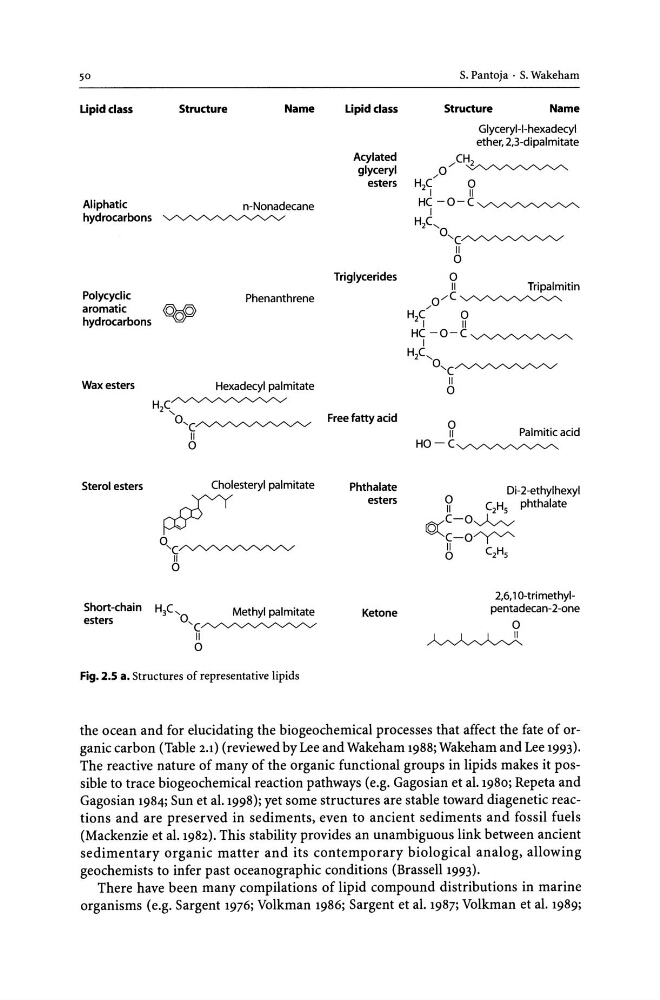
Fig. 2.5 a. Structures of representative lipids
Lipid class
Acylated
glyceryl
esters
Triglycerides
Free fatty acid
Phthalate
esters
Ketone
S. Pantoja· S. Wakeham
Structure
Name
Glyceryl-I-hexadecyl
ether,2,3-dipalmitate
/CH2
o~
H 2 C/
0
I
II
HC-O-C~
I
H2C.,
O'C~
II
o
o
II
Tripalmitin
O/C~
H 2 C/
0
I
11
HC -O-C
I~
H2C,
O'C~
11
o
~
Palmitic acid
HO-C~
2,6,10-trimethylpentadecan-2-one
o
~
the ocean and for elucidating the biogeochemical processes that affect the fate of organic carbon (Table 2.1) (reviewed by Lee and Wakeham 1988; Wakeham and Lee 1993).
The reactive nature of many of the organic functional groups in lipids makes it possible to trace biogeochemical reaction pathways (e.g. Gagosian et al.1980; Repeta and
Gagosian 1984; Sun et al. 1998); yet some structures are stable toward diagenetic reactions and are preserved in sediments, even to ancient sediments and fossil fuels
(Mackenzie et al. 1982). This stability provides an unambiguous link between ancient
sedimentary organic matter and its contemporary biological analog, allowing
geochemists to infer past oceanographic conditions (Brassell 1993).
There have been many compilations of lipid compound distributions in marine
organisms (e.g. Sargent 1976; Volkman 1986; Sargent et al. 1987; Volkman et al. 1989;
Lipid class
Structure
Name
Aliphatic
n-Nonadecane
hydrocarbons ~
Polycyclic
aromatic
hydrocarbons
Wax esters
Sterol esters
Short-chain
esters
Phenanthrene
Hexadecyl palmitate
HC~
2 ,
o,c~
11
o
Cholesteryl palmitate
~
o,c~
11
o
H3C,
Methyl palmitate
o,c~
11
o
Fig. 2.5 a. Structures of representative lipids
Lipid class
Acylated
glyceryl
esters
Triglycerides
Free fatty acid
Phthalate
esters
Ketone
S. Pantoja· S. Wakeham
Structure
Name
Glyceryl-I-hexadecyl
ether,2,3-dipalmitate
/CH2
o~
H 2 C/
0
I
II
HC-O-C~
I
H2C.,
O'C~
II
o
o
II
Tripalmitin
O/C~
H 2 C/
0
I
11
HC -O-C
I~
H2C,
O'C~
11
o
~
Palmitic acid
HO-C~
2,6,10-trimethylpentadecan-2-one
o
~
the ocean and for elucidating the biogeochemical processes that affect the fate of organic carbon (Table 2.1) (reviewed by Lee and Wakeham 1988; Wakeham and Lee 1993).
The reactive nature of many of the organic functional groups in lipids makes it possible to trace biogeochemical reaction pathways (e.g. Gagosian et al.1980; Repeta and
Gagosian 1984; Sun et al. 1998); yet some structures are stable toward diagenetic reactions and are preserved in sediments, even to ancient sediments and fossil fuels
(Mackenzie et al. 1982). This stability provides an unambiguous link between ancient
sedimentary organic matter and its contemporary biological analog, allowing
geochemists to infer past oceanographic conditions (Brassell 1993).
There have been many compilations of lipid compound distributions in marine
organisms (e.g. Sargent 1976; Volkman 1986; Sargent et al. 1987; Volkman et al. 1989;