

CHAPTER 16 • Oceanic DOC Measurements
CO2 stripper
coils
Drying
t ubes
L -_
_ _ -+ _ _ +-_ HCI
Infrared gas
analyser
Recorder/
computer
-..::::...-7--~-----_+--_+- D.H 2 0
Airin
UV photochemical
reactor
<:::"""_-.-+-__ +----' Return
'-+- - - + - - NH 2 0 H. Hel
L -_ _ +-__ +-_ HCI
Pump
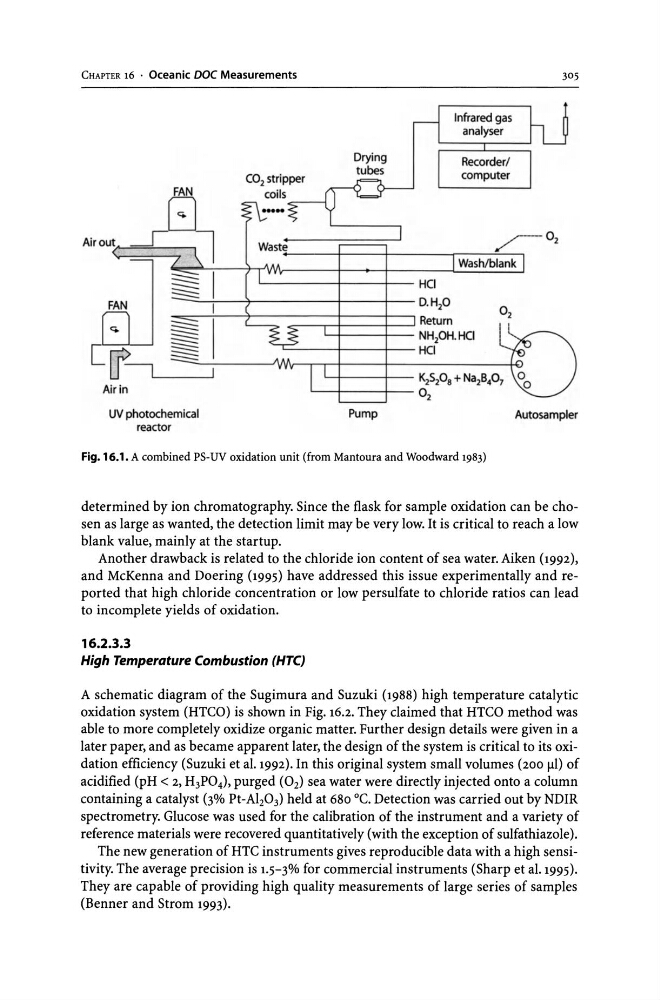
Fig. 16.1. A combined PS-UV oxidation unit (from Mantoura and Woodward 1983)
305
Autosam pler
determined by ion chromatography. Since the flask for sample oxidation can be chosen as large as wanted, the detection limit may be very low. It is critical to reach a low
blank value, mainly at the startup.
Another drawback is related to the chloride ion content of sea water. Aiken (1992),
and McKenna and Doering (1995) have addressed this issue experimentally and reported that high chloride concentration or low persulfate to chloride ratios can lead
to incomplete yields of oxidation.
16.2.3.3
High Temperature Combustion (HTC)
A schematic diagram of the Sugimura and Suzuki (1988) high temperature catalytic
oxidation system (HTCO) is shown in Fig. 16.2. They claimed that HTCO method was
able to more completely oxidize organic matter. Further design details were given in a
later paper, and as became apparent later, the design of the system is critical to its oxidation efficiency (Suzuki et al. 1992). In this original system small volumes (200 Ill) of
acidified (pH < 2 , H3P04), purged (02) sea water were directly injected onto a column
containing a catalyst (3% Pt-AI20 3) held at 680 °C. Detection was carried out by NDIR
spectrometry. Glucose was used for the calibration of the instrument and a variety of
reference materials were recovered quantitatively (with the exception of sulfathiazole).
The new generation of HTC instruments gives reproducible data with a high sensitivity. The average precision is 1.5-3% for commercial instruments (Sharp et al. 1995).
They are capable of providing high quality measurements of large series of samples
(Benner and Strom 1993).
CO2 stripper
coils
Drying
t ubes
L -_
_ _ -+ _ _ +-_ HCI
Infrared gas
analyser
Recorder/
computer
-..::::...-7--~-----_+--_+- D.H 2 0
Airin
UV photochemical
reactor
<:::"""_-.-+-__ +----' Return
'-+- - - + - - NH 2 0 H. Hel
L -_ _ +-__ +-_ HCI
Pump
Fig. 16.1. A combined PS-UV oxidation unit (from Mantoura and Woodward 1983)
305
Autosam pler
determined by ion chromatography. Since the flask for sample oxidation can be chosen as large as wanted, the detection limit may be very low. It is critical to reach a low
blank value, mainly at the startup.
Another drawback is related to the chloride ion content of sea water. Aiken (1992),
and McKenna and Doering (1995) have addressed this issue experimentally and reported that high chloride concentration or low persulfate to chloride ratios can lead
to incomplete yields of oxidation.
16.2.3.3
High Temperature Combustion (HTC)
A schematic diagram of the Sugimura and Suzuki (1988) high temperature catalytic
oxidation system (HTCO) is shown in Fig. 16.2. They claimed that HTCO method was
able to more completely oxidize organic matter. Further design details were given in a
later paper, and as became apparent later, the design of the system is critical to its oxidation efficiency (Suzuki et al. 1992). In this original system small volumes (200 Ill) of
acidified (pH < 2 , H3P04), purged (02) sea water were directly injected onto a column
containing a catalyst (3% Pt-AI20 3) held at 680 °C. Detection was carried out by NDIR
spectrometry. Glucose was used for the calibration of the instrument and a variety of
reference materials were recovered quantitatively (with the exception of sulfathiazole).
The new generation of HTC instruments gives reproducible data with a high sensitivity. The average precision is 1.5-3% for commercial instruments (Sharp et al. 1995).
They are capable of providing high quality measurements of large series of samples
(Benner and Strom 1993).