

150
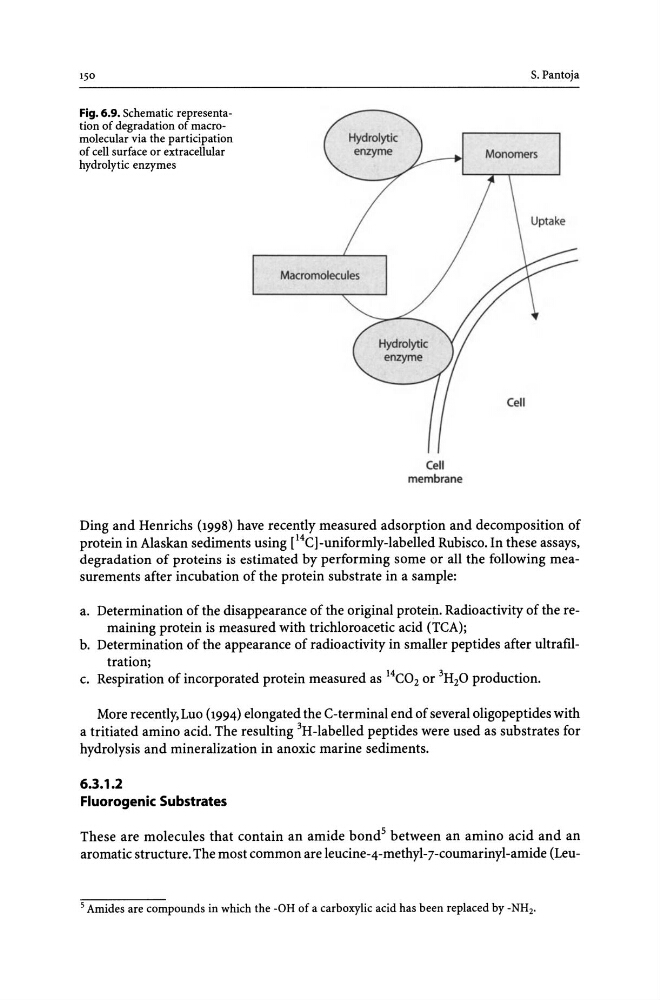
Fig. 6.9. Schematic representation of degradation of macromolecular via the participation
of cell surface or extracellular
hydrolytic enzymes
Cell
membrane
S. Pantoja
Ding and Henrichs (1998) have recently measured adsorption and decomposition of
protein in Alaskan sediments using [14C]-uniformly-labelled Rubisco. In these assays,
degradation of proteins is estimated by performing some or all the following measurements after incubation of the protein substrate in a sample:
a. Determination of the disappearance of the original protein. Radioactivity of the remaining protein is measured with trichloroacetic acid (TCA);
b. Determination of the appearance of radioactivity in smaller peptides after ultrafiltration;
c. Respiration of incorporated protein measured as 14C02 or 3H20 production.
More recently, Luo (1994) elongated the C-terminal end of several oligopeptides with
a tritiated amino acid. The resulting 3H-Iabelled peptides were used as substrates for
hydrolysis and mineralization in anoxic marine sediments.
6.3.1.2
Fluorogenic Substrates
These are molecules that contain an amide bonds between an amino acid and an
aromatic structure. The most common are leucine-4-methyl-7-coumarinyl-amide (Leu5 Amides are compounds in which the -OH of a carboxylic acid has been replaced by -NH2•
Fig. 6.9. Schematic representation of degradation of macromolecular via the participation
of cell surface or extracellular
hydrolytic enzymes
Cell
membrane
S. Pantoja
Ding and Henrichs (1998) have recently measured adsorption and decomposition of
protein in Alaskan sediments using [14C]-uniformly-labelled Rubisco. In these assays,
degradation of proteins is estimated by performing some or all the following measurements after incubation of the protein substrate in a sample:
a. Determination of the disappearance of the original protein. Radioactivity of the remaining protein is measured with trichloroacetic acid (TCA);
b. Determination of the appearance of radioactivity in smaller peptides after ultrafiltration;
c. Respiration of incorporated protein measured as 14C02 or 3H20 production.
More recently, Luo (1994) elongated the C-terminal end of several oligopeptides with
a tritiated amino acid. The resulting 3H-Iabelled peptides were used as substrates for
hydrolysis and mineralization in anoxic marine sediments.
6.3.1.2
Fluorogenic Substrates
These are molecules that contain an amide bonds between an amino acid and an
aromatic structure. The most common are leucine-4-methyl-7-coumarinyl-amide (Leu5 Amides are compounds in which the -OH of a carboxylic acid has been replaced by -NH2•