

XII
Contents
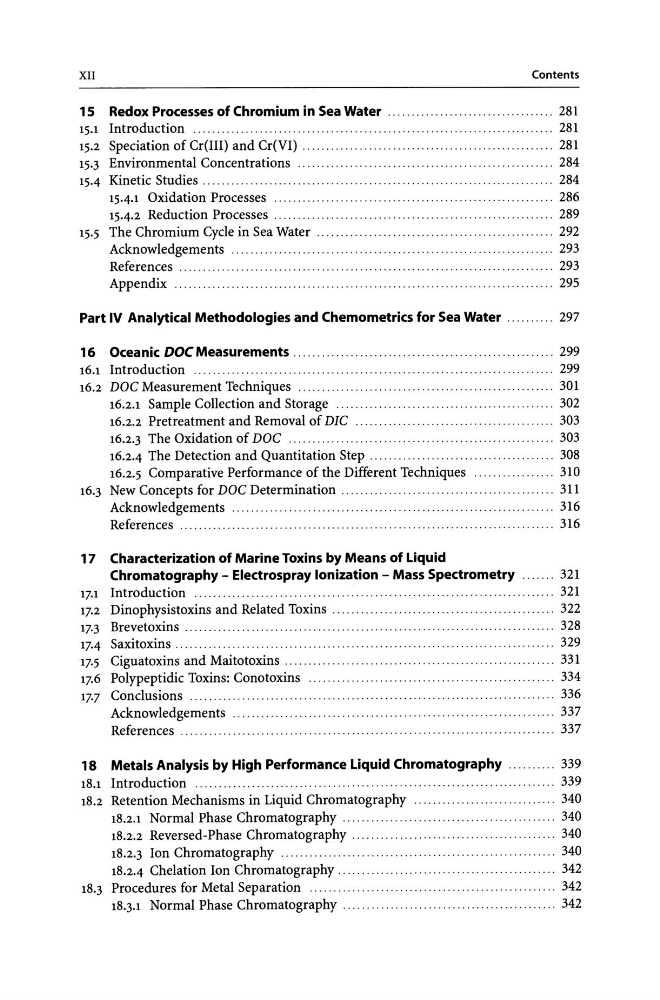
15 Redox Processes of Chromium in Sea Water ............................ ...... 281
15.1 Introduction ............................................................................ 281
15.2 Speciation of Cr(III) and Cr(VI) ..................................................... 281
15.3 Environmental Concentrations ...................................................... 284
15.4 Kinetic Studies .......................................................................... 284
15-4.1 Oxidation Processes ........................................................... 286
15.4.2 Reduction Processes ........................................................... 289
15.5 The Chromium Cycle in Sea Water .................................................. 292
Acknowledgements .................................................................... 293
References ............................................................................... 293
Appendix ................................................................................ 295
Part IV Analytical Methodologies and Chemometrics for Sea Water .......... 297
16 Oceanic DOC Measurements ....................................................... 299
16.1 Introduction ............................................................................ 299
16.2 DOC Measurement Techniques ...................................................... 301
16.2.1 Sample Collection and Storage .............................................. 302
16.2.2 Pretreatment and Removal of DIe .......................................... 303
16.2.3 The Oxidation of DOC ........................................................ 303
16.2.4 The Detection and Quantitation Step ....................................... 308
16.2.5 Comparative Performance of the Different Techniques ................. 310
16.3 New Concepts for DOC Determination ............................................. 311
Acknowledgements .................................................................... 316
References .............................................................................. 316
17 Characterization of Marine Toxins by Means of Liquid
Chromatography - Electrospray Ionization - Mass Spectrometry ....... 321
17.1 Introduction ............................................................................ 321
17.2 Dinophysistoxins and Related Toxins ............................................... 322
17.3 Brevetoxins......... . . . . . . . . . . . . . . . . . . . . . . . . . . . . . . . . . . . . . . . . . . . . . . . . . . . . . . . . . . . . . . . . . . . .. 328
17.4 Saxitoxins................................... ............................................ 329
17.5 Ciguatoxins and Maitotoxins ........................................................ 331
17.6 Polypeptidic Toxins: Conotoxins .................................................... 334
17.7 Conclusions ............................................................................. 336
Acknowledgements .................................................................... 337
References .........................................................................
337
18 Metals Analysis by High Performance Liquid Chromatography .......... 339
18.1 Introduction ............................................................................ 339
18.2 Retention Mechanisms in Liquid Chromatography .............................. 340
18.2.1 Normal Phase Chromatography ............................................. 340
18.2.2 Reversed-Phase Chromatography ........................................... 340
18.2.3 Ion Chromatography .......................................................... 340
18.2.4 Chelation Ion Chromatography.............................................. 342
18.3 Procedures for Metal Separation .................................................... 342
18.3-1 Normal Phase Chromatography ............................................. 342
Contents
15 Redox Processes of Chromium in Sea Water ............................ ...... 281
15.1 Introduction ............................................................................ 281
15.2 Speciation of Cr(III) and Cr(VI) ..................................................... 281
15.3 Environmental Concentrations ...................................................... 284
15.4 Kinetic Studies .......................................................................... 284
15-4.1 Oxidation Processes ........................................................... 286
15.4.2 Reduction Processes ........................................................... 289
15.5 The Chromium Cycle in Sea Water .................................................. 292
Acknowledgements .................................................................... 293
References ............................................................................... 293
Appendix ................................................................................ 295
Part IV Analytical Methodologies and Chemometrics for Sea Water .......... 297
16 Oceanic DOC Measurements ....................................................... 299
16.1 Introduction ............................................................................ 299
16.2 DOC Measurement Techniques ...................................................... 301
16.2.1 Sample Collection and Storage .............................................. 302
16.2.2 Pretreatment and Removal of DIe .......................................... 303
16.2.3 The Oxidation of DOC ........................................................ 303
16.2.4 The Detection and Quantitation Step ....................................... 308
16.2.5 Comparative Performance of the Different Techniques ................. 310
16.3 New Concepts for DOC Determination ............................................. 311
Acknowledgements .................................................................... 316
References .............................................................................. 316
17 Characterization of Marine Toxins by Means of Liquid
Chromatography - Electrospray Ionization - Mass Spectrometry ....... 321
17.1 Introduction ............................................................................ 321
17.2 Dinophysistoxins and Related Toxins ............................................... 322
17.3 Brevetoxins......... . . . . . . . . . . . . . . . . . . . . . . . . . . . . . . . . . . . . . . . . . . . . . . . . . . . . . . . . . . . . . . . . . . . .. 328
17.4 Saxitoxins................................... ............................................ 329
17.5 Ciguatoxins and Maitotoxins ........................................................ 331
17.6 Polypeptidic Toxins: Conotoxins .................................................... 334
17.7 Conclusions ............................................................................. 336
Acknowledgements .................................................................... 337
References .........................................................................
337
18 Metals Analysis by High Performance Liquid Chromatography .......... 339
18.1 Introduction ............................................................................ 339
18.2 Retention Mechanisms in Liquid Chromatography .............................. 340
18.2.1 Normal Phase Chromatography ............................................. 340
18.2.2 Reversed-Phase Chromatography ........................................... 340
18.2.3 Ion Chromatography .......................................................... 340
18.2.4 Chelation Ion Chromatography.............................................. 342
18.3 Procedures for Metal Separation .................................................... 342
18.3-1 Normal Phase Chromatography ............................................. 342