

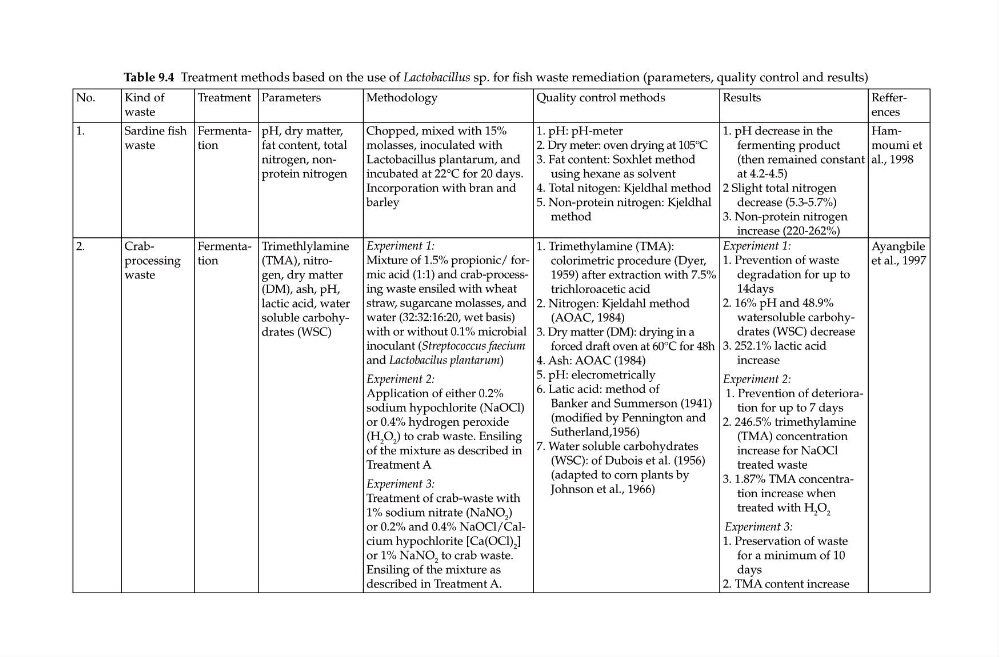
Table 9.4 Treatment methods based on the use of Lactobacillus sp. for fi sh waste remediation (parameters, quality control and results)
No.
Kind of
waste
Treatment Parameters
Methodology
Quality control methods
Results
Refferences
1.
Sardine fi sh
waste
Fermentation
pH, dry matter,
fat content, total
nitrogen, nonprotein nitrogen
Chopped, mixed with 15%
molasses, inoculated with
Lactobacillus plantarum, and
incubated at 22°C for 20 days.
Incorporation with bran and
barley
1. pH: pH-meter
2. Dry meter: oven drying at 105°C
3. Fat content: Soxhlet method
using hexane as solvent
4. Total nitogen: Kjeldhal method
5. Non-protein nitrogen: Kjeldhal
method
1. pH decrease in the
fermenting product
(then remained constant
at 4.2-4.5)
2 Slight total nitrogen
decrease (5.3-5.7%)
3. Non-protein nitrogen
increase (220-262%)
Hammoumi et
al., 1998
2.
Crabprocessing
waste
Fermentation
Trimethlylamine
(TMA), nitrogen, dry matter
(DM), ash, pH,
lactic acid, water
soluble carbohydrates (WSC)
Experiment 1:
Mixture of 1.5% propionic/ formic acid (1:1) and crab-processing waste ensiled with wheat
straw, sugarcane molasses, and
water (32:32:16:20, wet basis)
with or without 0.1% microbial
inoculant (Streptococcus faecium
and Lactobacilus plantarum)
Experiment 2:
Application of either 0.2%
sodium hypochlorite (NaOCl)
or 0.4% hydrogen peroxide
(H 2 O 2 ) to crab waste. Ensiling
of the mixture as described in
Treatment A
Experiment 3:
Treatment of crab-waste with
1% sodium nitrate (NaNO 2 )
or 0.2% and 0.4% NaOCl/Calcium hypochlorite [Ca(OCl) 2 ]
or 1% NaNO 2 to crab waste.
Ensiling of the mixture as
described in Treatment A.
1. Trimethylamine (TMA):
colorimetric procedure (Dyer,
1959) after extraction with 7.5%
trichloroacetic acid
2. Nitrogen: Kjeldahl method
(AOAC, 1984)
3. Dry matter (DM): drying in a
forced draft oven at 60°C for 48h
4. Ash: AOAC (1984)
5. pH: elecrometrically
6. Latic acid: method of
Banker and Summerson (1941)
(modifi ed by Pennington and
Sutherland,1956)
7. Water soluble carbohydrates
(WSC): of Dubois et al. (1956)
(adapted to corn plants by
Johnson et al., 1966)
Experiment 1:
1. Prevention of waste
degradation for up to
14days
2. 16% pH and 48.9%
watersoluble carbohydrates (WSC) decrease
3. 252.1% lactic acid
increase
Experiment 2:
1. Prevention of deterioration for up to 7 days
2. 246.5% trimethylamine
(TMA) concentration
increase for NaOCl
treated waste
3. 1.87% TMA concentration increase when
treated with H 2 O 2
Experiment 3:
1. Preservation of waste
for a minimum of 10
days
2. TMA content increase
Ayangbile
et al., 1997
No.
Kind of
waste
Treatment Parameters
Methodology
Quality control methods
Results
Refferences
1.
Sardine fi sh
waste
Fermentation
pH, dry matter,
fat content, total
nitrogen, nonprotein nitrogen
Chopped, mixed with 15%
molasses, inoculated with
Lactobacillus plantarum, and
incubated at 22°C for 20 days.
Incorporation with bran and
barley
1. pH: pH-meter
2. Dry meter: oven drying at 105°C
3. Fat content: Soxhlet method
using hexane as solvent
4. Total nitogen: Kjeldhal method
5. Non-protein nitrogen: Kjeldhal
method
1. pH decrease in the
fermenting product
(then remained constant
at 4.2-4.5)
2 Slight total nitrogen
decrease (5.3-5.7%)
3. Non-protein nitrogen
increase (220-262%)
Hammoumi et
al., 1998
2.
Crabprocessing
waste
Fermentation
Trimethlylamine
(TMA), nitrogen, dry matter
(DM), ash, pH,
lactic acid, water
soluble carbohydrates (WSC)
Experiment 1:
Mixture of 1.5% propionic/ formic acid (1:1) and crab-processing waste ensiled with wheat
straw, sugarcane molasses, and
water (32:32:16:20, wet basis)
with or without 0.1% microbial
inoculant (Streptococcus faecium
and Lactobacilus plantarum)
Experiment 2:
Application of either 0.2%
sodium hypochlorite (NaOCl)
or 0.4% hydrogen peroxide
(H 2 O 2 ) to crab waste. Ensiling
of the mixture as described in
Treatment A
Experiment 3:
Treatment of crab-waste with
1% sodium nitrate (NaNO 2 )
or 0.2% and 0.4% NaOCl/Calcium hypochlorite [Ca(OCl) 2 ]
or 1% NaNO 2 to crab waste.
Ensiling of the mixture as
described in Treatment A.
1. Trimethylamine (TMA):
colorimetric procedure (Dyer,
1959) after extraction with 7.5%
trichloroacetic acid
2. Nitrogen: Kjeldahl method
(AOAC, 1984)
3. Dry matter (DM): drying in a
forced draft oven at 60°C for 48h
4. Ash: AOAC (1984)
5. pH: elecrometrically
6. Latic acid: method of
Banker and Summerson (1941)
(modifi ed by Pennington and
Sutherland,1956)
7. Water soluble carbohydrates
(WSC): of Dubois et al. (1956)
(adapted to corn plants by
Johnson et al., 1966)
Experiment 1:
1. Prevention of waste
degradation for up to
14days
2. 16% pH and 48.9%
watersoluble carbohydrates (WSC) decrease
3. 252.1% lactic acid
increase
Experiment 2:
1. Prevention of deterioration for up to 7 days
2. 246.5% trimethylamine
(TMA) concentration
increase for NaOCl
treated waste
3. 1.87% TMA concentration increase when
treated with H 2 O 2
Experiment 3:
1. Preservation of waste
for a minimum of 10
days
2. TMA content increase
Ayangbile
et al., 1997