

450
~<>~Q(o
P. Rivaro . R. Frache
noel
0.60
0.40
0.20
0.00
- 0.20
-0.40
-0.60
- 1.00
- 1.20
-1.40
- 1.60
- 1.80
- 2.00
- 2.20
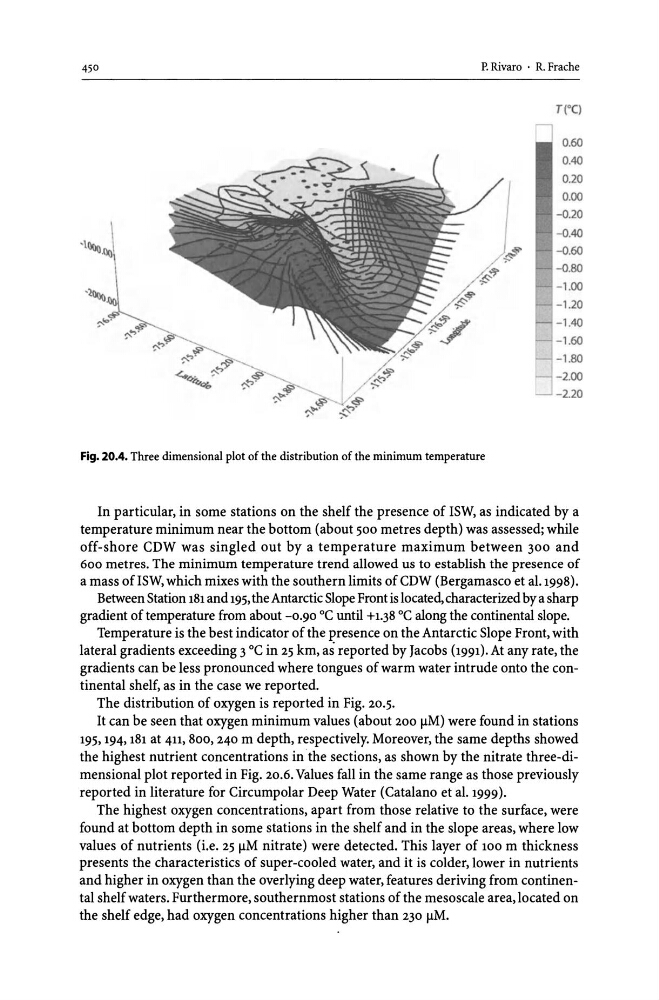
Fig. 20.4. Three dimensional plot of the distribution of the minimum temperature
In particular, in some stations on the shelf the presence of ISW, as indicated by a
temperature minimum near the bottom (about 500 metres depth) was assessed; while
off-shore CDW was singled out by a temperature maximum between 300 and
600 metres. The minimum temperature trend allowed us to establish the presence of
a mass of ISW, which mixes with the southern limits of CDW (Bergamasco et al. 1998).
Between Station 181 and 195, the Antarctic Slope Front is located, characterized by a sharp
gradient of temperature from about -0.90 °C until +1.38 °C along the continental slope.
Temperature is the best indicator of the presence on the Antarctic Slope Front, with
lateral gradients exceeding 3 °C in 25 km, as reported by Jacobs (1991). At any rate, the
gradients can be less pronounced where tongues of warm water intrude onto the continental shelf, as in the case we reported.
The distribution of oxygen is reported in Fig. 20.5.
It can be seen that oxygen minimum values (about 200 jlM) were found in stations
195,194,181 at 411, 800, 240 m depth, respectively. Moreover, the same depths showed
the highest nutrient concentrations in the sections, as shown by the nitrate three-dimensional plot reported in Fig. 20.6. Values fall in the same range as those previously
reported in literature for Circumpolar Deep Water (Catalano et al. 1999).
The highest oxygen concentrations, apart from those relative to the surface, were
found at bottom depth in some stations in the shelf and in the slope areas, where low
values of nutrients (i.e. 25 jlM nitrate) were detected. This layer of 100 m thickness
presents the characteristics of super-cooled water, and it is colder, lower in nutrients
and higher in oxygen than the overlying deep water, features deriving from continental shelf waters. Furthermore, southernmost stations of the mesoscale area, located on
the shelf edge, had oxygen concentrations higher than 230 jlM.
~<>~Q(o
P. Rivaro . R. Frache
noel
0.60
0.40
0.20
0.00
- 0.20
-0.40
-0.60
- 1.00
- 1.20
-1.40
- 1.60
- 1.80
- 2.00
- 2.20
Fig. 20.4. Three dimensional plot of the distribution of the minimum temperature
In particular, in some stations on the shelf the presence of ISW, as indicated by a
temperature minimum near the bottom (about 500 metres depth) was assessed; while
off-shore CDW was singled out by a temperature maximum between 300 and
600 metres. The minimum temperature trend allowed us to establish the presence of
a mass of ISW, which mixes with the southern limits of CDW (Bergamasco et al. 1998).
Between Station 181 and 195, the Antarctic Slope Front is located, characterized by a sharp
gradient of temperature from about -0.90 °C until +1.38 °C along the continental slope.
Temperature is the best indicator of the presence on the Antarctic Slope Front, with
lateral gradients exceeding 3 °C in 25 km, as reported by Jacobs (1991). At any rate, the
gradients can be less pronounced where tongues of warm water intrude onto the continental shelf, as in the case we reported.
The distribution of oxygen is reported in Fig. 20.5.
It can be seen that oxygen minimum values (about 200 jlM) were found in stations
195,194,181 at 411, 800, 240 m depth, respectively. Moreover, the same depths showed
the highest nutrient concentrations in the sections, as shown by the nitrate three-dimensional plot reported in Fig. 20.6. Values fall in the same range as those previously
reported in literature for Circumpolar Deep Water (Catalano et al. 1999).
The highest oxygen concentrations, apart from those relative to the surface, were
found at bottom depth in some stations in the shelf and in the slope areas, where low
values of nutrients (i.e. 25 jlM nitrate) were detected. This layer of 100 m thickness
presents the characteristics of super-cooled water, and it is colder, lower in nutrients
and higher in oxygen than the overlying deep water, features deriving from continental shelf waters. Furthermore, southernmost stations of the mesoscale area, located on
the shelf edge, had oxygen concentrations higher than 230 jlM.