

CHAPTER 15 . Toxic Effects of Organometallic Compounds towards Marine Biota
355
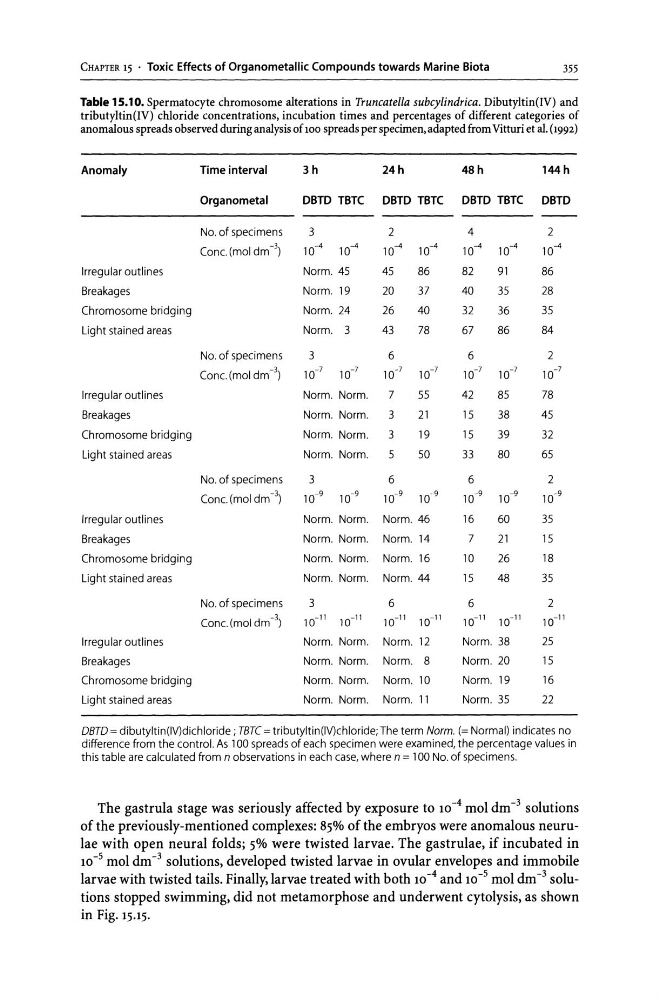
Table 15.10. Spermatocyte chromosome alterations in Truncatella subcylindrica. Dibutyltin{IV) and
tributyltin{IV) chloride concentrations, incubation times and percentages of different categories of
anomalous spreads observed during analysis of 100 spreads per specimen, adapted from Vitturi et al. (1992)
Anomaly
Time interval
3h
24h
48h
144 h
Organometal
DBTD TBTC
DBTD TBTC
DBTD TBTC
DBTD
No. of specimens
3
2
4
2
Cone. (mol dm -3)
10- 4 10- 4
10-4 10- 4
10- 4 10-4
10- 4
Irregular outlines
Norm. 45
45
86
82
91
86
Breakages
Norm. 19
20
37
40
35
28
Chromosome bridging
Norm. 24
26
40
32
36
35
Light stained areas
Norm. 3
43
78
67
86
84
No. of specimens
3
6
6
2
Cone. (mol dm -3)
10- 7 10- 7
10- 7 10- 7
10- 7 10- 7
10- 7
Irregular outlines
Norm. Norm.
7
55
42
85
78
Breakages
Norm. Norm.
3
21
15
38
45
Chromosome bridging
Norm. Norm.
3
19
15
39
32
Light stained areas
Norm. Norm.
5
50
33
80
65
No. of specimens
3
6
6
2
Cone. (mol dm -3)
10- 9 10- 9
10- 9 10- 9
10- 9 10- 9
10- 9
Irregular outlines
Norm. Norm. Norm. 46
16
60
35
Breakages
Norm. Norm. Norm. 14
7
21
15
Chromosome bridging
Norm. Norm. Norm. 16
10
26
18
Light stained areas
Norm. Norm. Norm. 44
15
48
35
No. of specimens
3
6
6
2
Cone. (mol dm -3)
10- 11 10- 11
10- 11 10- 11
10- 11 10- 11
10- 11
Irregular outlines
Norm. Norm. Norm. 12
Norm. 38
25
Breakages
Norm. Norm. Norm. 8
Norm. 20
15
Chromosome bridging
Norm. Norm. Norm. 10
Norm. 19
16
Light stained areas
Norm. Norm. Norm. 11
Norm. 35
22
OBTD = dibutyltin(lV)dichloride ; TBTC = tributyltin(lV)chloride; The term Norm. (= Normal) indicates no
difference from the control. As 100 spreads of each specimen were examined, the percentage values in
this table are calculated from n observations in each case, where n = 100 No. of specimens.
The gastrula stage was seriously affected by exposure to 10- 4 mol dm -3 solutions
of the previously-mentioned complexes: 85% of the embryos were anomalous neurulae with open neural folds; 5% were twisted larvae. The gastrulae, if incubated in
10 -5 mol dm- 3 solutions, developed twisted larvae in ovular envelopes and immobile
larvae with twisted tails. Finally, larvae treated with both 10 -4 and 10 -5 mol dm -3 solutions stopped swimming, did not metamorphose and underwent cytolysis, as shown
in Fig. 15.15.
355
Table 15.10. Spermatocyte chromosome alterations in Truncatella subcylindrica. Dibutyltin{IV) and
tributyltin{IV) chloride concentrations, incubation times and percentages of different categories of
anomalous spreads observed during analysis of 100 spreads per specimen, adapted from Vitturi et al. (1992)
Anomaly
Time interval
3h
24h
48h
144 h
Organometal
DBTD TBTC
DBTD TBTC
DBTD TBTC
DBTD
No. of specimens
3
2
4
2
Cone. (mol dm -3)
10- 4 10- 4
10-4 10- 4
10- 4 10-4
10- 4
Irregular outlines
Norm. 45
45
86
82
91
86
Breakages
Norm. 19
20
37
40
35
28
Chromosome bridging
Norm. 24
26
40
32
36
35
Light stained areas
Norm. 3
43
78
67
86
84
No. of specimens
3
6
6
2
Cone. (mol dm -3)
10- 7 10- 7
10- 7 10- 7
10- 7 10- 7
10- 7
Irregular outlines
Norm. Norm.
7
55
42
85
78
Breakages
Norm. Norm.
3
21
15
38
45
Chromosome bridging
Norm. Norm.
3
19
15
39
32
Light stained areas
Norm. Norm.
5
50
33
80
65
No. of specimens
3
6
6
2
Cone. (mol dm -3)
10- 9 10- 9
10- 9 10- 9
10- 9 10- 9
10- 9
Irregular outlines
Norm. Norm. Norm. 46
16
60
35
Breakages
Norm. Norm. Norm. 14
7
21
15
Chromosome bridging
Norm. Norm. Norm. 16
10
26
18
Light stained areas
Norm. Norm. Norm. 44
15
48
35
No. of specimens
3
6
6
2
Cone. (mol dm -3)
10- 11 10- 11
10- 11 10- 11
10- 11 10- 11
10- 11
Irregular outlines
Norm. Norm. Norm. 12
Norm. 38
25
Breakages
Norm. Norm. Norm. 8
Norm. 20
15
Chromosome bridging
Norm. Norm. Norm. 10
Norm. 19
16
Light stained areas
Norm. Norm. Norm. 11
Norm. 35
22
OBTD = dibutyltin(lV)dichloride ; TBTC = tributyltin(lV)chloride; The term Norm. (= Normal) indicates no
difference from the control. As 100 spreads of each specimen were examined, the percentage values in
this table are calculated from n observations in each case, where n = 100 No. of specimens.
The gastrula stage was seriously affected by exposure to 10- 4 mol dm -3 solutions
of the previously-mentioned complexes: 85% of the embryos were anomalous neurulae with open neural folds; 5% were twisted larvae. The gastrulae, if incubated in
10 -5 mol dm- 3 solutions, developed twisted larvae in ovular envelopes and immobile
larvae with twisted tails. Finally, larvae treated with both 10 -4 and 10 -5 mol dm -3 solutions stopped swimming, did not metamorphose and underwent cytolysis, as shown
in Fig. 15.15.