

314
M. R. Preston
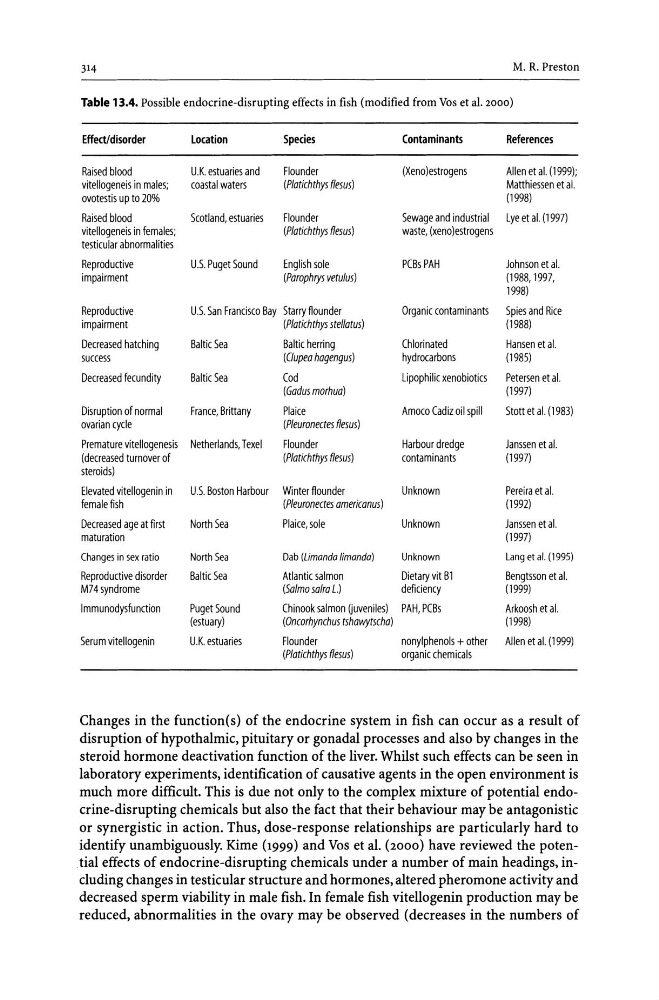
Table 13.4. Possible endocrine-disrupting effects in fish (modified from Vos et al. 2000)
Effect/disorder
Location
Species
Contaminants
References
Raised blood
U.K. estuaries and
Flounder
(Xeno)estrogens
Allen et al. (1999);
viteliogeneis in males;
coastal waters
(Platichthys f/esus)
Manhiessen et al.
ovotestis up to 20%
(1998)
Raised blood
Scotland, estuaries
Flounder
Sewage and industrial
Lye et al. (1997)
viteliogeneis in females;
(Platichthys f/esus)
waste, (xeno)estrogens
testicular abnormalities
Reproductive
U.s. Puget Sound
English sole
PCBs PAH
Johnson et al.
impairment
(Parophrys vetulus)
(1988,1997,
1998)
Reproductive
U.s. San Francisco Bay Starry flounder
Organic contaminants
Spies and Rice
impairment
(Platichthys stellatus)
(1988)
Decreased hatching
Baltic Sea
Baltic herring
Chlorinated
Hansen et al.
success
(C1upea hagengus)
hydrocarbons
(1985)
Decreased fecundity
Baltic Sea
Cod
Lipophilic xenobiotics
Petersen et al.
(Gadus morhua)
(1997)
Disruption of normal
France, Brittany
Plaice
Amoco Cadiz oil spill
Stott et al. (1983)
ovarian cycle
(Pleuronectes f/esus)
Premature vitellogenesis Netherlands, Texel
Flounder
Harbour dredge
Janssen et al.
(decreased turnover of
(Platichthys flesus)
contaminants
(1997)
steroids)
Elevated viteliogenin in
U.s. Boston Harbour Winter flounder
Unknown
Pereira et al.
female fish
(Pleuronectes americanus)
(1992)
Decreased age at first
North Sea
Plaice, sole
Unknown
Janssen et al.
maturation
(1997)
Changes in sex ratio
North Sea
Dab (Limanda limanda)
Unknown
Lang et al. (1995)
Reproductive disorder
Baltic Sea
Atlantic salmon
Dietary vit B 1
Bengtsson et al.
M74 syndrome
(Salmo salra L.)
deficiency
(1999)
Immunodysfunction
Puget Sound
Chinook salmon (juveniles) PAH, PCBs
Arkoosh et al.
(estuary)
(Oncorhynchus tshawytscha)
(1998)
Serum viteliogenin
U.K. estuaries
Flounder
nonylphenols + other Alien et al. (1999)
(Platichthys flesus)
organic chemicals
Changes in the function(s) of the endocrine system in fish can occur as a result of
disruption of hypothalmic, pituitary or gonadal processes and also by changes in the
steroid hormone deactivation function of the liver. Whilst such effects can be seen in
laboratory experiments, identification of causative agents in the open environment is
much more difficult. This is due not only to the complex mixture of potential endocrine-disrupting chemicals but also the fact that their behaviour may be antagonistic
or synergistic in action. Thus, dose-response relationships are particularly hard to
identify unambiguously. Kime (1999) and Vos et al. (2000) have reviewed the potential effects of endocrine-disrupting chemicals under a number of main headings, including changes in testicular structure and hormones, altered pheromone activity and
decreased sperm viability in male fish. In female fish vitellogenin production may be
reduced, abnormalities in the ovary may be observed (decreases in the numbers of
M. R. Preston
Table 13.4. Possible endocrine-disrupting effects in fish (modified from Vos et al. 2000)
Effect/disorder
Location
Species
Contaminants
References
Raised blood
U.K. estuaries and
Flounder
(Xeno)estrogens
Allen et al. (1999);
viteliogeneis in males;
coastal waters
(Platichthys f/esus)
Manhiessen et al.
ovotestis up to 20%
(1998)
Raised blood
Scotland, estuaries
Flounder
Sewage and industrial
Lye et al. (1997)
viteliogeneis in females;
(Platichthys f/esus)
waste, (xeno)estrogens
testicular abnormalities
Reproductive
U.s. Puget Sound
English sole
PCBs PAH
Johnson et al.
impairment
(Parophrys vetulus)
(1988,1997,
1998)
Reproductive
U.s. San Francisco Bay Starry flounder
Organic contaminants
Spies and Rice
impairment
(Platichthys stellatus)
(1988)
Decreased hatching
Baltic Sea
Baltic herring
Chlorinated
Hansen et al.
success
(C1upea hagengus)
hydrocarbons
(1985)
Decreased fecundity
Baltic Sea
Cod
Lipophilic xenobiotics
Petersen et al.
(Gadus morhua)
(1997)
Disruption of normal
France, Brittany
Plaice
Amoco Cadiz oil spill
Stott et al. (1983)
ovarian cycle
(Pleuronectes f/esus)
Premature vitellogenesis Netherlands, Texel
Flounder
Harbour dredge
Janssen et al.
(decreased turnover of
(Platichthys flesus)
contaminants
(1997)
steroids)
Elevated viteliogenin in
U.s. Boston Harbour Winter flounder
Unknown
Pereira et al.
female fish
(Pleuronectes americanus)
(1992)
Decreased age at first
North Sea
Plaice, sole
Unknown
Janssen et al.
maturation
(1997)
Changes in sex ratio
North Sea
Dab (Limanda limanda)
Unknown
Lang et al. (1995)
Reproductive disorder
Baltic Sea
Atlantic salmon
Dietary vit B 1
Bengtsson et al.
M74 syndrome
(Salmo salra L.)
deficiency
(1999)
Immunodysfunction
Puget Sound
Chinook salmon (juveniles) PAH, PCBs
Arkoosh et al.
(estuary)
(Oncorhynchus tshawytscha)
(1998)
Serum viteliogenin
U.K. estuaries
Flounder
nonylphenols + other Alien et al. (1999)
(Platichthys flesus)
organic chemicals
Changes in the function(s) of the endocrine system in fish can occur as a result of
disruption of hypothalmic, pituitary or gonadal processes and also by changes in the
steroid hormone deactivation function of the liver. Whilst such effects can be seen in
laboratory experiments, identification of causative agents in the open environment is
much more difficult. This is due not only to the complex mixture of potential endocrine-disrupting chemicals but also the fact that their behaviour may be antagonistic
or synergistic in action. Thus, dose-response relationships are particularly hard to
identify unambiguously. Kime (1999) and Vos et al. (2000) have reviewed the potential effects of endocrine-disrupting chemicals under a number of main headings, including changes in testicular structure and hormones, altered pheromone activity and
decreased sperm viability in male fish. In female fish vitellogenin production may be
reduced, abnormalities in the ovary may be observed (decreases in the numbers of