

CHAPTER 7 . Sedimentary Geochemistry of the Carbonate and Sulphide Systems
171
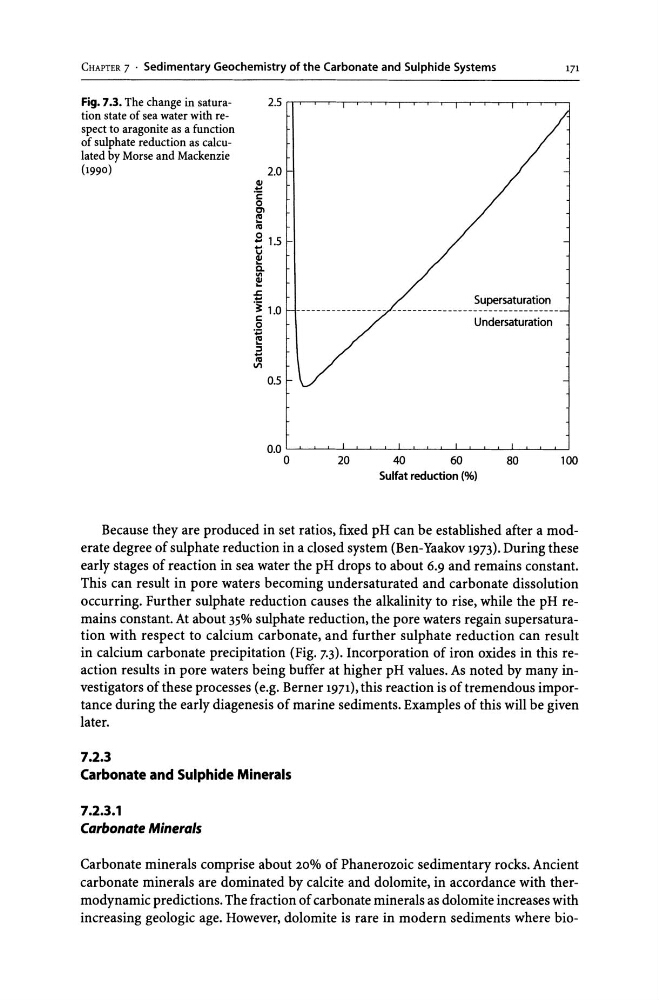
Fig. 7.3. The change in satura2.5 r r Irr--,--,--,-,-,-,----r--,--,--,--,,.,,.-r-r-,--~.._.,...,
tion state of sea water with respect to aragonite as a function
of sulphate reduction as calculated by Morse and Mackenzie
(1990)
2.0
l!!
'c o en
e
..
B 15
i .
a.
~
.r:. ...
. ~ 1.0
I:
o
.~
:::I
10
III
0.5
0.0 LI -,---,---,---'--,---,--,---'--,--,--,---'--,--,--,--'--,--,-.L....J
o
20
40
60
80
100
Sulfat reduction (%)
Because they are produced in set ratios, fixed pH can be established after a moderate degree of sulphate reduction in a closed system (Ben-Yaakov 1973). During these
early stages of reaction in sea water the pH drops to about 6.9 and remains constant.
This can result in pore waters becoming undersaturated and carbonate dissolution
occurring. Further sulphate reduction causes the alkalinity to rise, while the pH remains constant. At about 35% sulphate reduction, the pore waters regain supersaturation with respect to calcium carbonate, and further sulphate reduction can result
in calcium carbonate precipitation (Fig. 7.3). Incorporation of iron oxides in this reaction results in pore waters being buffer at higher pH values. As noted by many investigators of these processes (e.g. Berner 1971), this reaction is of tremendous importance during the early diagenesis of marine sediments. Examples of this will be given
later.
7.2.3
Carbonate and Sulphide Minerals
7.2.3.1
Carbonate Minerals
Carbonate minerals comprise about 20% of Phanerozoic sedimentary rocks. Ancient
carbonate minerals are dominated by calcite and dolomite, in accordance with thermodynamic predictions. The fraction of carbonate minerals as dolomite increases with
increasing geologic age. However, dolomite is rare in modern sediments where bio-
171
Fig. 7.3. The change in satura2.5 r r Irr--,--,--,-,-,-,----r--,--,--,--,,.,,.-r-r-,--~.._.,...,
tion state of sea water with respect to aragonite as a function
of sulphate reduction as calculated by Morse and Mackenzie
(1990)
2.0
l!!
'c o en
e
..
B 15
i .
a.
~
.r:. ...
. ~ 1.0
I:
o
.~
:::I
10
III
0.5
0.0 LI -,---,---,---'--,---,--,---'--,--,--,---'--,--,--,--'--,--,-.L....J
o
20
40
60
80
100
Sulfat reduction (%)
Because they are produced in set ratios, fixed pH can be established after a moderate degree of sulphate reduction in a closed system (Ben-Yaakov 1973). During these
early stages of reaction in sea water the pH drops to about 6.9 and remains constant.
This can result in pore waters becoming undersaturated and carbonate dissolution
occurring. Further sulphate reduction causes the alkalinity to rise, while the pH remains constant. At about 35% sulphate reduction, the pore waters regain supersaturation with respect to calcium carbonate, and further sulphate reduction can result
in calcium carbonate precipitation (Fig. 7.3). Incorporation of iron oxides in this reaction results in pore waters being buffer at higher pH values. As noted by many investigators of these processes (e.g. Berner 1971), this reaction is of tremendous importance during the early diagenesis of marine sediments. Examples of this will be given
later.
7.2.3
Carbonate and Sulphide Minerals
7.2.3.1
Carbonate Minerals
Carbonate minerals comprise about 20% of Phanerozoic sedimentary rocks. Ancient
carbonate minerals are dominated by calcite and dolomite, in accordance with thermodynamic predictions. The fraction of carbonate minerals as dolomite increases with
increasing geologic age. However, dolomite is rare in modern sediments where bio-