

166
J. W.Morse
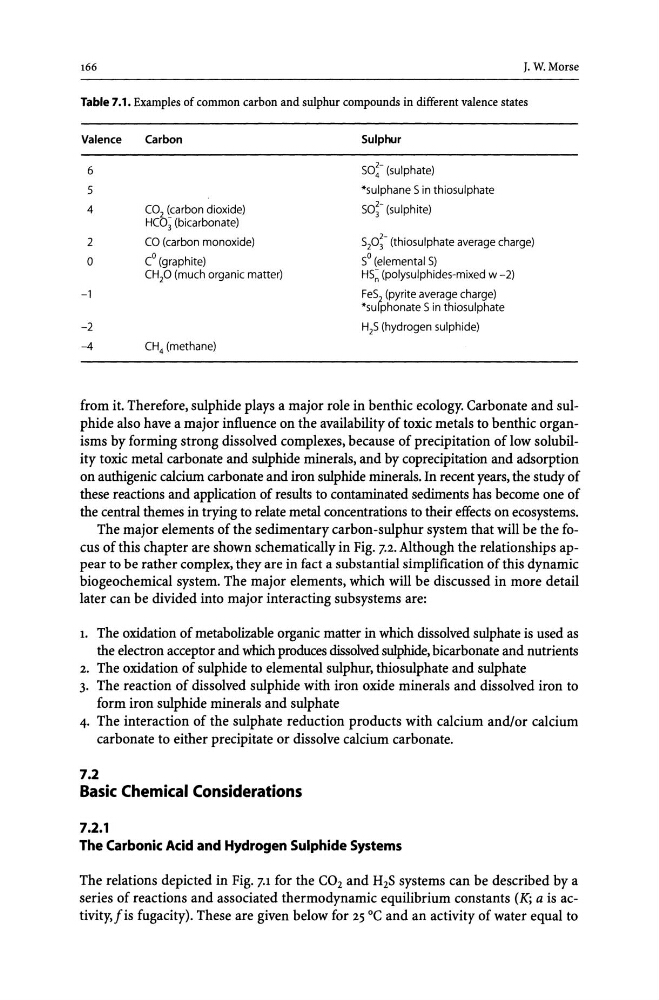
Table 7.1. Examples of common carbon and sulphur compounds in different valence states
Valence
Carbon
Sulphur
6
SO~- (sulphate)
5
*sulphane S in thiosulphate
4
CO 2 (carbon dioxide)
HCO; (bicarbonate)
50~- (sulphite)
2
CO (carbon monoxide)
520~- (thiosulphate average charge)
0
CO (graphite)
SO (elemental 5)
CHP (much organic matter)
H5~ (polysulphides-mixed w -2)
-1
Fe5 2 (pyrite average charge)
*sulphonate 5 in thiosulphate
-2
H 2 5 (hydrogen sulphide)
-4
CH 4 (methane)
from it. Therefore, sulphide plays a major role in benthic ecology. Carbonate and sulphide also have a major influence on the availability of toxic metals to benthic organisms by forming strong dissolved complexes, because of precipitation of low solubility toxic metal carbonate and sulphide minerals, and by coprecipitation and adsorption
on authigenic calcium carbonate and iron sulphide minerals. In recent years, the study of
these reactions and application of results to contaminated sediments has become one of
the central themes in trying to relate metal concentrations to their effects on ecosystems.
The major elements of the sedimentary carbon-sulphur system that will be the focus of this chapter are shown schematically in Fig. 7.2. Although the relationships appear to be rather complex, they are in fact a substantial simplification of this dynamic
biogeochemical system. The major elements, which will be discussed in more detail
later can be divided into major interacting subsystems are:
1. The oxidation of metabolizable organic matter in which dissolved sulphate is used as
the electron acceptor and which produces dissolved sulphide, bicarbonate and nutrients
2. The oxidation of sulphide to elemental sulphur, thiosulphate and sulphate
3. The reaction of dissolved sulphide with iron oxide minerals and dissolved iron to
form iron sulphide minerals and sulphate
4. The interaction of the sulphate reduction products with calcium and/or calcium
carbonate to either precipitate or dissolve calcium carbonate.
7.2
Basic Chemical Considerations
7.2.1
The Carbonic Acid and Hydrogen Sulphide Systems
The relations depicted in Fig. 7.1 for the CO2 and H2S systems can be described by a
series of reactions and associated thermodynamic equilibrium constants (K; a is activity,f is fugacity). These are given below for 25°C and an activity of water equal to
J. W.Morse
Table 7.1. Examples of common carbon and sulphur compounds in different valence states
Valence
Carbon
Sulphur
6
SO~- (sulphate)
5
*sulphane S in thiosulphate
4
CO 2 (carbon dioxide)
HCO; (bicarbonate)
50~- (sulphite)
2
CO (carbon monoxide)
520~- (thiosulphate average charge)
0
CO (graphite)
SO (elemental 5)
CHP (much organic matter)
H5~ (polysulphides-mixed w -2)
-1
Fe5 2 (pyrite average charge)
*sulphonate 5 in thiosulphate
-2
H 2 5 (hydrogen sulphide)
-4
CH 4 (methane)
from it. Therefore, sulphide plays a major role in benthic ecology. Carbonate and sulphide also have a major influence on the availability of toxic metals to benthic organisms by forming strong dissolved complexes, because of precipitation of low solubility toxic metal carbonate and sulphide minerals, and by coprecipitation and adsorption
on authigenic calcium carbonate and iron sulphide minerals. In recent years, the study of
these reactions and application of results to contaminated sediments has become one of
the central themes in trying to relate metal concentrations to their effects on ecosystems.
The major elements of the sedimentary carbon-sulphur system that will be the focus of this chapter are shown schematically in Fig. 7.2. Although the relationships appear to be rather complex, they are in fact a substantial simplification of this dynamic
biogeochemical system. The major elements, which will be discussed in more detail
later can be divided into major interacting subsystems are:
1. The oxidation of metabolizable organic matter in which dissolved sulphate is used as
the electron acceptor and which produces dissolved sulphide, bicarbonate and nutrients
2. The oxidation of sulphide to elemental sulphur, thiosulphate and sulphate
3. The reaction of dissolved sulphide with iron oxide minerals and dissolved iron to
form iron sulphide minerals and sulphate
4. The interaction of the sulphate reduction products with calcium and/or calcium
carbonate to either precipitate or dissolve calcium carbonate.
7.2
Basic Chemical Considerations
7.2.1
The Carbonic Acid and Hydrogen Sulphide Systems
The relations depicted in Fig. 7.1 for the CO2 and H2S systems can be described by a
series of reactions and associated thermodynamic equilibrium constants (K; a is activity,f is fugacity). These are given below for 25°C and an activity of water equal to