

114
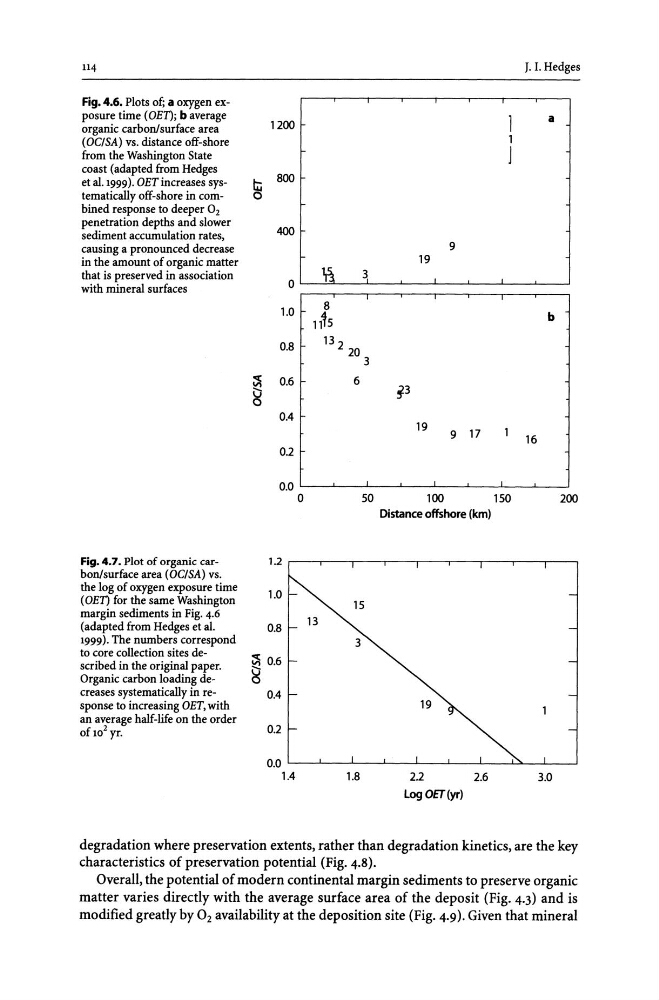
Fig. 4.6. Plots of; a oxygen exposure time (OET); b average
organic carbon/surface area
(OC/SA) vs. distance off-shore
from the Washington State
coast (adapted from Hedges
et al.1999). OET increases systematically off-shore in combined response to deeper O2
penetration depths and slower
sediment accumulation rates,
causing a pronounced decrease
in the amount of organic matter
that is preserved in association
with mineral surfaces
Fig. 4.7. Plot of organic carbon/surface area (OC/SA) vs.
the log of oxygen exposure time
(OET) for the same Washington
margin sediments in Fig. 4.6
(adapted from Hedges et al.
1999). The numbers correspond
to core collection sites described in the original paper.
Organic carbon loading decreases systematically in response to increasing OET, with
an average half-life on the order
of 10 2 yr.
~
1200
800
400
o I ~
3 1
1.0
0.8
8
llt5
13 2 20 3
J.1. Hedges
a
9
19
b
:'i 0.6
6
j3
g
0.4
19
9 17
16
0.2
0.0 L I _ - - - ' _ _ .L..._--'-_---' _ _ .L..._--'-_---'_--'
o
50
100
150
200
Distance offshore (km)
1.2 r---,---,----.-----,----.------y----,--r---.
1.0
0.8
:'i 0.6
g
0.4
19
0.2
0.0 I
1'1.4
1.8
2.2
2.6
3.0
logOET(yr)
degradation where preservation extents, rather than degradation kinetics, are the key
characteristics of preservation potential (Fig. 4.8).
Overall, the potential of modern continental margin sediments to preserve organic
matter varies directly with the average surface area of the deposit (Fig. 4.3) and is
modified greatly by O2 availability at the deposition site (Fig. 4.9). Given that mineral
Fig. 4.6. Plots of; a oxygen exposure time (OET); b average
organic carbon/surface area
(OC/SA) vs. distance off-shore
from the Washington State
coast (adapted from Hedges
et al.1999). OET increases systematically off-shore in combined response to deeper O2
penetration depths and slower
sediment accumulation rates,
causing a pronounced decrease
in the amount of organic matter
that is preserved in association
with mineral surfaces
Fig. 4.7. Plot of organic carbon/surface area (OC/SA) vs.
the log of oxygen exposure time
(OET) for the same Washington
margin sediments in Fig. 4.6
(adapted from Hedges et al.
1999). The numbers correspond
to core collection sites described in the original paper.
Organic carbon loading decreases systematically in response to increasing OET, with
an average half-life on the order
of 10 2 yr.
~
1200
800
400
o I ~
3 1
1.0
0.8
8
llt5
13 2 20 3
J.1. Hedges
a
9
19
b
:'i 0.6
6
j3
g
0.4
19
9 17
16
0.2
0.0 L I _ - - - ' _ _ .L..._--'-_---' _ _ .L..._--'-_---'_--'
o
50
100
150
200
Distance offshore (km)
1.2 r---,---,----.-----,----.------y----,--r---.
1.0
0.8
:'i 0.6
g
0.4
19
0.2
0.0 I
1'1.4
1.8
2.2
2.6
3.0
logOET(yr)
degradation where preservation extents, rather than degradation kinetics, are the key
characteristics of preservation potential (Fig. 4.8).
Overall, the potential of modern continental margin sediments to preserve organic
matter varies directly with the average surface area of the deposit (Fig. 4.3) and is
modified greatly by O2 availability at the deposition site (Fig. 4.9). Given that mineral