

14.4 Waves at Coral Reefs
429
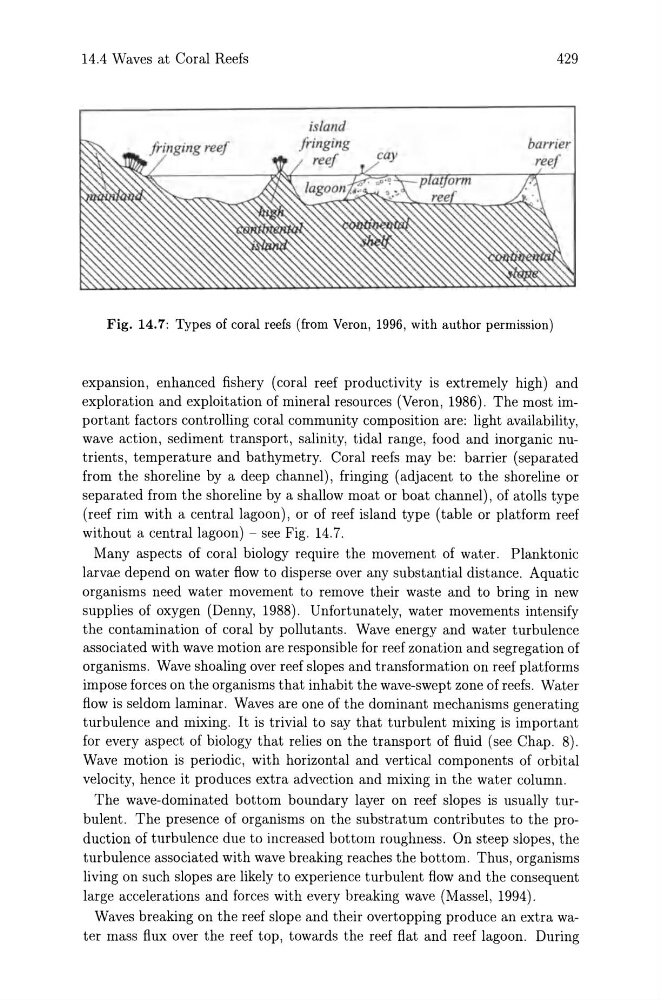
Fig. 14.7: Types of coral reefs (from Veron, 1996, with author permission)
expansion, enhanced fishery (coral reef productivity is extremely high) and
exploration and exploitation of mineral resources (Veron, 1986). The most important factors controlling coral community composition are: light availability,
wave action, sediment transport, salinity, tidal range, food and inorganic nutrients, temperature and bathymetry. Coral reefs may be: barrier (separated
from the shoreline by a deep channel), fringing (adjacent to the shoreline or
separated from the shoreline by a shallow moat or boat channel) , of atolls type
(reef rim with a central lagoon), or of reef island type (table or platform reef
without a central lagoon) - see Fig. 14.7.
Many aspects of coral biology require the movement of water. Planktonic
larvae depend on water flow to disperse over any substantial distance. Aquatic
organisms need water movement to remove their waste and to bring in new
supplies of oxygen (Denny, 1988) . Unfortunately, water movements intensify
the contamination of coral by pollutants. Wave energy and water turbulence
associated with wave motion are responsible for reef zonation and segregation of
organisms. Wave shoaling over reef slopes and transformation on reef platforms
impose forces on the organisms that inhabit the wave-swept zone of reefs. Water
flow is seldom laminar. Waves are one of the dominant mechanisms generating
turbulence and mixing. It is trivial to say that turbulent mixing is important
for every aspect of biology that relies on the transport of fluid (see Chap. 8).
Wave motion is periodic, with horizontal and vertical components of orbital
velocity, hence it produces extra advection and mixing in the water column.
The wave-dominated bottom boundary layer on reef slopes is usually turbulent. The presence of organisms on the substratum contributes to the production of turbulence due to increased bottom roughness. On steep slopes, the
turbulence associated with wave breaking reaches the bottom. Thus, organisms
living on such slopes are likely to experience turbulent flow and the consequent
large accelerations and forces with every breaking wave (Massel, 1994).
Waves breaking on the reef slope and their overtopping produce an extra water mass flux over the reef top, towards the reef flat and reef lagoon. During
429
Fig. 14.7: Types of coral reefs (from Veron, 1996, with author permission)
expansion, enhanced fishery (coral reef productivity is extremely high) and
exploration and exploitation of mineral resources (Veron, 1986). The most important factors controlling coral community composition are: light availability,
wave action, sediment transport, salinity, tidal range, food and inorganic nutrients, temperature and bathymetry. Coral reefs may be: barrier (separated
from the shoreline by a deep channel), fringing (adjacent to the shoreline or
separated from the shoreline by a shallow moat or boat channel) , of atolls type
(reef rim with a central lagoon), or of reef island type (table or platform reef
without a central lagoon) - see Fig. 14.7.
Many aspects of coral biology require the movement of water. Planktonic
larvae depend on water flow to disperse over any substantial distance. Aquatic
organisms need water movement to remove their waste and to bring in new
supplies of oxygen (Denny, 1988) . Unfortunately, water movements intensify
the contamination of coral by pollutants. Wave energy and water turbulence
associated with wave motion are responsible for reef zonation and segregation of
organisms. Wave shoaling over reef slopes and transformation on reef platforms
impose forces on the organisms that inhabit the wave-swept zone of reefs. Water
flow is seldom laminar. Waves are one of the dominant mechanisms generating
turbulence and mixing. It is trivial to say that turbulent mixing is important
for every aspect of biology that relies on the transport of fluid (see Chap. 8).
Wave motion is periodic, with horizontal and vertical components of orbital
velocity, hence it produces extra advection and mixing in the water column.
The wave-dominated bottom boundary layer on reef slopes is usually turbulent. The presence of organisms on the substratum contributes to the production of turbulence due to increased bottom roughness. On steep slopes, the
turbulence associated with wave breaking reaches the bottom. Thus, organisms
living on such slopes are likely to experience turbulent flow and the consequent
large accelerations and forces with every breaking wave (Massel, 1994).
Waves breaking on the reef slope and their overtopping produce an extra water mass flux over the reef top, towards the reef flat and reef lagoon. During