

422
14 Tides and Waves on Vegetated Coasts
e 1.0
0
=
~
0.9
>.
01)
.... 0.8
11)
= 11)
'0
11)
0.7
.~
0.6
Oil
S .... 0.5
0
Z
0.4
0.3
0.2
0.1
0.0
0
5
10
15
20
25
30
35
40
45
50
Distance from mangrove front (m)
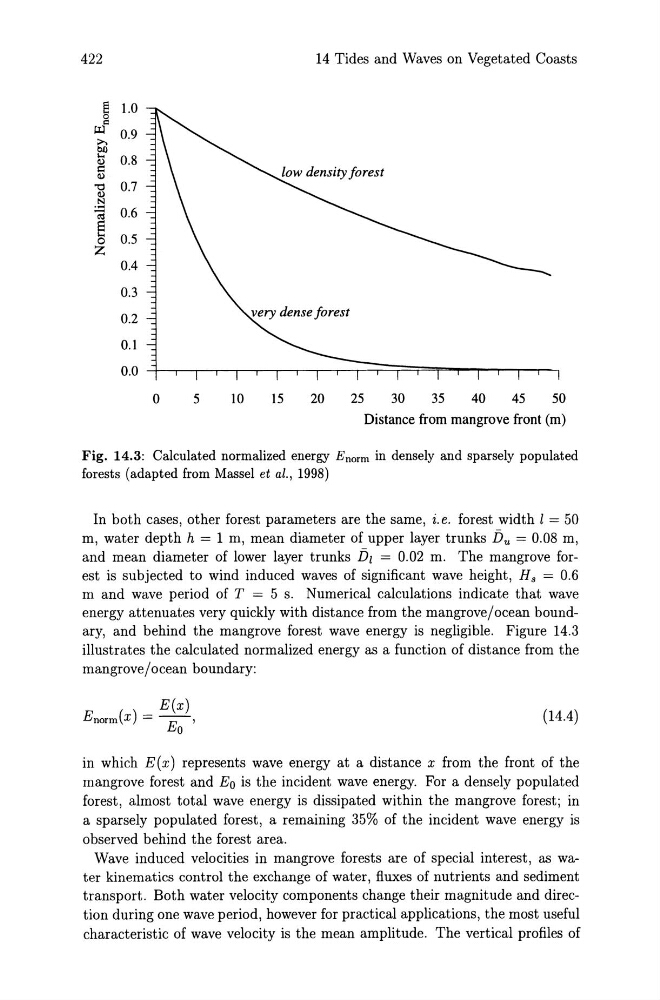
Fig. 14.3: Calculated normalized energy E norm in densely and sparsely populated
forests (adapted from Massel et al., 1998)
In both cases, other forest parameters are the same, i. e. forest width I = 50
m, water depth h = 1 m, mean diameter of upper layer trunks Du = 0.08 m,
and mean diameter of lower layer trunks Dl = 0.02 m. The mangrove forest is subjected to wind induced waves of significant wave height, Hs = 0.6
m and wave period of T = 5 s. Numerical calculations indicate that wave
energy attenuates very quickly with distance from the mangrove/ocean boundary, and behind the mangrove forest wave energy is negligible. Figure 14.3
illustrates the calculated normalized energy as a function of distance from the
mangrove / ocean boundary:
E(x)
Enorm(x) = Eo'
(14.4)
in which E (x) represents wave energy at a distance x from the front of the
mangrove forest and Eo is the incident wave energy. For a densely populated
forest, almost total wave energy is dissipated within the mangrove forest; in
a sparsely populated forest, a remaining 35% of the incident wave energy is
observed behind the forest area.
Wave induced velocities in mangrove forests are of special interest, as water kinematics control the exchange of water, fluxes of nutrients and sediment
transport. Both water velocity components change their magnitude and direction during one wave period, however for practical applications, the most useful
characteristic of wave velocity is the mean amplitude. The vertical profiles of
14 Tides and Waves on Vegetated Coasts
e 1.0
0
=
~
0.9
>.
01)
.... 0.8
11)
= 11)
'0
11)
0.7
.~
0.6
Oil
S .... 0.5
0
Z
0.4
0.3
0.2
0.1
0.0
0
5
10
15
20
25
30
35
40
45
50
Distance from mangrove front (m)
Fig. 14.3: Calculated normalized energy E norm in densely and sparsely populated
forests (adapted from Massel et al., 1998)
In both cases, other forest parameters are the same, i. e. forest width I = 50
m, water depth h = 1 m, mean diameter of upper layer trunks Du = 0.08 m,
and mean diameter of lower layer trunks Dl = 0.02 m. The mangrove forest is subjected to wind induced waves of significant wave height, Hs = 0.6
m and wave period of T = 5 s. Numerical calculations indicate that wave
energy attenuates very quickly with distance from the mangrove/ocean boundary, and behind the mangrove forest wave energy is negligible. Figure 14.3
illustrates the calculated normalized energy as a function of distance from the
mangrove / ocean boundary:
E(x)
Enorm(x) = Eo'
(14.4)
in which E (x) represents wave energy at a distance x from the front of the
mangrove forest and Eo is the incident wave energy. For a densely populated
forest, almost total wave energy is dissipated within the mangrove forest; in
a sparsely populated forest, a remaining 35% of the incident wave energy is
observed behind the forest area.
Wave induced velocities in mangrove forests are of special interest, as water kinematics control the exchange of water, fluxes of nutrients and sediment
transport. Both water velocity components change their magnitude and direction during one wave period, however for practical applications, the most useful
characteristic of wave velocity is the mean amplitude. The vertical profiles of