

13.2 Transport and Mixing in Estuaries
403
Light intensity/photosynthesis rate
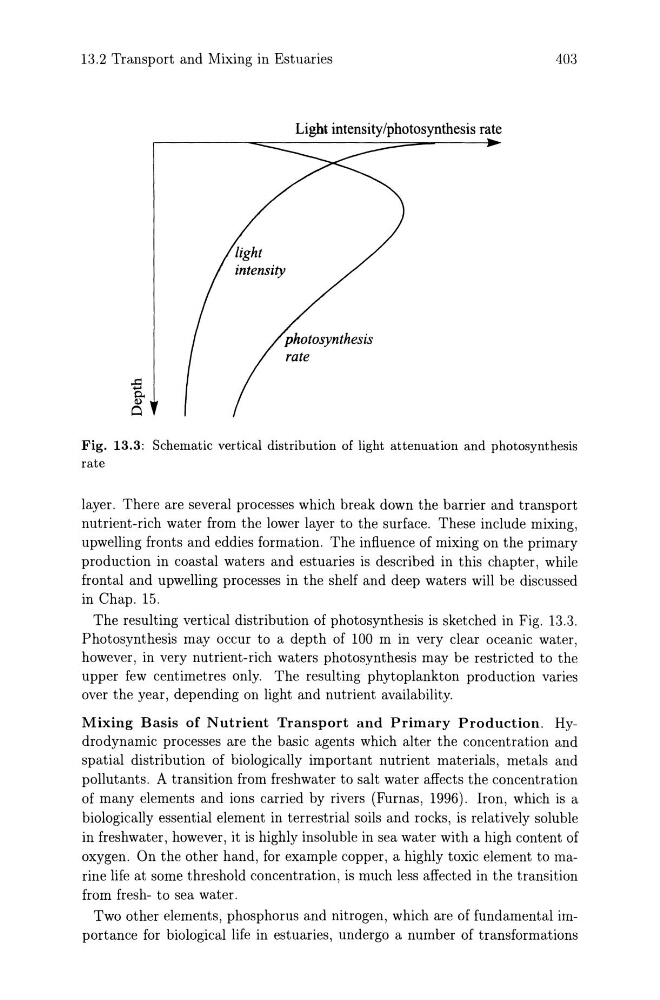
Fig. 13.3: Schematic vertical distribution of light attenuation and photosynthesis
rate
layer. There are several processes which break down the barrier and transport
nutrient-rich water from the lower layer to the surface. These include mixing,
upwelling fronts and eddies formation. The influence of mixing on the primary
production in coastal waters and estuaries is described in this chapter, while
frontal and upwelling processes in the shelf and deep waters will be discussed
in Chap. 15.
The resulting vertical distribution of photosynthesis is sketched in Fig. 13.3.
Photosynthesis may occur to a depth of 100 m in very clear oceanic water,
however, in very nutrient-rich waters photosynthesis may be restricted to the
upper few centimetres only. The resulting phytoplankton production varies
over the year, depending on light and nutrient availability.
Mixing Basis of Nutrient Transport and Primary Production. Hydrodynamic processes are the basic agents which alter the concentration and
spatial distribution of biologically important nutrient materials, metals and
pollutants. A transition from freshwater to salt water affects the concentration
of many elements and ions carried by rivers (Furnas, 1996). Iron, which is a
biologically essential element in terrestrial soils and rocks, is relatively soluble
in freshwater, however, it is highly insoluble in sea water with a high content of
oxygen. On the other hand, for example copper, a highly toxic element to marine life at some threshold concentration, is much less affected in the transition
from fresh- to sea water.
Two other elements, phosphorus and nitrogen, which are of fundamental importance for biological life in estuaries, undergo a number of transformations
403
Light intensity/photosynthesis rate
Fig. 13.3: Schematic vertical distribution of light attenuation and photosynthesis
rate
layer. There are several processes which break down the barrier and transport
nutrient-rich water from the lower layer to the surface. These include mixing,
upwelling fronts and eddies formation. The influence of mixing on the primary
production in coastal waters and estuaries is described in this chapter, while
frontal and upwelling processes in the shelf and deep waters will be discussed
in Chap. 15.
The resulting vertical distribution of photosynthesis is sketched in Fig. 13.3.
Photosynthesis may occur to a depth of 100 m in very clear oceanic water,
however, in very nutrient-rich waters photosynthesis may be restricted to the
upper few centimetres only. The resulting phytoplankton production varies
over the year, depending on light and nutrient availability.
Mixing Basis of Nutrient Transport and Primary Production. Hydrodynamic processes are the basic agents which alter the concentration and
spatial distribution of biologically important nutrient materials, metals and
pollutants. A transition from freshwater to salt water affects the concentration
of many elements and ions carried by rivers (Furnas, 1996). Iron, which is a
biologically essential element in terrestrial soils and rocks, is relatively soluble
in freshwater, however, it is highly insoluble in sea water with a high content of
oxygen. On the other hand, for example copper, a highly toxic element to marine life at some threshold concentration, is much less affected in the transition
from fresh- to sea water.
Two other elements, phosphorus and nitrogen, which are of fundamental importance for biological life in estuaries, undergo a number of transformations