

12.4 Propagation of the Pressure Pulse
387
t =0 x=O
x=l
x
B
t=5 ~I ____________ A~~~ ________ ~C~ ____________ ~.
x = 0
x = 25
x = 25 + I
x
B
t=~ ~I _________________________ A~~~ ________ ~~C~.
x = 0
x = ct n
x = ct n + I x
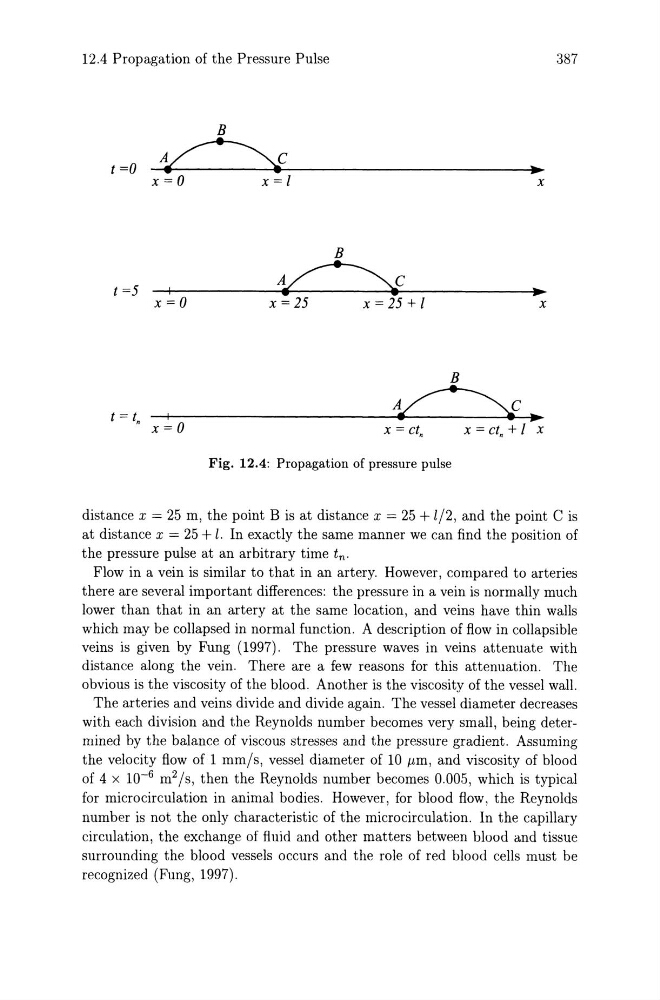
Fig. 12.4: Propagation of pressure pulse
distance x = 25 m, the point B is at distance x = 25 + 1/2, and the point C is
at distance x = 25 + 1. In exactly the same manner we can find the position of
the pressure pulse at an arbitrary time tn.
Flow in a vein is similar to that in an artery. However, compared to arteries
there are several important differences: the pressure in a vein is normally much
lower than that in an artery at the same location, and veins have thin walls
which may be collapsed in normal function. A description of flow in collapsible
veins is given by Fung (1997). The pressure waves in veins attenuate with
distance along the vein. There are a few reasons for this attenuation. The
obvious is the viscosity of the blood. Another is the viscosity of the vessel wall.
The arteries and veins divide and divide again. The vessel diameter decreases
with each division and the Reynolds number becomes very small, being determined by the balance of viscous stresses and the pressure gradient. Assuming
the velocity flow of 1 mm/s, vessel diameter of 10 /km, and viscosity of blood
of 4 x 10- 6 m 2 /s, then the Reynolds number becomes 0.005, which is typical
for microcirculation in animal bodies. However, for blood flow, the Reynolds
number is not the only characteristic of the microcirculation. In the capillary
circulation, the exchange of fluid and other matters between blood and tissue
surrounding the blood vessels occurs and the role of red blood cells must be
recognized (Fung, 1997).
387
t =0 x=O
x=l
x
B
t=5 ~I ____________ A~~~ ________ ~C~ ____________ ~.
x = 0
x = 25
x = 25 + I
x
B
t=~ ~I _________________________ A~~~ ________ ~~C~.
x = 0
x = ct n
x = ct n + I x
Fig. 12.4: Propagation of pressure pulse
distance x = 25 m, the point B is at distance x = 25 + 1/2, and the point C is
at distance x = 25 + 1. In exactly the same manner we can find the position of
the pressure pulse at an arbitrary time tn.
Flow in a vein is similar to that in an artery. However, compared to arteries
there are several important differences: the pressure in a vein is normally much
lower than that in an artery at the same location, and veins have thin walls
which may be collapsed in normal function. A description of flow in collapsible
veins is given by Fung (1997). The pressure waves in veins attenuate with
distance along the vein. There are a few reasons for this attenuation. The
obvious is the viscosity of the blood. Another is the viscosity of the vessel wall.
The arteries and veins divide and divide again. The vessel diameter decreases
with each division and the Reynolds number becomes very small, being determined by the balance of viscous stresses and the pressure gradient. Assuming
the velocity flow of 1 mm/s, vessel diameter of 10 /km, and viscosity of blood
of 4 x 10- 6 m 2 /s, then the Reynolds number becomes 0.005, which is typical
for microcirculation in animal bodies. However, for blood flow, the Reynolds
number is not the only characteristic of the microcirculation. In the capillary
circulation, the exchange of fluid and other matters between blood and tissue
surrounding the blood vessels occurs and the role of red blood cells must be
recognized (Fung, 1997).