

5.4 Harmonic Analysis and Prediction of Tides
181
Highest Astronomical Tide (HAT)
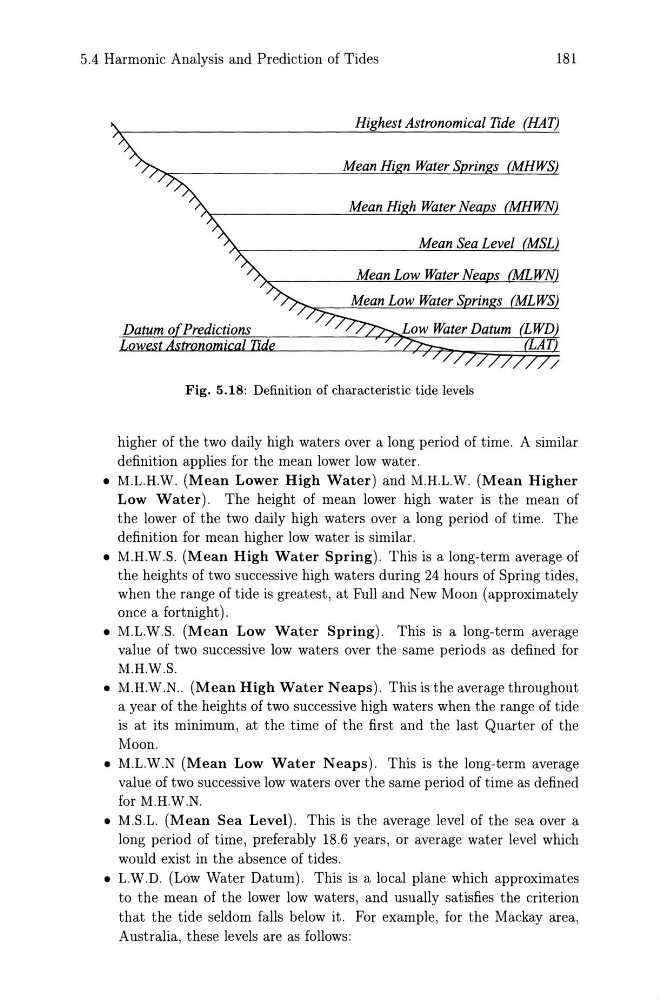
Fig. 5.18: Definition of characteristic tide levels
higher of the two daily high waters over a long period of time. A similar
definition applies for the mean lower low water.
• M.L.HW. (Mean Lower High Water) and M.H.L.W. (Mean Higher
Low Water). The height of mean lower high water is the mean of
the lower of the two daily high waters over a long period of time. The
definition for mean higher low water is similar.
• M.H.W.S. (Mean High Water Spring). This is a long-term average of
the heights of two successive high waters during 24 hours of Spring tides,
when the range of tide is greatest, at Full and New Moon (approximately
once a fortnight).
• M.L.W.S. (Mean Low Water Spring). This is a long-term average
value of two successive low waters over the same periods as defined for
M.H.W.S.
• M.H.W.N .. (Mean High Water Neaps). This is the average throughout
a year of the heights of two successive high waters when the range of tide
is at its minimum, at the time of the first and the last Quarter of the
Moon.
• M.L.W.N (Mean Low Water Neaps). This is the long-term average
value of two successive low waters over the same period of time as defined
for M.H.W.N.
• M.S.L. (Mean Sea Level). This is the average level of the sea over a
long period of time, preferably 18.6 years, or average water level which
would exist in the absence of tides.
• L.W.D. (Low Water Datum). This is a local plane which approximates
to the mean of the lower low waters, and usually satisfies the criterion
that the tide seldom falls below it. For example, for the Mackay area,
Australia, these levels are as follows:
181
Highest Astronomical Tide (HAT)
Fig. 5.18: Definition of characteristic tide levels
higher of the two daily high waters over a long period of time. A similar
definition applies for the mean lower low water.
• M.L.HW. (Mean Lower High Water) and M.H.L.W. (Mean Higher
Low Water). The height of mean lower high water is the mean of
the lower of the two daily high waters over a long period of time. The
definition for mean higher low water is similar.
• M.H.W.S. (Mean High Water Spring). This is a long-term average of
the heights of two successive high waters during 24 hours of Spring tides,
when the range of tide is greatest, at Full and New Moon (approximately
once a fortnight).
• M.L.W.S. (Mean Low Water Spring). This is a long-term average
value of two successive low waters over the same periods as defined for
M.H.W.S.
• M.H.W.N .. (Mean High Water Neaps). This is the average throughout
a year of the heights of two successive high waters when the range of tide
is at its minimum, at the time of the first and the last Quarter of the
Moon.
• M.L.W.N (Mean Low Water Neaps). This is the long-term average
value of two successive low waters over the same period of time as defined
for M.H.W.N.
• M.S.L. (Mean Sea Level). This is the average level of the sea over a
long period of time, preferably 18.6 years, or average water level which
would exist in the absence of tides.
• L.W.D. (Low Water Datum). This is a local plane which approximates
to the mean of the lower low waters, and usually satisfies the criterion
that the tide seldom falls below it. For example, for the Mackay area,
Australia, these levels are as follows: