

34
Marine Mammal Physiology: Requisites for Ocean Living
during a dive. The dive response and rates of O 2 store depletion are further detailed in
recent reviews (Ponganis et al. 2011; Davis 2014; Elsner 2015; Ponganis 2015). The decrease
in cardiac output and the distribution of the blood flow to tissues will also affect the magnitude and distribution of nitrogen uptake from the lungs at depth (Chapter 4). The range
and complexity of the dive response during free dives is illustrated for shallow versus
deep dives of a California sea lion in Figure 2.2.
2.2.3 Aerobic dive limits
The enhanced O 2 stores, the dive response, and the workload of muscle all combine to
contribute to the duration of aerobic metabolism during a dive and an animal’s aerobic
dive limit (ADL). Originally, an aerobic dive limit (Figure 2.3) was measured by determining post-dive blood lactate levels in Weddell seals (Kooyman et al. 1980, 1983). Importantly,
it was noted that most free dives (90%–97%) of Weddell seals were less than this limit,
and that dives beyond that limit were associated with longer surface intervals. Hence, the
concept developed that most dives were aerobic, and that it was the efficiency of aerobic
metabolism that allowed animals to dive frequently.
Although an ADL has only been determined in a few other marine mammals (Ponganis
et al. 1997a,c; Shaffer et al. 1997; Williams et al. 1999), the concept of an ADL and aerobic diving has been applied to multiple species and has become fundamental in the interpretation
Heart rate (beats min
–1
)
Trained head immersion
Trained dive
Time (min)
160
120
80
40
0
160
120
80
40
0
2
0
1
3
4
5
6
7
2
0
1
3
4
5
6
7
160
120
80
40
Forced submersion
0
0
1
2
4
5
6
7
3
0
40
80
120
160
0
40
80
120
160
0
40
80
120
160
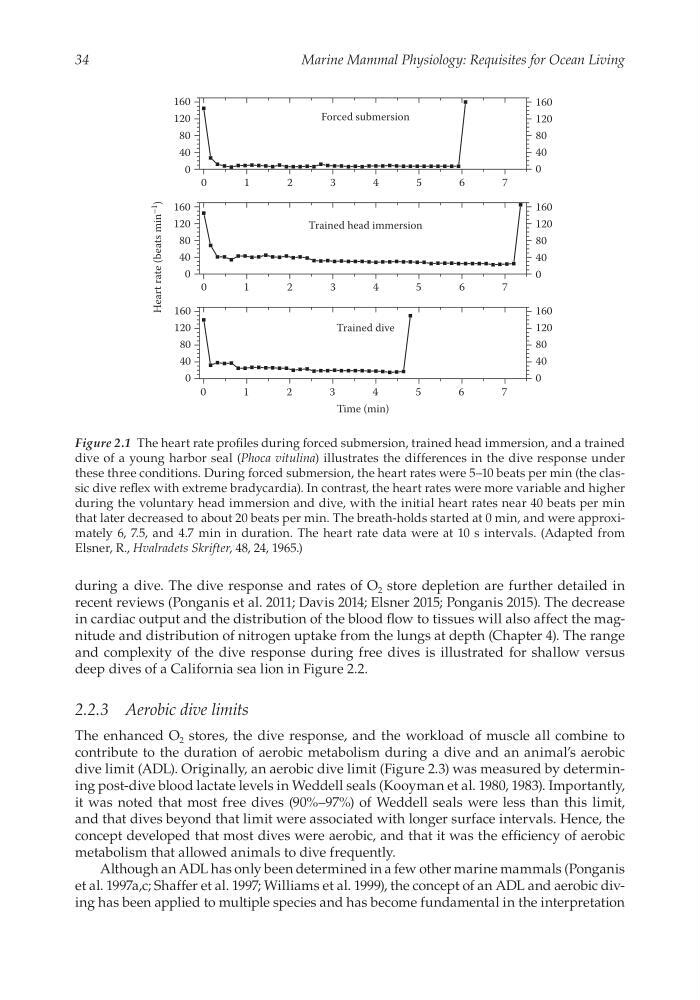
Figure 2.1 The heart rate profiles during forced submersion, trained head immersion, and a trained
dive of a young harbor seal (Phoca vitulina) illustrates the differences in the dive response under
these three conditions. During forced submersion, the heart rates were 5–10 beats per min (the classic dive reflex with extreme bradycardia). In contrast, the heart rates were more variable and higher
during the voluntary head immersion and dive, with the initial heart rates near 40 beats per min
that later decreased to about 20 beats per min. The breath-holds started at 0 min, and were approximately 6, 7.5, and 4.7 min in duration. The heart rate data were at 10 s intervals. (Adapted from
Elsner, R., Hvalradets Skrifter, 48, 24, 1965.)
Marine Mammal Physiology: Requisites for Ocean Living
during a dive. The dive response and rates of O 2 store depletion are further detailed in
recent reviews (Ponganis et al. 2011; Davis 2014; Elsner 2015; Ponganis 2015). The decrease
in cardiac output and the distribution of the blood flow to tissues will also affect the magnitude and distribution of nitrogen uptake from the lungs at depth (Chapter 4). The range
and complexity of the dive response during free dives is illustrated for shallow versus
deep dives of a California sea lion in Figure 2.2.
2.2.3 Aerobic dive limits
The enhanced O 2 stores, the dive response, and the workload of muscle all combine to
contribute to the duration of aerobic metabolism during a dive and an animal’s aerobic
dive limit (ADL). Originally, an aerobic dive limit (Figure 2.3) was measured by determining post-dive blood lactate levels in Weddell seals (Kooyman et al. 1980, 1983). Importantly,
it was noted that most free dives (90%–97%) of Weddell seals were less than this limit,
and that dives beyond that limit were associated with longer surface intervals. Hence, the
concept developed that most dives were aerobic, and that it was the efficiency of aerobic
metabolism that allowed animals to dive frequently.
Although an ADL has only been determined in a few other marine mammals (Ponganis
et al. 1997a,c; Shaffer et al. 1997; Williams et al. 1999), the concept of an ADL and aerobic diving has been applied to multiple species and has become fundamental in the interpretation
Heart rate (beats min
–1
)
Trained head immersion
Trained dive
Time (min)
160
120
80
40
0
160
120
80
40
0
2
0
1
3
4
5
6
7
2
0
1
3
4
5
6
7
160
120
80
40
Forced submersion
0
0
1
2
4
5
6
7
3
0
40
80
120
160
0
40
80
120
160
0
40
80
120
160
Figure 2.1 The heart rate profiles during forced submersion, trained head immersion, and a trained
dive of a young harbor seal (Phoca vitulina) illustrates the differences in the dive response under
these three conditions. During forced submersion, the heart rates were 5–10 beats per min (the classic dive reflex with extreme bradycardia). In contrast, the heart rates were more variable and higher
during the voluntary head immersion and dive, with the initial heart rates near 40 beats per min
that later decreased to about 20 beats per min. The breath-holds started at 0 min, and were approximately 6, 7.5, and 4.7 min in duration. The heart rate data were at 10 s intervals. (Adapted from
Elsner, R., Hvalradets Skrifter, 48, 24, 1965.)