

ATP
ATP
ATP
TCA
TCA
Glucose
Glycogen
Ketone
bodies
Glycerol
Lipolysis
B
e
ta
o
x
id
a
ti
o
n
Gluconeogenesis
Gluconeogenesis
Triglycerols
FFA
FFA
Acetyl CoA
Acetyl CoA
Acetyl CoA
MUSCLE
ADIPOSE TISSUE
(blubber layer)
BRAIN
LIVER
RBC
Amino acids
Protein
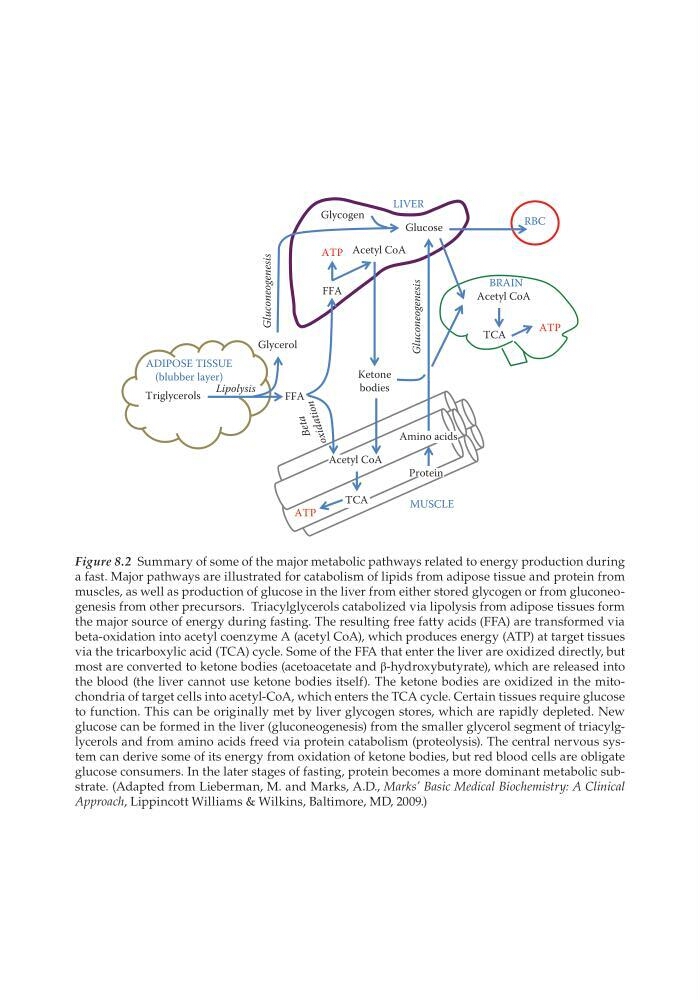
Figure 8.2 Summary of some of the major metabolic pathways related to energy production during
a fast. Major pathways are illustrated for catabolism of lipids from adipose tissue and protein from
muscles, as well as production of glucose in the liver from either stored glycogen or from gluconeogenesis from other precursors. Triacylglycerols catabolized via lipolysis from adipose tissues form
the major source of energy during fasting. The resulting free fatty acids (FFA) are transformed via
beta-oxidation into acetyl coenzyme A (acetyl CoA), which produces energy (ATP) at target tissues
via the tricarboxylic acid (TCA) cycle. Some of the FFA that enter the liver are oxidized directly, but
most are converted to ketone bodies (acetoacetate and β-hydroxybutyrate), which are released into
the blood (the liver cannot use ketone bodies itself). The ketone bodies are oxidized in the mitochondria of target cells into acetyl-CoA, which enters the TCA cycle. Certain tissues require glucose
to function. This can be originally met by liver glycogen stores, which are rapidly depleted. New
glucose can be formed in the liver (gluconeogenesis) from the smaller glycerol segment of triacylglycerols and from amino acids freed via protein catabolism (proteolysis). The central nervous system can derive some of its energy from oxidation of ketone bodies, but red blood cells are obligate
glucose consumers. In the later stages of fasting, protein becomes a more dominant metabolic substrate. (Adapted from Lieberman, M. and Marks, A.D., Marks’ Basic Medical Biochemistry: A Clinical
Approach, Lippincott Williams & Wilkins, Baltimore, MD, 2009.)
ATP
ATP
TCA
TCA
Glucose
Glycogen
Ketone
bodies
Glycerol
Lipolysis
B
e
ta
o
x
id
a
ti
o
n
Gluconeogenesis
Gluconeogenesis
Triglycerols
FFA
FFA
Acetyl CoA
Acetyl CoA
Acetyl CoA
MUSCLE
ADIPOSE TISSUE
(blubber layer)
BRAIN
LIVER
RBC
Amino acids
Protein
Figure 8.2 Summary of some of the major metabolic pathways related to energy production during
a fast. Major pathways are illustrated for catabolism of lipids from adipose tissue and protein from
muscles, as well as production of glucose in the liver from either stored glycogen or from gluconeogenesis from other precursors. Triacylglycerols catabolized via lipolysis from adipose tissues form
the major source of energy during fasting. The resulting free fatty acids (FFA) are transformed via
beta-oxidation into acetyl coenzyme A (acetyl CoA), which produces energy (ATP) at target tissues
via the tricarboxylic acid (TCA) cycle. Some of the FFA that enter the liver are oxidized directly, but
most are converted to ketone bodies (acetoacetate and β-hydroxybutyrate), which are released into
the blood (the liver cannot use ketone bodies itself). The ketone bodies are oxidized in the mitochondria of target cells into acetyl-CoA, which enters the TCA cycle. Certain tissues require glucose
to function. This can be originally met by liver glycogen stores, which are rapidly depleted. New
glucose can be formed in the liver (gluconeogenesis) from the smaller glycerol segment of triacylglycerols and from amino acids freed via protein catabolism (proteolysis). The central nervous system can derive some of its energy from oxidation of ketone bodies, but red blood cells are obligate
glucose consumers. In the later stages of fasting, protein becomes a more dominant metabolic substrate. (Adapted from Lieberman, M. and Marks, A.D., Marks’ Basic Medical Biochemistry: A Clinical
Approach, Lippincott Williams & Wilkins, Baltimore, MD, 2009.)