

298
Marine Mammal Physiology: Requisites for Ocean Living
13.3 Pinnipeds
13.3.1 Physiologic adaptation: Haul-out behavior
Pinnipeds include seals, sea lions, and walruses. These families each have unique habitats
and express unique behaviors, but one behavior that they share in common is a tendency
to haul out, or congregate in large groups on land or ice. Nearly all California sea lions
(Zalophus californianus), for example, return to islands off the coast of southern California
and Mexico each year to give birth and reproduce. Animals are packed along the beaches
and rocks, and these dense groups are ideal for disease transfer (Figure 13.2).
Leptospirosis is a disease caused by the bacteria Leptospira sp., characterized by kidney failure and causing large, cyclical outbreaks of mortality in California sea lions (LloydSmith et al. 2007). The bacteria are excreted in the urine, and infected animals may shed
bacteria even after they have recovered from illness. Just a few sick animals can infect
hundreds of animals in close physical proximity.
Many parasites rely on this haul-out behavior in order to complete their life cycle in a
marine mammal definitive host. Hookworms (Uncinaria sp.) are acquired by the northern
fur seal (Callorhinus ursinus) and California sea lion dams, when the worm buries through
the skin and migrates into the mammary glands. Larvae are transferred to pups through
the milk, where they mature into adult worms in the pup’s intestines. As the hookworms
actually bury into the intestinal lining and feed on the pup’s blood, high hookworm burdens can cause anemia through blood loss, intestinal perforation, and death. Nearly 100%
of pups can be infested in a single year, and mortality can exceed 70% (Lyons et al. 2005).
The pups that survive will clear the infection, but the eggs that they shed in their feces
will survive in the sand until the next time the mothers come to the beaches to pup. The
life-history behaviors of returning to the same site year after year to pup, and sharing that
beach with hundreds of other animals, encourage the hookworms to persist in this species.
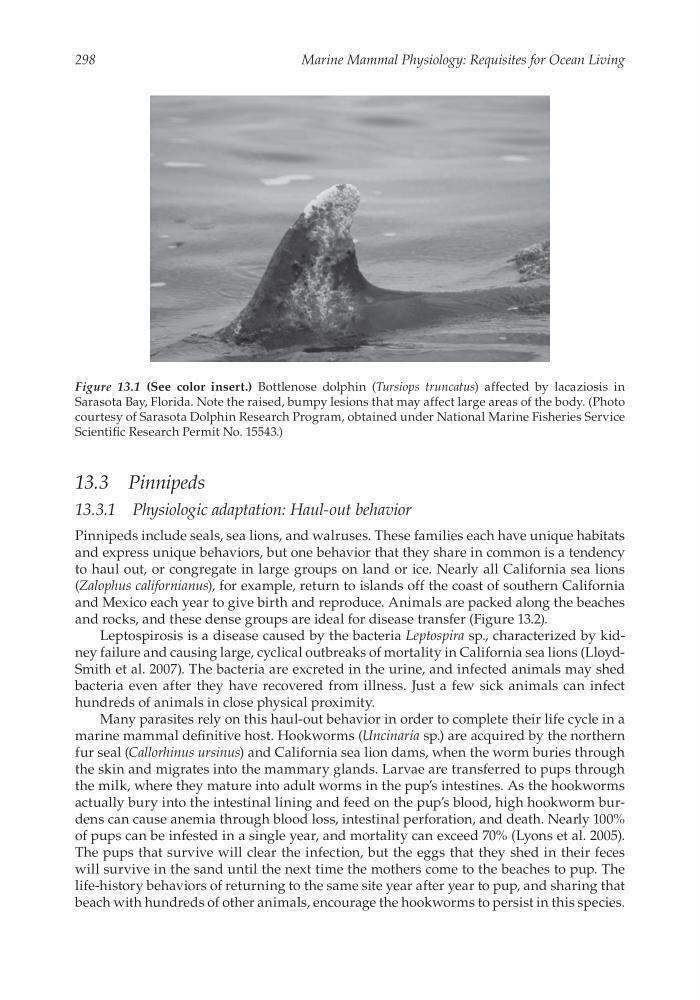
Figure 13.1 (See color insert.) Bottlenose dolphin (Tursiops truncatus) affected by lacaziosis in
Sarasota Bay, Florida. Note the raised, bumpy lesions that may affect large areas of the body. (Photo
courtesy of Sarasota Dolphin Research Program, obtained under National Marine Fisheries Service
Scientific Research Permit No. 15543.)
Marine Mammal Physiology: Requisites for Ocean Living
13.3 Pinnipeds
13.3.1 Physiologic adaptation: Haul-out behavior
Pinnipeds include seals, sea lions, and walruses. These families each have unique habitats
and express unique behaviors, but one behavior that they share in common is a tendency
to haul out, or congregate in large groups on land or ice. Nearly all California sea lions
(Zalophus californianus), for example, return to islands off the coast of southern California
and Mexico each year to give birth and reproduce. Animals are packed along the beaches
and rocks, and these dense groups are ideal for disease transfer (Figure 13.2).
Leptospirosis is a disease caused by the bacteria Leptospira sp., characterized by kidney failure and causing large, cyclical outbreaks of mortality in California sea lions (LloydSmith et al. 2007). The bacteria are excreted in the urine, and infected animals may shed
bacteria even after they have recovered from illness. Just a few sick animals can infect
hundreds of animals in close physical proximity.
Many parasites rely on this haul-out behavior in order to complete their life cycle in a
marine mammal definitive host. Hookworms (Uncinaria sp.) are acquired by the northern
fur seal (Callorhinus ursinus) and California sea lion dams, when the worm buries through
the skin and migrates into the mammary glands. Larvae are transferred to pups through
the milk, where they mature into adult worms in the pup’s intestines. As the hookworms
actually bury into the intestinal lining and feed on the pup’s blood, high hookworm burdens can cause anemia through blood loss, intestinal perforation, and death. Nearly 100%
of pups can be infested in a single year, and mortality can exceed 70% (Lyons et al. 2005).
The pups that survive will clear the infection, but the eggs that they shed in their feces
will survive in the sand until the next time the mothers come to the beaches to pup. The
life-history behaviors of returning to the same site year after year to pup, and sharing that
beach with hundreds of other animals, encourage the hookworms to persist in this species.
Figure 13.1 (See color insert.) Bottlenose dolphin (Tursiops truncatus) affected by lacaziosis in
Sarasota Bay, Florida. Note the raised, bumpy lesions that may affect large areas of the body. (Photo
courtesy of Sarasota Dolphin Research Program, obtained under National Marine Fisheries Service
Scientific Research Permit No. 15543.)