

5.7 TwoSpatial Dimensions
289
(a)
o :'~~~..L.o.-.L~.-1..L.........~~~~~......L~~-"::
x
.
o
(b)
x
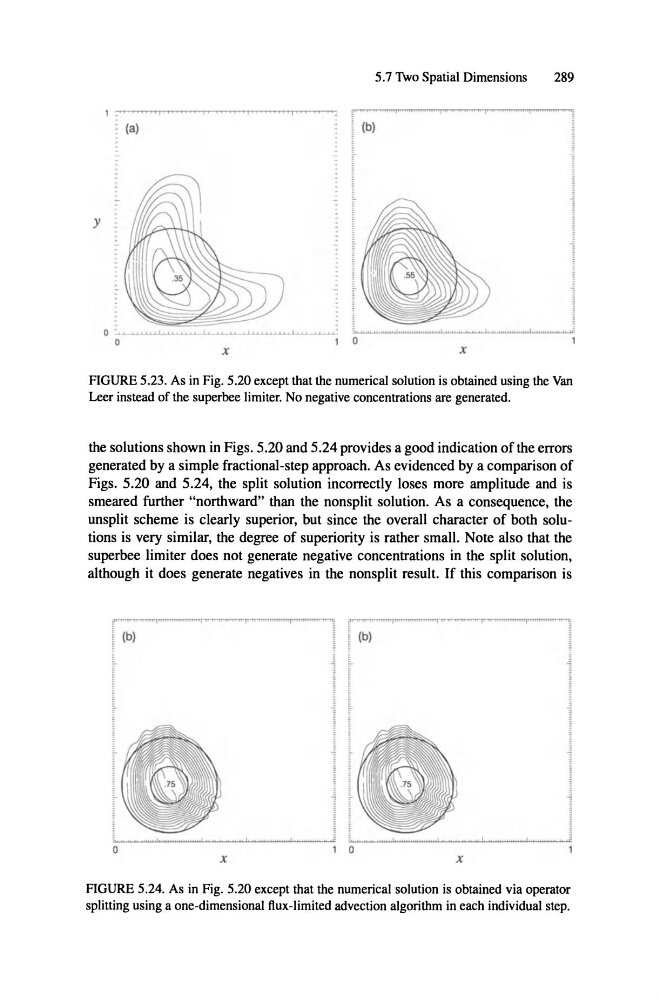
FIGURE5.23. As in Fig. 5.20 except that the numerical solution is obtained using the Van
Leer instead of the superbee limiter. No negativeconcentrations are generated.
the solutions shown in Figs. 5.20 and 5.24 provides a good indication of the errors
generated by a simple fractional-step approach. As evidenced by a comparison of
Figs . 5.20 and 5.24, the split solution incorrectly loses more amplitude and is
smeared further "northward" than the nonsplit solution. As a consequence, the
unsplit scheme is clearly superior, but since the overall character of both solutions is very similar, the degree of superiority is rather smalI. Note also that the
superbee limiter does not generate negative concentrations in the split solution,
although it does generate negatives in the nonsplit result. If this comparison is
o
1
x
(b)
0
x
FIGURE5.24. As in Fig. 5.20 except that the numerical solution is obtained via operator
splittingusing a one-dimensional flux-limited advectionalgorithm in each individual step.
289
(a)
o :'~~~..L.o.-.L~.-1..L.........~~~~~......L~~-"::
x
.
o
(b)
x
FIGURE5.23. As in Fig. 5.20 except that the numerical solution is obtained using the Van
Leer instead of the superbee limiter. No negativeconcentrations are generated.
the solutions shown in Figs. 5.20 and 5.24 provides a good indication of the errors
generated by a simple fractional-step approach. As evidenced by a comparison of
Figs . 5.20 and 5.24, the split solution incorrectly loses more amplitude and is
smeared further "northward" than the nonsplit solution. As a consequence, the
unsplit scheme is clearly superior, but since the overall character of both solutions is very similar, the degree of superiority is rather smalI. Note also that the
superbee limiter does not generate negative concentrations in the split solution,
although it does generate negatives in the nonsplit result. If this comparison is
o
1
x
(b)
0
x
FIGURE5.24. As in Fig. 5.20 except that the numerical solution is obtained via operator
splittingusing a one-dimensional flux-limited advectionalgorithm in each individual step.