

3.5 Linear Equations with Variable Coefficients
151
(a)
."".-. .............
u
,
/.
.\
. \
/ .
-\
.
r '.-'
\ .( -
\ -
\.
./
-/
.
../
...., •
. I \.
-
.
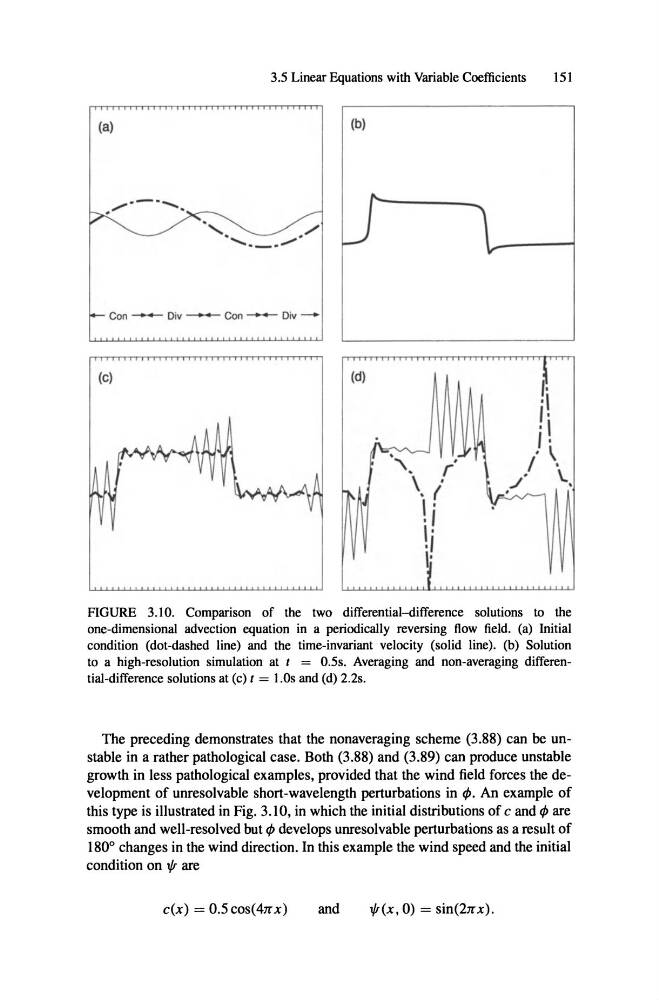
FIGURE 3.10. Comparison of the two differential-difference solutions to the
one-dirnensional advection equation in a periodically reversing ftow field. (a) Initial
condition (dot-dashed line) and the time-invariant velocity (solid line). (b) Solution
to a high-resolution simulation at t = 0.5s. Averaging and non-averaging differenThe preceding demonstrates that the nonaveraging scheme (3.88) can be unstable in a rather pathological case . Both (3.88) and (3.89) can produce unstable
growth in less pathological examples, provided that the wind field forces the development of unresolvable short -wavelength perturbations in i fJ . An example of
this type is iIIustrated in Fig. 3.10, in which the initial distributions of c and i fJ are
smooth and well-resolved but fjJ develops unresolvable perturbations as a result of
180
0 changes in the wind direction. In this example the wind speed and the initial
condition on 1/1 are
c(x) = 0.5 cos(4n x) and 1/1(x , 0) = sin(2nx).
151
(a)
."".-. .............
u
,
/.
.\
. \
/ .
-\
.
r '.-'
\ .( -
\ -
\.
./
-/
.
../
...., •
. I \.
-
.
FIGURE 3.10. Comparison of the two differential-difference solutions to the
one-dirnensional advection equation in a periodically reversing ftow field. (a) Initial
condition (dot-dashed line) and the time-invariant velocity (solid line). (b) Solution
to a high-resolution simulation at t = 0.5s. Averaging and non-averaging differenThe preceding demonstrates that the nonaveraging scheme (3.88) can be unstable in a rather pathological case . Both (3.88) and (3.89) can produce unstable
growth in less pathological examples, provided that the wind field forces the development of unresolvable short -wavelength perturbations in i fJ . An example of
this type is iIIustrated in Fig. 3.10, in which the initial distributions of c and i fJ are
smooth and well-resolved but fjJ develops unresolvable perturbations as a result of
180
0 changes in the wind direction. In this example the wind speed and the initial
condition on 1/1 are
c(x) = 0.5 cos(4n x) and 1/1(x , 0) = sin(2nx).