

Variation in Sea Turtle Life History Patterns
249
consume gelatinous prey species is not size dependent (Bjorndal, 1997). Olive ridleys
apparently spend more time at the surface than leatherbacks (Pitman, 1993) and may
exhibit a “float and wait” foraging strategy, although Polovina et al. (in review)
report that olive ridleys only spend 20% of their time on the surface and 40% of
their time diving deeper than 40 m.
9.4 RELATIONSHIPS OF THE THREE LIFE HISTORY
PATTERNS TO PHYLOGENETIC PATTERNS AND
REPRODUCTIVE TRAITS
9.4.1 P HYLOGENETIC P ATTERNS
A comparison of the life history patterns (Type 1, 2, or 3) of the seven species of
extant sea turtles with their phylogenetic patterns is presented in Figure 9.3, left
dendrogram (Bowen and Karl, 1997). Sea turtles are generally recognized as a
monophyletic group (Bowen and Karl, 1997). The ancestor of sea turtles was probably a resident of coastal salt marshes, estuaries, and tidal creeks. Once these
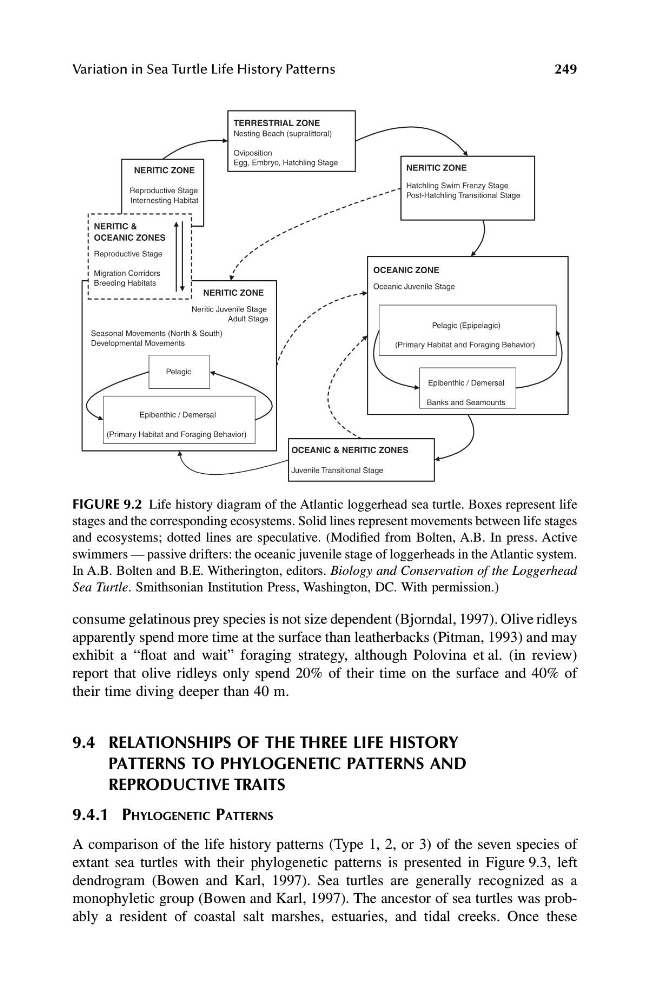
FIGURE 9.2 Life history diagram of the Atlantic loggerhead sea turtle. Boxes represent life
stages and the corresponding ecosystems. Solid lines represent movements between life stages
and ecosystems; dotted lines are speculative. (Modified from Bolten, A.B. In press. Active
swimmers — passive drifters: the oceanic juvenile stage of loggerheads in the Atlantic system.
In A.B. Bolten and B.E. Witherington, editors. Biology and Conservation of the Loggerhead
Sea Turtle . Smithsonian Institution Press, Washington, DC. With permission.)
NERITIC ZONE
Reproductive Stage
Internesting Habitat
TERRESTRIAL ZONE
Nesting Beach (supralittoral)
Oviposition
Egg, Embryo, Hatchling Stage
OCEANIC & NERITIC ZONES
Juvenile Transitional Stage
NERITIC ZONE
Neritic Juvenile Stage
Adult Stage
Reproductive Stage
Migration Corridors
Breeding Habitats
OCEANIC ZONE
Oceanic Juvenile Stage
NERITIC ZONE
Hatchling Swim Frenzy Stage
Post-Hatchling Transitional Stage
Pelagic (Epipelagic)
(Primary Habitat and Foraging Behavior)
Epibenthic / Demersal
Banks and Seamounts
Pelagic
Epibenthic / Demersal
(Primary Habitat and Foraging Behavior)
Seasonal Movements (North & South)
Developmental Movements
NERITIC &
OCEANIC ZONES
1123 book.book Page 249 Monday, November 11, 2002 11:11 AM
249
consume gelatinous prey species is not size dependent (Bjorndal, 1997). Olive ridleys
apparently spend more time at the surface than leatherbacks (Pitman, 1993) and may
exhibit a “float and wait” foraging strategy, although Polovina et al. (in review)
report that olive ridleys only spend 20% of their time on the surface and 40% of
their time diving deeper than 40 m.
9.4 RELATIONSHIPS OF THE THREE LIFE HISTORY
PATTERNS TO PHYLOGENETIC PATTERNS AND
REPRODUCTIVE TRAITS
9.4.1 P HYLOGENETIC P ATTERNS
A comparison of the life history patterns (Type 1, 2, or 3) of the seven species of
extant sea turtles with their phylogenetic patterns is presented in Figure 9.3, left
dendrogram (Bowen and Karl, 1997). Sea turtles are generally recognized as a
monophyletic group (Bowen and Karl, 1997). The ancestor of sea turtles was probably a resident of coastal salt marshes, estuaries, and tidal creeks. Once these
FIGURE 9.2 Life history diagram of the Atlantic loggerhead sea turtle. Boxes represent life
stages and the corresponding ecosystems. Solid lines represent movements between life stages
and ecosystems; dotted lines are speculative. (Modified from Bolten, A.B. In press. Active
swimmers — passive drifters: the oceanic juvenile stage of loggerheads in the Atlantic system.
In A.B. Bolten and B.E. Witherington, editors. Biology and Conservation of the Loggerhead
Sea Turtle . Smithsonian Institution Press, Washington, DC. With permission.)
NERITIC ZONE
Reproductive Stage
Internesting Habitat
TERRESTRIAL ZONE
Nesting Beach (supralittoral)
Oviposition
Egg, Embryo, Hatchling Stage
OCEANIC & NERITIC ZONES
Juvenile Transitional Stage
NERITIC ZONE
Neritic Juvenile Stage
Adult Stage
Reproductive Stage
Migration Corridors
Breeding Habitats
OCEANIC ZONE
Oceanic Juvenile Stage
NERITIC ZONE
Hatchling Swim Frenzy Stage
Post-Hatchling Transitional Stage
Pelagic (Epipelagic)
(Primary Habitat and Foraging Behavior)
Epibenthic / Demersal
Banks and Seamounts
Pelagic
Epibenthic / Demersal
(Primary Habitat and Foraging Behavior)
Seasonal Movements (North & South)
Developmental Movements
NERITIC &
OCEANIC ZONES
1123 book.book Page 249 Monday, November 11, 2002 11:11 AM