

Critical Approaches to Sex Determination in Sea Turtles
105
in a species or population (e.g., pivotal temperature, transitional range of temperatures, etc.). Subsequent studies then use those parameters for comparative purposes
or even for predicting sex ratios. Therefore, the accuracy of the temperature recordings is of paramount importance. For example, a change of only a few tenths of a
degree Celsius can have a significant effect on sex ratio if that change occurs near
the pivotal temperature. The accuracy of temperature estimates reported in TSD
studies is limited by factors such as the accuracy of the recording equipment, the
stability of the incubators, and the experimental protocol. For example, the resolution
of typical temperature data loggers is approximately 0.2–0.4 ∞ C, and a typical incubator may vary by several tenths of a degree around the selected temperature. Thus,
when reviewing data on TSD, one should be cautious when comparing temperature
estimates from studies that might use different experimental protocols and temperature recording equipment.
4.2.2 P IVOTAL T EMPERATURES OF S EA T URTLES
A variety of studies have estimated pivotal temperatures in sea turtles (Table 4.1).
In general, the reported pivotal temperatures occur over a relatively narrow temperature range from approximately 27.7 to 31 ∞ C, depending on the particular species
and study, with the majority clustering in the 29.0 to 30.0 ∞ C range. 31 The reason for
this narrow range is unknown, but it is plausible that it could relate to factors such
as ecological or physiological constraints that may be selecting for this range of
pivotal temperatures.
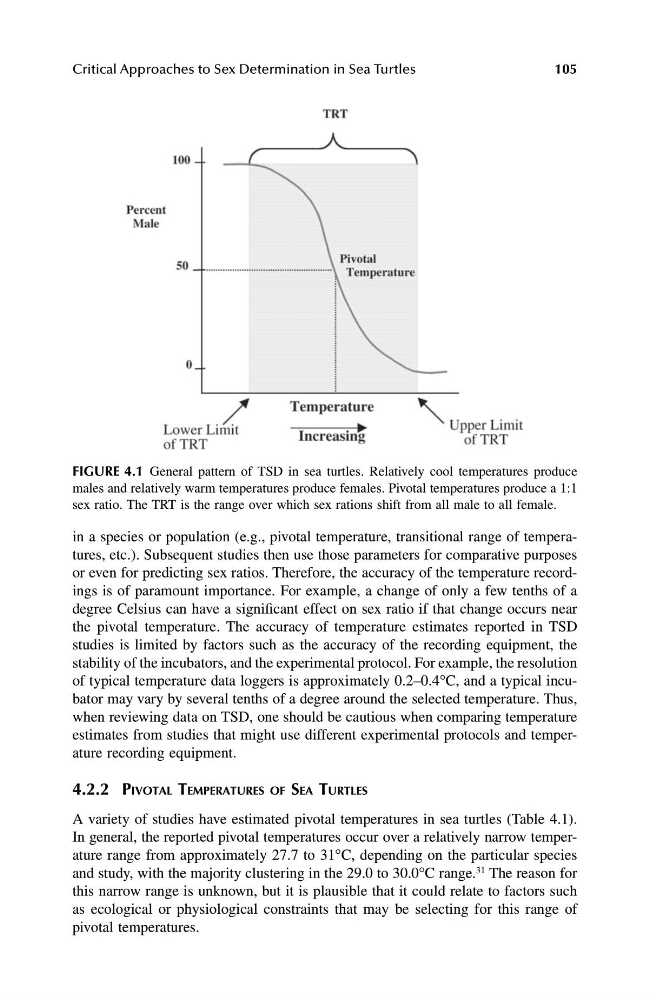
FIGURE 4.1 General pattern of TSD in sea turtles. Relatively cool temperatures produce
males and relatively warm temperatures produce females. Pivotal temperatures produce a 1:1
sex ratio. The TRT is the range over which sex rations shift from all male to all female.
1123 book.book Page 105 Monday, November 11, 2002 11:11 AM
105
in a species or population (e.g., pivotal temperature, transitional range of temperatures, etc.). Subsequent studies then use those parameters for comparative purposes
or even for predicting sex ratios. Therefore, the accuracy of the temperature recordings is of paramount importance. For example, a change of only a few tenths of a
degree Celsius can have a significant effect on sex ratio if that change occurs near
the pivotal temperature. The accuracy of temperature estimates reported in TSD
studies is limited by factors such as the accuracy of the recording equipment, the
stability of the incubators, and the experimental protocol. For example, the resolution
of typical temperature data loggers is approximately 0.2–0.4 ∞ C, and a typical incubator may vary by several tenths of a degree around the selected temperature. Thus,
when reviewing data on TSD, one should be cautious when comparing temperature
estimates from studies that might use different experimental protocols and temperature recording equipment.
4.2.2 P IVOTAL T EMPERATURES OF S EA T URTLES
A variety of studies have estimated pivotal temperatures in sea turtles (Table 4.1).
In general, the reported pivotal temperatures occur over a relatively narrow temperature range from approximately 27.7 to 31 ∞ C, depending on the particular species
and study, with the majority clustering in the 29.0 to 30.0 ∞ C range. 31 The reason for
this narrow range is unknown, but it is plausible that it could relate to factors such
as ecological or physiological constraints that may be selecting for this range of
pivotal temperatures.
FIGURE 4.1 General pattern of TSD in sea turtles. Relatively cool temperatures produce
males and relatively warm temperatures produce females. Pivotal temperatures produce a 1:1
sex ratio. The TRT is the range over which sex rations shift from all male to all female.
1123 book.book Page 105 Monday, November 11, 2002 11:11 AM