

The External, Musculoskeletal and Neuro-Anatomy of Sea Turtles
59
muscles innervated by the facial nerve (Schumacher, 1973). The jaw muscles of
turtles are mostly located inside the skull. Unlike mammals, turtles lack a mandibularis muscle; instead, they have an adductor mandibulae with several heads. The
muscles of the head and throat and their specific locations (origins and insertions)
and innervations are summarized in Table 2.1 and Figures 2.19–2.21. Muscles of
the tongue, innervated by the hypoglossal and the glossopharyngeal nerves, are not
described here but have been described by Schumacher (1973).
Neck muscles (Table 2.1) are superficial (Figure 2.19) or deep and are innervated by cervical nerves. The deep neck muscles include the neck extensors, the
longus colli (short, segmentally arranged muscles that travel obliquely between
successive cervical vertebrae), and the neck flexor and retractor (retrahens colli)
muscles (extending from the cervical vertebrae to the dorsal vertebral elements of
the carapace).
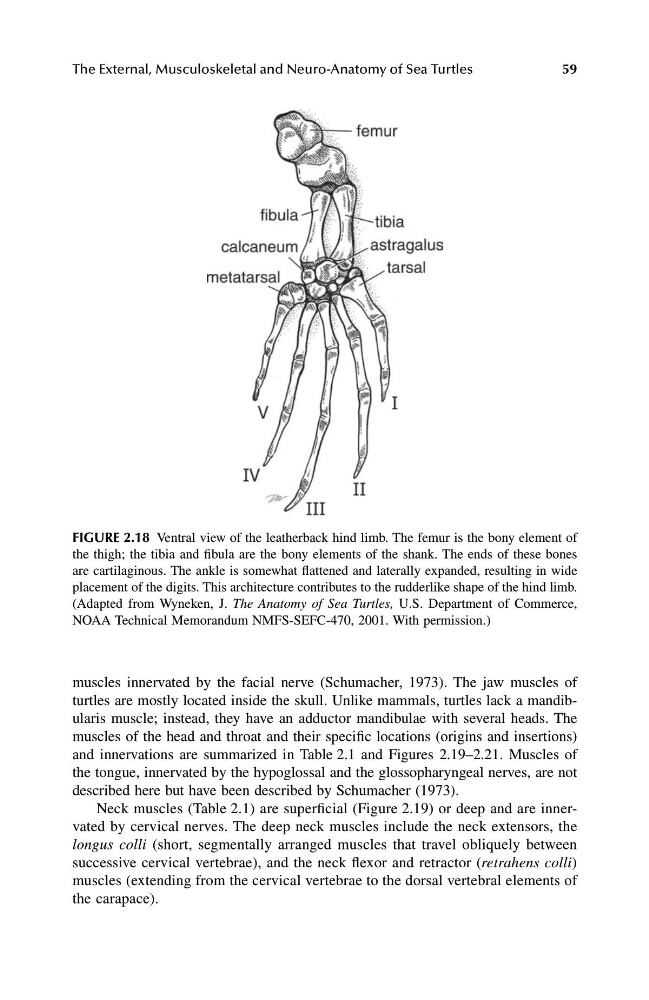
FIGURE 2.18 Ventral view of the leatherback hind limb. The femur is the bony element of
the thigh; the tibia and fibula are the bony elements of the shank. The ends of these bones
are cartilaginous. The ankle is somewhat flattened and laterally expanded, resulting in wide
placement of the digits. This architecture contributes to the rudderlike shape of the hind limb.
(Adapted from Wyneken, J. The Anatomy of Sea Turtles, U.S. Department of Commerce,
NOAA Technical Memorandum NMFS-SEFC-470, 2001. With permission.)
1123_C02.fm Page 59 Friday, November 15, 2002 11:16 AM
59
muscles innervated by the facial nerve (Schumacher, 1973). The jaw muscles of
turtles are mostly located inside the skull. Unlike mammals, turtles lack a mandibularis muscle; instead, they have an adductor mandibulae with several heads. The
muscles of the head and throat and their specific locations (origins and insertions)
and innervations are summarized in Table 2.1 and Figures 2.19–2.21. Muscles of
the tongue, innervated by the hypoglossal and the glossopharyngeal nerves, are not
described here but have been described by Schumacher (1973).
Neck muscles (Table 2.1) are superficial (Figure 2.19) or deep and are innervated by cervical nerves. The deep neck muscles include the neck extensors, the
longus colli (short, segmentally arranged muscles that travel obliquely between
successive cervical vertebrae), and the neck flexor and retractor (retrahens colli)
muscles (extending from the cervical vertebrae to the dorsal vertebral elements of
the carapace).
FIGURE 2.18 Ventral view of the leatherback hind limb. The femur is the bony element of
the thigh; the tibia and fibula are the bony elements of the shank. The ends of these bones
are cartilaginous. The ankle is somewhat flattened and laterally expanded, resulting in wide
placement of the digits. This architecture contributes to the rudderlike shape of the hind limb.
(Adapted from Wyneken, J. The Anatomy of Sea Turtles, U.S. Department of Commerce,
NOAA Technical Memorandum NMFS-SEFC-470, 2001. With permission.)
1123_C02.fm Page 59 Friday, November 15, 2002 11:16 AM