

2.2ISO/TC211
43
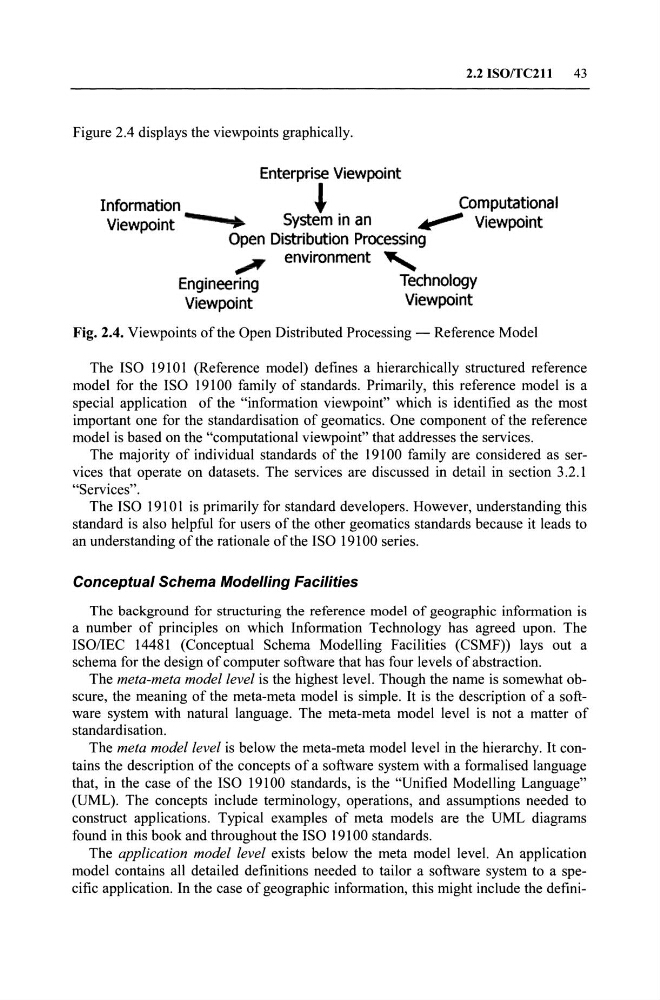
Figure 2.4 displays the viewpoints graphically.
Enterprise Viewpoint
Information
~ .
Computational
Viewpoint -...............
System In an
...."". Viewpoint
Open Distribution Processing
~ environment "
Engineering
Technology
Viewpoint
Viewpoint
Fig. 2.4. Viewpoints of the Open Distributed Processing - Reference Model
The ISO 19101 (Reference model) defines a hierarchically structured reference
model for the ISO 19100 family of standards. Primarily, this reference model is a
special application of the "information viewpoint" which is identified as the most
important one for the standardisation of geomatics. One component of the reference
model is based on the "computational viewpoint" that addresses the services.
The majority of individual standards of the 19100 family are considered as services that operate on datasets. The services are discussed in detail in section 3.2.1
"Services" .
The ISO 19101 is primarily for standard developers. However, understanding this
standard is also helpful for users of the other geomatics standards because it leads to
an understanding ofthe rationale ofthe ISO 19100 series.
Conceptual Schema Modelling Faci/ities
The background for structuring the reference model of geographie information is
a number of principles on which Information Technology has agreed upon. The
ISO/IEC 14481 (Conceptual Schema Modelling Facilities (CSMF)) lays out a
schema for the design of computer software that has four levels of abstraction.
The meta-meta model level is the highest level. Though the name is somewhat obscure, the meaning of the meta-meta model is simple. It is the description of a software system with natural language. The meta-meta model level is not a matter of
standardisation.
The meta model level is below the meta-meta model level in the hierarehy. It eontains the deseription of the eoneepts of a software system with a formalised language
that, in the case of the ISO 19100 standards, is the "Unified Modelling Language"
(UML). The eoneepts include terminology, operations, and assumptions needed to
eonstruet applieations. Typieal examples of meta models are the UML diagrams
found in this book and throughout the ISO 19100 standards.
The application model level exists below the meta model level. An application
model eontains all detailed definitions needed to tailor a software system to a speeifie applieation. In the ease of geographie information, this might include the defini-
43
Figure 2.4 displays the viewpoints graphically.
Enterprise Viewpoint
Information
~ .
Computational
Viewpoint -...............
System In an
...."". Viewpoint
Open Distribution Processing
~ environment "
Engineering
Technology
Viewpoint
Viewpoint
Fig. 2.4. Viewpoints of the Open Distributed Processing - Reference Model
The ISO 19101 (Reference model) defines a hierarchically structured reference
model for the ISO 19100 family of standards. Primarily, this reference model is a
special application of the "information viewpoint" which is identified as the most
important one for the standardisation of geomatics. One component of the reference
model is based on the "computational viewpoint" that addresses the services.
The majority of individual standards of the 19100 family are considered as services that operate on datasets. The services are discussed in detail in section 3.2.1
"Services" .
The ISO 19101 is primarily for standard developers. However, understanding this
standard is also helpful for users of the other geomatics standards because it leads to
an understanding ofthe rationale ofthe ISO 19100 series.
Conceptual Schema Modelling Faci/ities
The background for structuring the reference model of geographie information is
a number of principles on which Information Technology has agreed upon. The
ISO/IEC 14481 (Conceptual Schema Modelling Facilities (CSMF)) lays out a
schema for the design of computer software that has four levels of abstraction.
The meta-meta model level is the highest level. Though the name is somewhat obscure, the meaning of the meta-meta model is simple. It is the description of a software system with natural language. The meta-meta model level is not a matter of
standardisation.
The meta model level is below the meta-meta model level in the hierarehy. It eontains the deseription of the eoneepts of a software system with a formalised language
that, in the case of the ISO 19100 standards, is the "Unified Modelling Language"
(UML). The eoneepts include terminology, operations, and assumptions needed to
eonstruet applieations. Typieal examples of meta models are the UML diagrams
found in this book and throughout the ISO 19100 standards.
The application model level exists below the meta model level. An application
model eontains all detailed definitions needed to tailor a software system to a speeifie applieation. In the ease of geographie information, this might include the defini-