

20 1 Basics of standards
The ISO 9001:2000 (Quality Management Systems - Requirements) provides a
comprehensive list of regulatory requirements needed to assess the ability of a company to meet the customer's satisfaction. This standard is the only one in the ISO
9000 family against which a third-party certification can be carried.
The ISO 9004:2000 (Quality Management Systems - Guidelines for Performance
Improvements) provides advice and hints for the continuous improvement of the
quality management within a company or institution.
The ISO 19011 (Guidelines on Quality and/or Environmental Management Systems Auditing) is currently (2003) under development. It will provide a guideline to
the verification of a system's ability to achieve defined quality objectives. It might be
used internally or for auditing suppliers.
ISO 8402
ISO 9000-1
~
ISO 9000
ISO 9001
~
ISO 9002
ISO 9003
ISO 9001
ISO 9004-1
~
ISO 9004
ISO 10011
~
ISO 19011
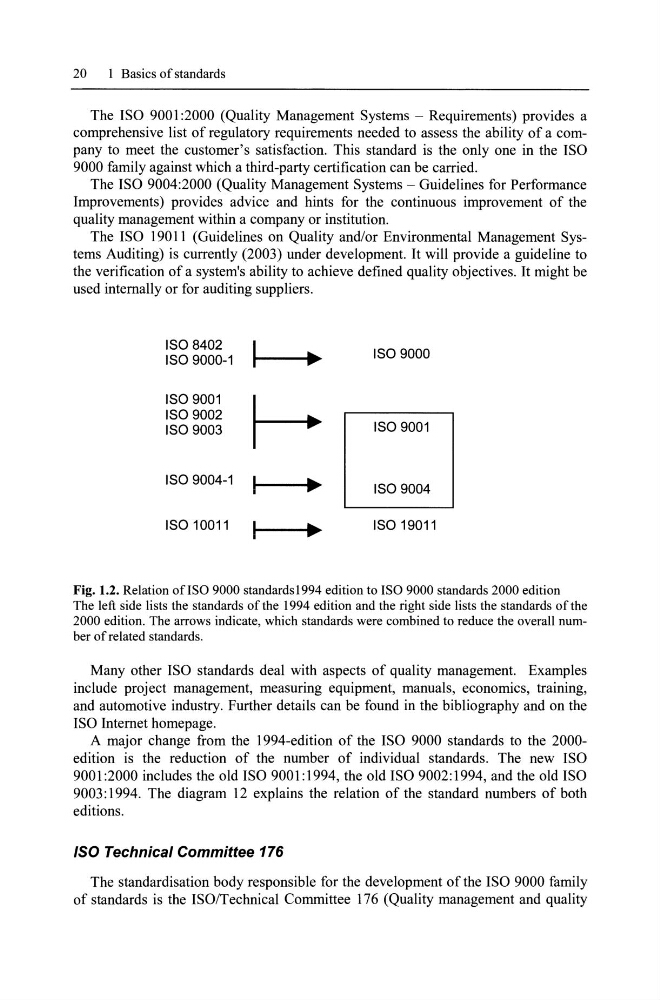
Fig. 1.2. Relation ofISO 9000 standards1994 edition to ISO 9000 standards 2000 edition
The left side lists the standards of the 1994 edition and the right side lists the standards of the
2000 edition. The arrows indicate, which standards were combined to reduce the overall number ofrelated standards.
Many other ISO standards deal with aspects of quality management. Examples
include project management, measuring equipment, manuals, economics, training,
and automotive industry. Further details can be found in the bibliography and on the
ISO Internet homepage.
A major change from the 1994-edition of the ISO 9000 standards to the 2000edition is the reduction of the number of individual standards. The new ISO
9001:2000 includes the old ISO 9001:1994, the old ISO 9002:1994, and the old ISO
9003:1994. The diagram 12 explains the relation of the standard numbers of both
editions.
ISO Technical Committee 176
The standardisation body responsible for the development of the ISO 9000 family
of standards is the ISO/Technical Committee 176 (Quality management and quality
The ISO 9001:2000 (Quality Management Systems - Requirements) provides a
comprehensive list of regulatory requirements needed to assess the ability of a company to meet the customer's satisfaction. This standard is the only one in the ISO
9000 family against which a third-party certification can be carried.
The ISO 9004:2000 (Quality Management Systems - Guidelines for Performance
Improvements) provides advice and hints for the continuous improvement of the
quality management within a company or institution.
The ISO 19011 (Guidelines on Quality and/or Environmental Management Systems Auditing) is currently (2003) under development. It will provide a guideline to
the verification of a system's ability to achieve defined quality objectives. It might be
used internally or for auditing suppliers.
ISO 8402
ISO 9000-1
~
ISO 9000
ISO 9001
~
ISO 9002
ISO 9003
ISO 9001
ISO 9004-1
~
ISO 9004
ISO 10011
~
ISO 19011
Fig. 1.2. Relation ofISO 9000 standards1994 edition to ISO 9000 standards 2000 edition
The left side lists the standards of the 1994 edition and the right side lists the standards of the
2000 edition. The arrows indicate, which standards were combined to reduce the overall number ofrelated standards.
Many other ISO standards deal with aspects of quality management. Examples
include project management, measuring equipment, manuals, economics, training,
and automotive industry. Further details can be found in the bibliography and on the
ISO Internet homepage.
A major change from the 1994-edition of the ISO 9000 standards to the 2000edition is the reduction of the number of individual standards. The new ISO
9001:2000 includes the old ISO 9001:1994, the old ISO 9002:1994, and the old ISO
9003:1994. The diagram 12 explains the relation of the standard numbers of both
editions.
ISO Technical Committee 176
The standardisation body responsible for the development of the ISO 9000 family
of standards is the ISO/Technical Committee 176 (Quality management and quality