

82 Marine Macro- and Microalgae: An Overview
both in terms of number of centers and biomass loads, in certain zones of southern Chile, it can no
longer be considered a small-scale activity from an environmental point of view. This situation has given
rise to calculations that the environmental cost, only as a result of salmon culture, reaches at least 30%
of the Gross Domestic Product of fisheries activity in Chile (Buschmann and Pizarro 2001). This cost
is associated mainly with cultures of high trophic level species (carnivores) that require a supply of
exogenous energy (feed) that produces elevated concentrations of nutrients entering the system, even
in situations where food conversion efficiency is high. It has been determined that the recuperation of
inorganic dissolved wastes by harvesting the organism cultured does not exceed 75% for nitrogen or
60% of the carbon (see, as an example, mass balance in Buschmann et al. 1996a). Although nitrogenuse efficiency is comparatively greater in salmon cultures than in cattle farms, salmon activity in Chile
introduces more nitrogen into the fresh and marine aquatic systems than cattle activities (Soto et al.
2007). Thus, we observe an environmental context related to this activity, where a variety of organic and
inorganic waste materials are introduced into aquatic systems, with multiple and complex environmental
effects (see more details in Buschmann et al. 2009). Although Chile is among the principal marine
aquaculture producers worldwide, Chile’s productions levels differ considerably from those of oriental
countries; this is because Chile produces, predominantly, carnivorous organisms (Buschmann et al. 2009).
Evidently, the significant aquaculture activity that sustains countries such as Japan, Korea, or China,
must be based on models that balance organic and inorganic waste generated by certain organisms, with
organisms that enable this waste to be recycled and which, when harvested, facilitate extraction of these
waste materials from the environment (Shi et al. 2011). Thus, the concept of IMTA acquires particular
relevance as a means of reducing the environmental risks. In this context, algae play a vital role in
reducing volumes of dissolved inorganic nutrients (Troell et al. 1999; Chopin et al. 2001, 2008, 2011;
Buschmann et al. 2008a).
The effects produced by aquaculture vary significantly, generating different environmental situations
that may be detrimental to the aquaculture activity itself, and that must be identified and resolved.
The introduction of nitrogen in coastal zones is one of these negative effects and can induce certain
eutrophication processes that favor the proliferation of green algae (green tides), as occurred in China,
prior to the Beijing Olympics (Liu et al. 2012). In Chile, this association has not been verified; however,
proliferations of green algae in bays with intensive aquaculture activities can present these blooms and
overgrowth on other coastal organisms (see Buschmann et al. 2013). Decomposition of these algal
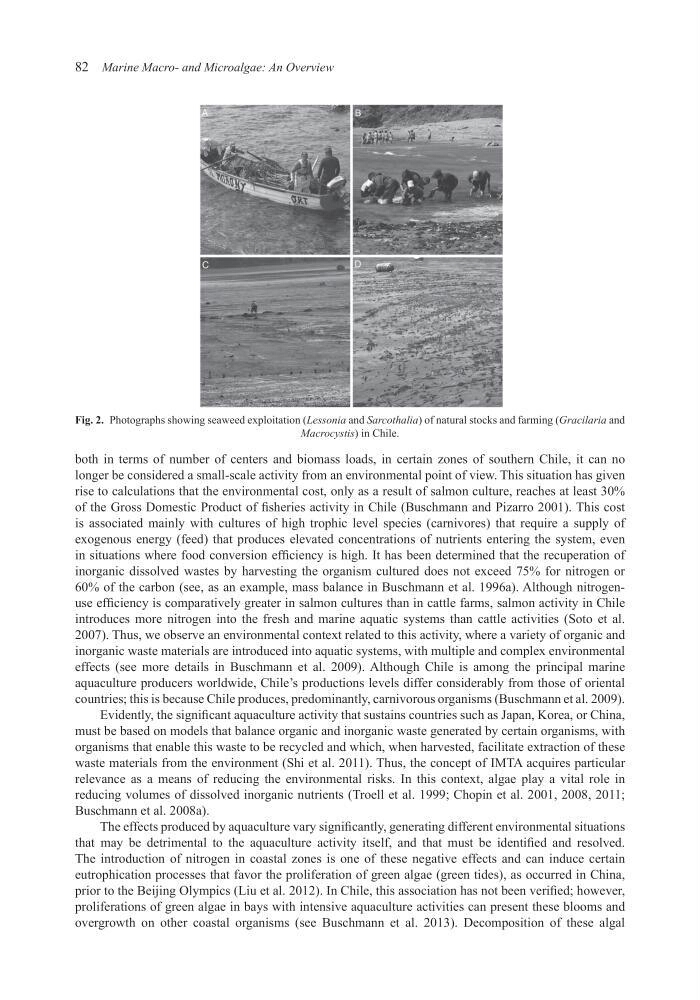
Fig. 2. Photographs showing seaweed exploitation (Lessonia and Sarcothalia) of natural stocks and farming (Gracilaria and
Macrocystis) in Chile.
both in terms of number of centers and biomass loads, in certain zones of southern Chile, it can no
longer be considered a small-scale activity from an environmental point of view. This situation has given
rise to calculations that the environmental cost, only as a result of salmon culture, reaches at least 30%
of the Gross Domestic Product of fisheries activity in Chile (Buschmann and Pizarro 2001). This cost
is associated mainly with cultures of high trophic level species (carnivores) that require a supply of
exogenous energy (feed) that produces elevated concentrations of nutrients entering the system, even
in situations where food conversion efficiency is high. It has been determined that the recuperation of
inorganic dissolved wastes by harvesting the organism cultured does not exceed 75% for nitrogen or
60% of the carbon (see, as an example, mass balance in Buschmann et al. 1996a). Although nitrogenuse efficiency is comparatively greater in salmon cultures than in cattle farms, salmon activity in Chile
introduces more nitrogen into the fresh and marine aquatic systems than cattle activities (Soto et al.
2007). Thus, we observe an environmental context related to this activity, where a variety of organic and
inorganic waste materials are introduced into aquatic systems, with multiple and complex environmental
effects (see more details in Buschmann et al. 2009). Although Chile is among the principal marine
aquaculture producers worldwide, Chile’s productions levels differ considerably from those of oriental
countries; this is because Chile produces, predominantly, carnivorous organisms (Buschmann et al. 2009).
Evidently, the significant aquaculture activity that sustains countries such as Japan, Korea, or China,
must be based on models that balance organic and inorganic waste generated by certain organisms, with
organisms that enable this waste to be recycled and which, when harvested, facilitate extraction of these
waste materials from the environment (Shi et al. 2011). Thus, the concept of IMTA acquires particular
relevance as a means of reducing the environmental risks. In this context, algae play a vital role in
reducing volumes of dissolved inorganic nutrients (Troell et al. 1999; Chopin et al. 2001, 2008, 2011;
Buschmann et al. 2008a).
The effects produced by aquaculture vary significantly, generating different environmental situations
that may be detrimental to the aquaculture activity itself, and that must be identified and resolved.
The introduction of nitrogen in coastal zones is one of these negative effects and can induce certain
eutrophication processes that favor the proliferation of green algae (green tides), as occurred in China,
prior to the Beijing Olympics (Liu et al. 2012). In Chile, this association has not been verified; however,
proliferations of green algae in bays with intensive aquaculture activities can present these blooms and
overgrowth on other coastal organisms (see Buschmann et al. 2013). Decomposition of these algal
Fig. 2. Photographs showing seaweed exploitation (Lessonia and Sarcothalia) of natural stocks and farming (Gracilaria and
Macrocystis) in Chile.