

306 Marine Macro- and Microalgae: An Overview
β-carotene from Dunaliella (Spencer 1989). This activity continued with Amway/Nutrilite during the
early 1990s. Over the years, other companies have taken advantage of the facilities created by Microbio
Resources including Carbon Capture Corporation (interested in microalgal-based CO 2 capture and
sequestration) and, since 2012, Synthetic Genomics.
We are not aware of any specific studies commissioned to analyze the economic impacts of microalgal
technology activities in Imperial County. However, we can make some estimates based on parallels with
San Diego County. We estimate that microalgae technology provides approximately 60 jobs directly in
Imperial County (employment at Earthrise plus SGI and research and education conducted at Imperial
Valley College and San Diego State University’s satellite campus). Using similar multipliers as those
used in the SANDAG report (above) for San Diego County, we estimate total employment in Imperial
County (direct plus indirect plus induced) of about 113 that can be traced to microalgae technology
efforts as well as some US$ 14 million in total economic output per year. While this is much smaller than
the total value of agricultural commodities produced in the County (US$4 Bn, Valenzuela 2011) the area
is attracting much interest in the microalgae community and is expected to increase.
Its combination of large tracks of inexpensive flat land, sunshine, temperature, water, high
unemployment, and alternative sources of microalgal nutrients (e.g., cattle feed lot waste) present
Imperial County with a tremendous opportunity to conduct R&D and commercial microalgal production
at scales yet unmatched anywhere else. We expect that the economic impact of microalgal technology in
the area will increase significantly in the future.
The challenges of sustaining positive economic impacts
The type of positive economic impacts described above tend to be quite localized because of the scale
of the industry at present. The industry is in “start-up” mode. Some of us have experienced first hand the
up and downs of small companies trying to make their mark in this space. The problems that these small
companies are presented with are those common to other industries. In some cases, companies are not
well capitalized; they may be too dependent on public money (which can dry up) or the capital that they
do have may not be well spent. Furthermore, these companies may take too long to develop products
or processes that can be used to raise revenue and they may not have the resources to properly market
their products and services. In some cases, these problems have been compounded because of making
exaggerated promises (including overly optimistic cost projections which some consider necessary to
raise investment) and a “if we make it they will buy it” attitude (Olaizola 2003a). In some cases, the result
has been layoffs and even bankruptcy.
As the industry has been affected by growing pains, we believe that lessons have been learned. The
industry is entering a maturing phase as a true understanding of the challenges and costs of microalgal
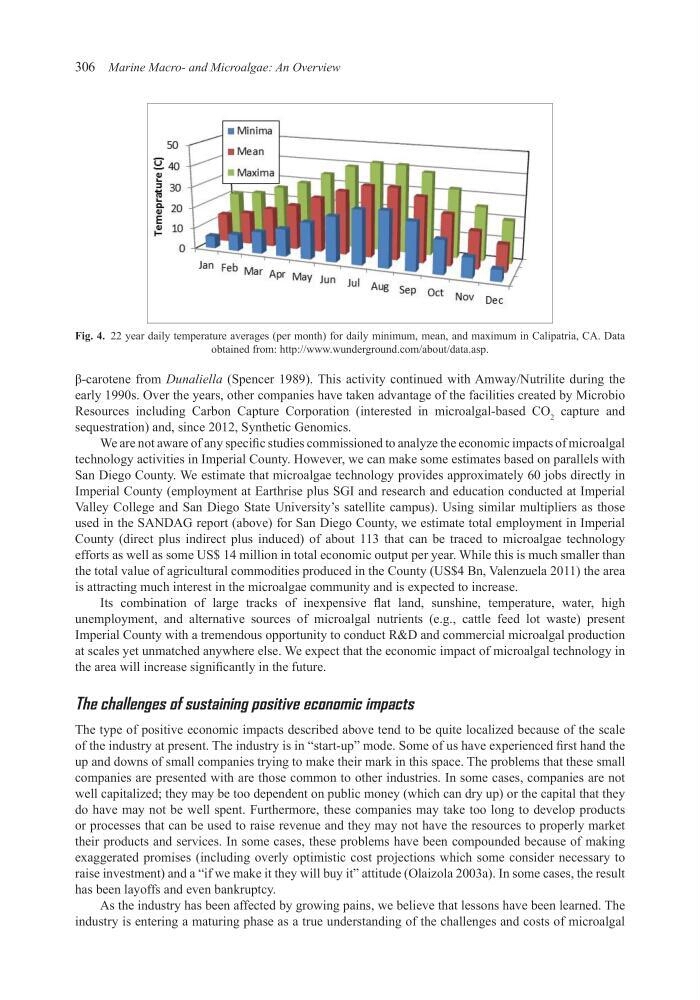
Fig. 4. 22 year daily temperature averages (per month) for daily minimum, mean, and maximum in Calipatria, CA. Data
obtained from: http://www.wunderground.com/about/data.asp.
β-carotene from Dunaliella (Spencer 1989). This activity continued with Amway/Nutrilite during the
early 1990s. Over the years, other companies have taken advantage of the facilities created by Microbio
Resources including Carbon Capture Corporation (interested in microalgal-based CO 2 capture and
sequestration) and, since 2012, Synthetic Genomics.
We are not aware of any specific studies commissioned to analyze the economic impacts of microalgal
technology activities in Imperial County. However, we can make some estimates based on parallels with
San Diego County. We estimate that microalgae technology provides approximately 60 jobs directly in
Imperial County (employment at Earthrise plus SGI and research and education conducted at Imperial
Valley College and San Diego State University’s satellite campus). Using similar multipliers as those
used in the SANDAG report (above) for San Diego County, we estimate total employment in Imperial
County (direct plus indirect plus induced) of about 113 that can be traced to microalgae technology
efforts as well as some US$ 14 million in total economic output per year. While this is much smaller than
the total value of agricultural commodities produced in the County (US$4 Bn, Valenzuela 2011) the area
is attracting much interest in the microalgae community and is expected to increase.
Its combination of large tracks of inexpensive flat land, sunshine, temperature, water, high
unemployment, and alternative sources of microalgal nutrients (e.g., cattle feed lot waste) present
Imperial County with a tremendous opportunity to conduct R&D and commercial microalgal production
at scales yet unmatched anywhere else. We expect that the economic impact of microalgal technology in
the area will increase significantly in the future.
The challenges of sustaining positive economic impacts
The type of positive economic impacts described above tend to be quite localized because of the scale
of the industry at present. The industry is in “start-up” mode. Some of us have experienced first hand the
up and downs of small companies trying to make their mark in this space. The problems that these small
companies are presented with are those common to other industries. In some cases, companies are not
well capitalized; they may be too dependent on public money (which can dry up) or the capital that they
do have may not be well spent. Furthermore, these companies may take too long to develop products
or processes that can be used to raise revenue and they may not have the resources to properly market
their products and services. In some cases, these problems have been compounded because of making
exaggerated promises (including overly optimistic cost projections which some consider necessary to
raise investment) and a “if we make it they will buy it” attitude (Olaizola 2003a). In some cases, the result
has been layoffs and even bankruptcy.
As the industry has been affected by growing pains, we believe that lessons have been learned. The
industry is entering a maturing phase as a true understanding of the challenges and costs of microalgal
Fig. 4. 22 year daily temperature averages (per month) for daily minimum, mean, and maximum in Calipatria, CA. Data
obtained from: http://www.wunderground.com/about/data.asp.