

The Cosmeceutical Properties of Compounds Derived from Marine Algae 203
cosmeceuticals (Athukorala et al. 2006; El Gamal 2009; Li et al. 2009). Due to its strong inhibitory activity
upon tyrosinase and melanin synthesis, it might also be useful as a natural whitening agent (Heo et al. 2009).
Fucoidans
Fucoidans (or fucans) is the generic name for a class of gelatinous bioactive polysaccharides that were first
isolated by Kylin in 1913 from brown algae (Kylin 1913). Fucoidans are sticky and viscous substances
that are mostly found in the fibrillar cell walls and intercellular spaces of various species of brown algae
(Phaeophytae), such as Laminaria japonica, Fucus vesiculosus, Undaria pinnatifida, Cladosiphon
okamuranus, and Hizikia fusiforme. They reinforce cell walls and protect them from dehydration when the
seaweed is exposed at low-tide. Experimental studies have suggested that fucoidans have antioxidant (Li
et al. 2008), skin protective, and anti-aging properties, in addition to their anti-bacterial (Zapopozhets
et al. 1995), anti-viral (Hayashi et al. 2008), anti-inflammatory, anti-coagulant (Cumashi et al. 2007),
anti-tumor properties (Kim et al. 2005), and immune modulatory effects (Zapopozhets et al. 1995).
Fucoidans show great potential in cosmeceutical formulations as they: (1) inhibit matrix metalloproteases
(collagenase) and the serine protease elastase; (2) enable contraction of fibroblast-populated collagen
gels, increasing integrin expression on fibroblasts; (3) increase skin thickness and elastic ity; (4) modulate
growth factor activity; (5) have anti-inflammatory properties; and (6) inhibit tyrosinase (Thomas and
Kim 2013).
Fucoidans are a complex and extremely diverse group of compounds. They are L-fucose rich, long
chained highly branched polysaccharides with species specific sugar compositions (Zyvagintseva et al.
2003), and generally contain sulfated and acetylated groups. The side branches contain fucose or other
glycosyl units that are bound together by differing glycosidic bonds (Percival and Ross 1950; Holtkamp et
al. 2009). They contain high amounts of fucose and varying amounts of galactose, xylose, and glucuronic
acid. The location of minor monosaccharide constituents (galactose, mannose, xylose, glucose) is still
unknown. Fucoidans differ in their structure between algal species with structural variations even found
within the same species. Due to the large variation of fucoidan structure within algae and the effect of the
differing extraction procedures used, many distinct fucoidan forms have been isolated (Li et al. 2008).
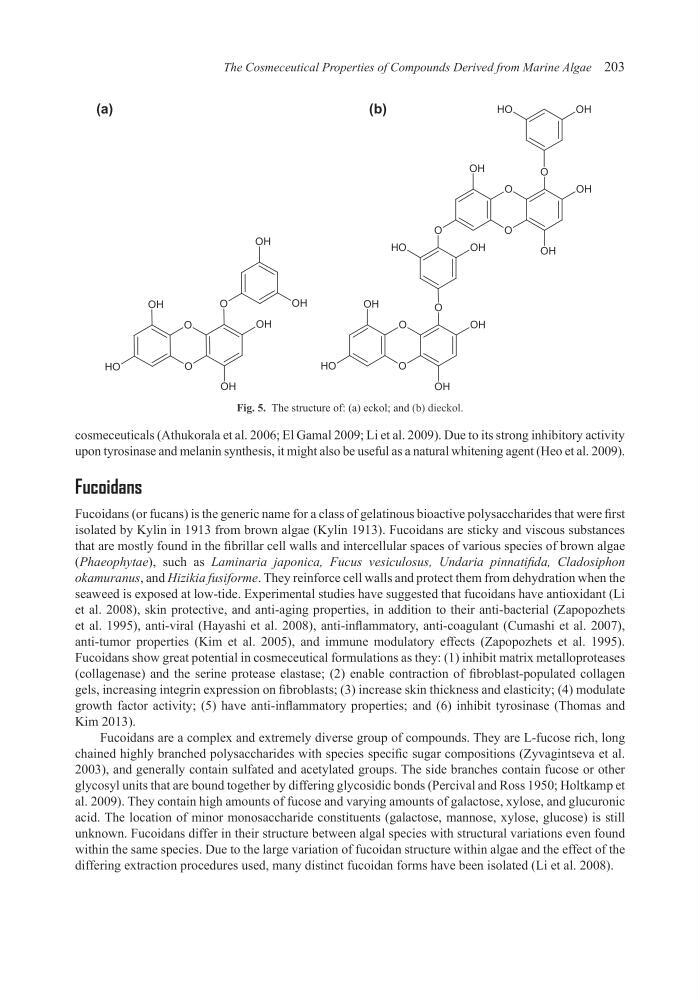
Fig. 5. The structure of: (a) eckol; and (b) dieckol.
O
O
O
OH
OH
OH
O
H
OH
OH
O
H
O
O
O
OH
OH
OH
O
OH
O
H
O
O
O
OH
OH
OH
OH
O
H
(a)
(b)
cosmeceuticals (Athukorala et al. 2006; El Gamal 2009; Li et al. 2009). Due to its strong inhibitory activity
upon tyrosinase and melanin synthesis, it might also be useful as a natural whitening agent (Heo et al. 2009).
Fucoidans
Fucoidans (or fucans) is the generic name for a class of gelatinous bioactive polysaccharides that were first
isolated by Kylin in 1913 from brown algae (Kylin 1913). Fucoidans are sticky and viscous substances
that are mostly found in the fibrillar cell walls and intercellular spaces of various species of brown algae
(Phaeophytae), such as Laminaria japonica, Fucus vesiculosus, Undaria pinnatifida, Cladosiphon
okamuranus, and Hizikia fusiforme. They reinforce cell walls and protect them from dehydration when the
seaweed is exposed at low-tide. Experimental studies have suggested that fucoidans have antioxidant (Li
et al. 2008), skin protective, and anti-aging properties, in addition to their anti-bacterial (Zapopozhets
et al. 1995), anti-viral (Hayashi et al. 2008), anti-inflammatory, anti-coagulant (Cumashi et al. 2007),
anti-tumor properties (Kim et al. 2005), and immune modulatory effects (Zapopozhets et al. 1995).
Fucoidans show great potential in cosmeceutical formulations as they: (1) inhibit matrix metalloproteases
(collagenase) and the serine protease elastase; (2) enable contraction of fibroblast-populated collagen
gels, increasing integrin expression on fibroblasts; (3) increase skin thickness and elastic ity; (4) modulate
growth factor activity; (5) have anti-inflammatory properties; and (6) inhibit tyrosinase (Thomas and
Kim 2013).
Fucoidans are a complex and extremely diverse group of compounds. They are L-fucose rich, long
chained highly branched polysaccharides with species specific sugar compositions (Zyvagintseva et al.
2003), and generally contain sulfated and acetylated groups. The side branches contain fucose or other
glycosyl units that are bound together by differing glycosidic bonds (Percival and Ross 1950; Holtkamp et
al. 2009). They contain high amounts of fucose and varying amounts of galactose, xylose, and glucuronic
acid. The location of minor monosaccharide constituents (galactose, mannose, xylose, glucose) is still
unknown. Fucoidans differ in their structure between algal species with structural variations even found
within the same species. Due to the large variation of fucoidan structure within algae and the effect of the
differing extraction procedures used, many distinct fucoidan forms have been isolated (Li et al. 2008).
Fig. 5. The structure of: (a) eckol; and (b) dieckol.
O
O
O
OH
OH
OH
O
H
OH
OH
O
H
O
O
O
OH
OH
OH
O
OH
O
H
O
O
O
OH
OH
OH
OH
O
H
(a)
(b)