

172 Marine Macro- and Microalgae: An Overview
High performance/Athletic animals
Nutrition is critical for optimal performance in athletic animals, either for a racehorse, equestrian
show jumping or greyhound race dog, among others. Animals in training and following competition
are submitted to considerable stress, which can upset their body system. Besides the enormous energy
expenses and recovery needs, managing the balance of dietary electrolytes is a key factor in maximizing
performance and recovery.
The dietary use of microalgae in these particular niche markets has already been reported, although
in a few cases. Benefits associated to microalgae are associated to an enhanced resistance and recovery of
muscle electrolyte balance, its overall antioxidant role, prevention of myocardial (heart) lesions, and joint
health. High levels of chlorophyll in blue green algae have also been associated with an enhanced blood
detoxifying capacity after strenuous exercise (Dias and Sendão unpublished data).
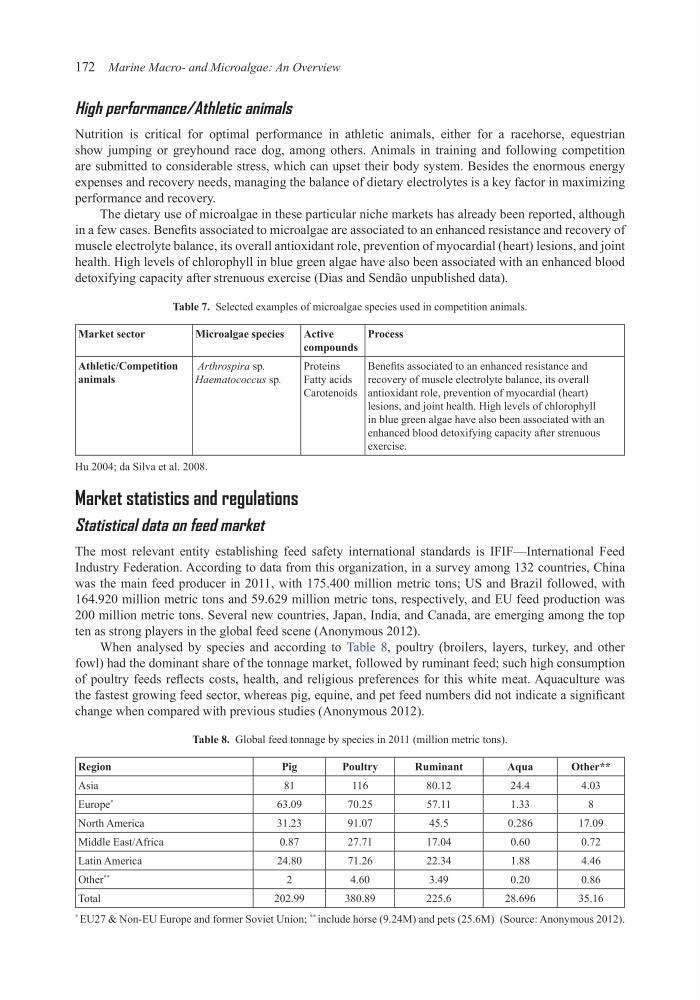
Table 7. Selected examples of microalgae species used in competition animals.
Market sector
Microalgae species
Active
compounds
Process
Athletic/Competition
animals
Arthrospira sp.
Haematococcus sp.
Proteins
Fatty acids
Carotenoids
Benefits associated to an enhanced resistance and
recovery of muscle electrolyte balance, its overall
antioxidant role, prevention of myocardial (heart)
lesions, and joint health. High levels of chlorophyll
in blue green algae have also been associated with an
enhanced blood detoxifying capacity after strenuous
exercise.
Hu 2004; da Silva et al. 2008.
Market statistics and regulations
Statistical data on feed market
The most relevant entity establishing feed safety international standards is IFIF—International Feed
Industry Federation. According to data from this organization, in a survey among 132 countries, China
was the main feed producer in 2011, with 175.400 million metric tons; US and Brazil followed, with
164.920 million metric tons and 59.629 million metric tons, respectively, and EU feed production was
200 million metric tons. Several new countries, Japan, India, and Canada, are emerging among the top
ten as strong players in the global feed scene (Anonymous 2012).
When analysed by species and according to Table 8, poultry (broilers, layers, turkey, and other
fowl) had the dominant share of the tonnage market, followed by ruminant feed; such high consumption
of poultry feeds reflects costs, health, and religious preferences for this white meat. Aquaculture was
the fastest growing feed sector, whereas pig, equine, and pet feed numbers did not indicate a significant
change when compared with previous studies (Anonymous 2012).
Table 8. Global feed tonnage by species in 2011 (million metric tons).
Region
Pig
Poultry
Ruminant
Aqua
Other**
Asia
81
116
80.12
24.4
4.03
Europe
*
63.09
70.25
57.11
1.33
8
North America
31.23
91.07
45.5
0.286
17.09
Middle East/Africa
0.87
27.71
17.04
0.60
0.72
Latin America
24.80
71.26
22.34
1.88
4.46
Other
**
2
4.60
3.49
0.20
0.86
Total
202.99
380.89
225.6
28.696
35.16
*
EU27 & Non-EU Europe and former Soviet Union;
**
include horse (9.24M) and pets (25.6M) (Source: Anonymous 2012).
High performance/Athletic animals
Nutrition is critical for optimal performance in athletic animals, either for a racehorse, equestrian
show jumping or greyhound race dog, among others. Animals in training and following competition
are submitted to considerable stress, which can upset their body system. Besides the enormous energy
expenses and recovery needs, managing the balance of dietary electrolytes is a key factor in maximizing
performance and recovery.
The dietary use of microalgae in these particular niche markets has already been reported, although
in a few cases. Benefits associated to microalgae are associated to an enhanced resistance and recovery of
muscle electrolyte balance, its overall antioxidant role, prevention of myocardial (heart) lesions, and joint
health. High levels of chlorophyll in blue green algae have also been associated with an enhanced blood
detoxifying capacity after strenuous exercise (Dias and Sendão unpublished data).
Table 7. Selected examples of microalgae species used in competition animals.
Market sector
Microalgae species
Active
compounds
Process
Athletic/Competition
animals
Arthrospira sp.
Haematococcus sp.
Proteins
Fatty acids
Carotenoids
Benefits associated to an enhanced resistance and
recovery of muscle electrolyte balance, its overall
antioxidant role, prevention of myocardial (heart)
lesions, and joint health. High levels of chlorophyll
in blue green algae have also been associated with an
enhanced blood detoxifying capacity after strenuous
exercise.
Hu 2004; da Silva et al. 2008.
Market statistics and regulations
Statistical data on feed market
The most relevant entity establishing feed safety international standards is IFIF—International Feed
Industry Federation. According to data from this organization, in a survey among 132 countries, China
was the main feed producer in 2011, with 175.400 million metric tons; US and Brazil followed, with
164.920 million metric tons and 59.629 million metric tons, respectively, and EU feed production was
200 million metric tons. Several new countries, Japan, India, and Canada, are emerging among the top
ten as strong players in the global feed scene (Anonymous 2012).
When analysed by species and according to Table 8, poultry (broilers, layers, turkey, and other
fowl) had the dominant share of the tonnage market, followed by ruminant feed; such high consumption
of poultry feeds reflects costs, health, and religious preferences for this white meat. Aquaculture was
the fastest growing feed sector, whereas pig, equine, and pet feed numbers did not indicate a significant
change when compared with previous studies (Anonymous 2012).
Table 8. Global feed tonnage by species in 2011 (million metric tons).
Region
Pig
Poultry
Ruminant
Aqua
Other**
Asia
81
116
80.12
24.4
4.03
Europe
*
63.09
70.25
57.11
1.33
8
North America
31.23
91.07
45.5
0.286
17.09
Middle East/Africa
0.87
27.71
17.04
0.60
0.72
Latin America
24.80
71.26
22.34
1.88
4.46
Other
**
2
4.60
3.49
0.20
0.86
Total
202.99
380.89
225.6
28.696
35.16
*
EU27 & Non-EU Europe and former Soviet Union;
**
include horse (9.24M) and pets (25.6M) (Source: Anonymous 2012).