

Microalgae for Feed 165
composition. This plasticity in composition is an important attribute in their use as animal feeds, as they
can be modulated to overproduce the desired nutritional compounds.
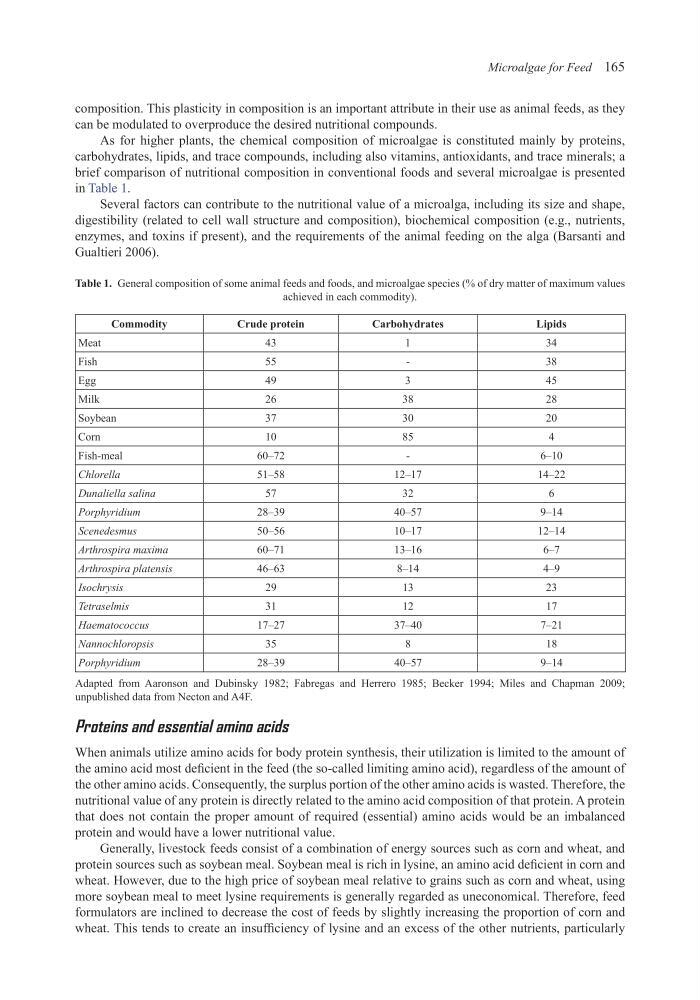
As for higher plants, the chemical composition of microalgae is constituted mainly by proteins,
carbohydrates, lipids, and trace compounds, including also vitamins, antioxidants, and trace minerals; a
brief comparison of nutritional composition in conventional foods and several microalgae is presented
in Table 1.
Several factors can contribute to the nutritional value of a microalga, including its size and shape,
digestibility (related to cell wall structure and composition), biochemical composition (e.g., nutrients,
enzymes, and toxins if present), and the requirements of the animal feeding on the alga (Barsanti and
Gualtieri 2006).
Table 1. General composition of some animal feeds and foods, and microalgae species (% of dry matter of maximum values
achieved in each commodity).
Commodity
Crude protein
Carbohydrates
Lipids
Meat
43
1
34
Fish
55
-
38
Egg
49
3
45
Milk
26
38
28
Soybean
37
30
20
Corn
10
85
4
Fish-meal
60–72
-
6–10
Chlorella
51–58
12–17
14–22
Dunaliella salina
57
32
6
Porphyridium
28–39
40–57
9–14
Scenedesmus
50–56
10–17
12–14
Arthrospira maxima
60–71
13–16
6–7
Arthrospira platensis
46–63
8–14
4–9
Isochrysis
29
13
23
Tetraselmis
31
12
17
Haematococcus
17–27
37–40
7–21
Nannochloropsis
35
8
18
Porphyridium
28–39
40–57
9–14
Adapted from Aaronson and Dubinsky 1982; Fabregas and Herrero 1985; Becker 1994; Miles and Chapman 2009;
unpublished data from Necton and A4F.
Proteins and essential amino acids
When animals utilize amino acids for body protein synthesis, their utilization is limited to the amount of
the amino acid most deficient in the feed (the so-called limiting amino acid), regardless of the amount of
the other amino acids. Consequently, the surplus portion of the other amino acids is wasted. Therefore, the
nutritional value of any protein is directly related to the amino acid composition of that protein. A protein
that does not contain the proper amount of required (essential) amino acids would be an imbalanced
protein and would have a lower nutritional value.
Generally, livestock feeds consist of a combination of energy sources such as corn and wheat, and
protein sources such as soybean meal. Soybean meal is rich in lysine, an amino acid deficient in corn and
wheat. However, due to the high price of soybean meal relative to grains such as corn and wheat, using
more soybean meal to meet lysine requirements is generally regarded as uneconomical. Therefore, feed
formulators are inclined to decrease the cost of feeds by slightly increasing the proportion of corn and
wheat. This tends to create an insufficiency of lysine and an excess of the other nutrients, particularly
composition. This plasticity in composition is an important attribute in their use as animal feeds, as they
can be modulated to overproduce the desired nutritional compounds.
As for higher plants, the chemical composition of microalgae is constituted mainly by proteins,
carbohydrates, lipids, and trace compounds, including also vitamins, antioxidants, and trace minerals; a
brief comparison of nutritional composition in conventional foods and several microalgae is presented
in Table 1.
Several factors can contribute to the nutritional value of a microalga, including its size and shape,
digestibility (related to cell wall structure and composition), biochemical composition (e.g., nutrients,
enzymes, and toxins if present), and the requirements of the animal feeding on the alga (Barsanti and
Gualtieri 2006).
Table 1. General composition of some animal feeds and foods, and microalgae species (% of dry matter of maximum values
achieved in each commodity).
Commodity
Crude protein
Carbohydrates
Lipids
Meat
43
1
34
Fish
55
-
38
Egg
49
3
45
Milk
26
38
28
Soybean
37
30
20
Corn
10
85
4
Fish-meal
60–72
-
6–10
Chlorella
51–58
12–17
14–22
Dunaliella salina
57
32
6
Porphyridium
28–39
40–57
9–14
Scenedesmus
50–56
10–17
12–14
Arthrospira maxima
60–71
13–16
6–7
Arthrospira platensis
46–63
8–14
4–9
Isochrysis
29
13
23
Tetraselmis
31
12
17
Haematococcus
17–27
37–40
7–21
Nannochloropsis
35
8
18
Porphyridium
28–39
40–57
9–14
Adapted from Aaronson and Dubinsky 1982; Fabregas and Herrero 1985; Becker 1994; Miles and Chapman 2009;
unpublished data from Necton and A4F.
Proteins and essential amino acids
When animals utilize amino acids for body protein synthesis, their utilization is limited to the amount of
the amino acid most deficient in the feed (the so-called limiting amino acid), regardless of the amount of
the other amino acids. Consequently, the surplus portion of the other amino acids is wasted. Therefore, the
nutritional value of any protein is directly related to the amino acid composition of that protein. A protein
that does not contain the proper amount of required (essential) amino acids would be an imbalanced
protein and would have a lower nutritional value.
Generally, livestock feeds consist of a combination of energy sources such as corn and wheat, and
protein sources such as soybean meal. Soybean meal is rich in lysine, an amino acid deficient in corn and
wheat. However, due to the high price of soybean meal relative to grains such as corn and wheat, using
more soybean meal to meet lysine requirements is generally regarded as uneconomical. Therefore, feed
formulators are inclined to decrease the cost of feeds by slightly increasing the proportion of corn and
wheat. This tends to create an insufficiency of lysine and an excess of the other nutrients, particularly