

56
EPTC
(Non phytotoxic)
S-CARBAMYL-GSH
(Non phytotoxic)
Richard H. Shimabukuro et al.
EPTC - SULFOXIDE
/
(Phyt,''''''
o NH
II I 2
HO-C-C
0
C3 H1
\
II I
CH -S-C-N
I : AT ~,H,
S-CARBAMYLMERCAPTURIC ACID
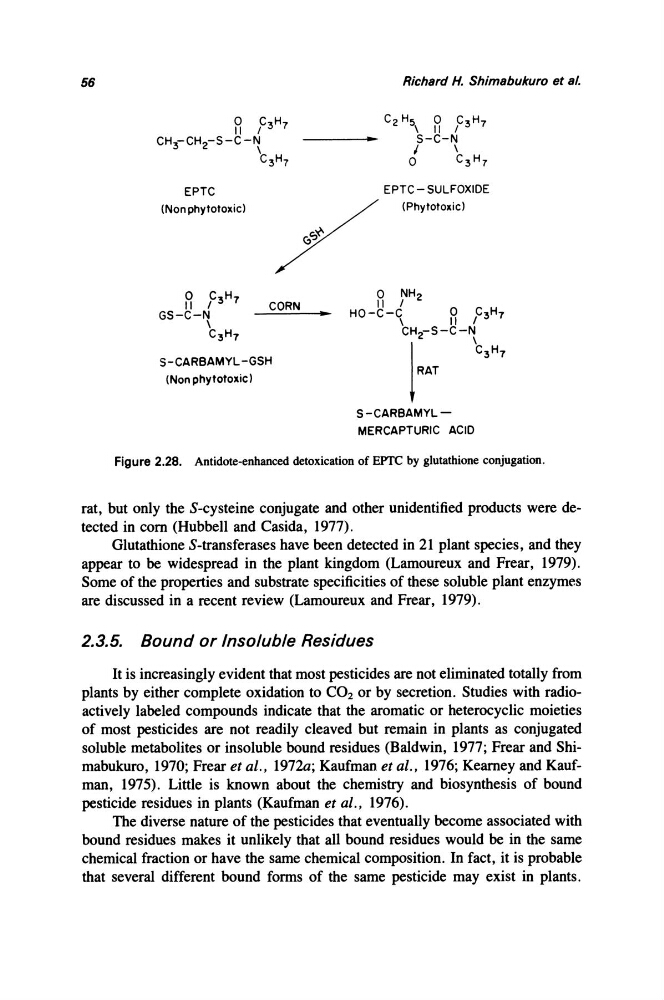
Figure 2.28. Antidote-enhanced detoxication of EPTC by glutathione conjugation.
rat, but only the S-cysteine conjugate and other unidentified products were detected in com (Hubbell and Casida, 1977).
Glutathione S-transferases have been detected in 21 plant species, and they
appear to be widespread in the plant kingdom (Lamoureux and Frear, 1979).
Some of the properties and substrate specificities of these soluble plant enzymes
are discussed in a recent review (Lamoureux and Frear, 1979).
2.3.5. Bound or Insoluble Residues
It is increasingly evident that most pesticides are not eliminated totally from
plants by either complete oxidation to CO2 or by secretion. Studies with radioactively labeled compounds indicate that the aromatic or heterocyclic moieties
of most pesticides are not readily cleaved but remain in plants as conjugated
soluble metabolites or insoluble bound residues (Baldwin, 1977; Frear and Shimabukuro, 1970; Frear et ai .• 1972a; Kaufman et ai .• 1976; Kearney and Kaufman, 1975). Little is known about the chemistry and biosynthesis of bound
pesticide residues in plants (Kaufman et ai .• 1976).
The diverse nature of the pesticides that eventually become associated with
bound residues makes it unlikely that all bound residues would be in the same
chemical fraction or have the same chemical composition. In fact, it is probable
that several different bound forms of the same pesticide may exist in plants.
EPTC
(Non phytotoxic)
S-CARBAMYL-GSH
(Non phytotoxic)
Richard H. Shimabukuro et al.
EPTC - SULFOXIDE
/
(Phyt,''''''
o NH
II I 2
HO-C-C
0
C3 H1
\
II I
CH -S-C-N
I : AT ~,H,
S-CARBAMYLMERCAPTURIC ACID
Figure 2.28. Antidote-enhanced detoxication of EPTC by glutathione conjugation.
rat, but only the S-cysteine conjugate and other unidentified products were detected in com (Hubbell and Casida, 1977).
Glutathione S-transferases have been detected in 21 plant species, and they
appear to be widespread in the plant kingdom (Lamoureux and Frear, 1979).
Some of the properties and substrate specificities of these soluble plant enzymes
are discussed in a recent review (Lamoureux and Frear, 1979).
2.3.5. Bound or Insoluble Residues
It is increasingly evident that most pesticides are not eliminated totally from
plants by either complete oxidation to CO2 or by secretion. Studies with radioactively labeled compounds indicate that the aromatic or heterocyclic moieties
of most pesticides are not readily cleaved but remain in plants as conjugated
soluble metabolites or insoluble bound residues (Baldwin, 1977; Frear and Shimabukuro, 1970; Frear et ai .• 1972a; Kaufman et ai .• 1976; Kearney and Kaufman, 1975). Little is known about the chemistry and biosynthesis of bound
pesticide residues in plants (Kaufman et ai .• 1976).
The diverse nature of the pesticides that eventually become associated with
bound residues makes it unlikely that all bound residues would be in the same
chemical fraction or have the same chemical composition. In fact, it is probable
that several different bound forms of the same pesticide may exist in plants.