

Pesticide Metabolism in Plants
55
CHLORFENPROP-METHYL
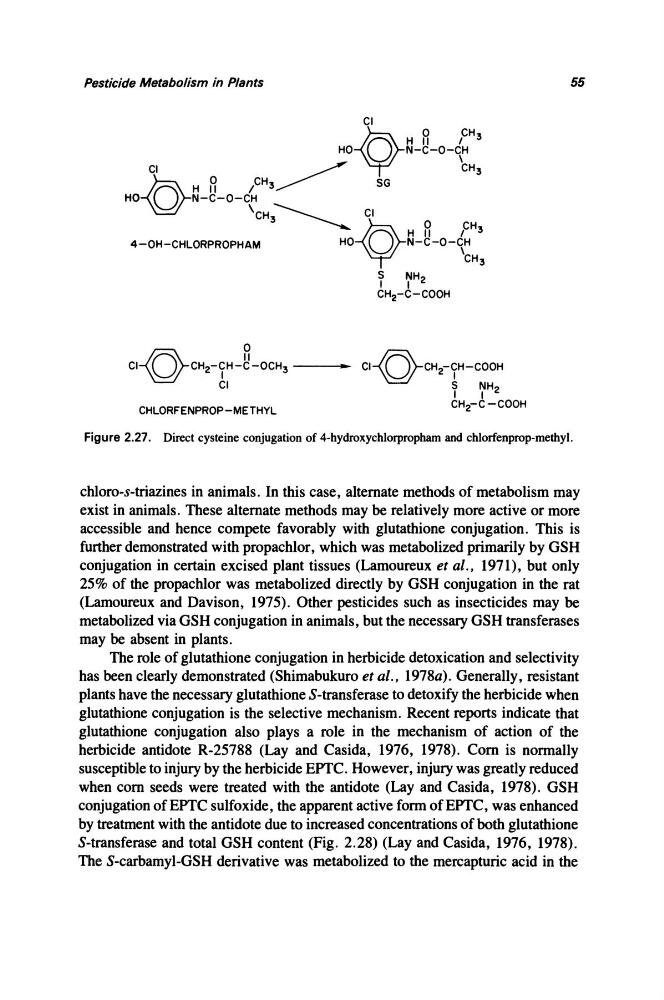
Figure 2.27. Direct cysteine conjugation of 4-hydroxychlorpropham and chlorfenprop-methyl.
chloro-s-triazines in animals. In this case, alternate methods of metabolism may
exist in animals. These alternate methods may be relatively more active or more
accessible and hence compete favorably with glutathione conjugation. This is
further demonstrated with propachlor, which was metabolized primarily by GSH
conjugation in certain excised plant tissues (Lamoureux et al., 1971), but only
25% of the propachlor was metabolized directly by GSH conjugation in the rat
(Lamoureux and Davison, 1975). Other pesticides such as insecticides may be
metabolized via GSH conjugation in animals, but the necessary GSH transferases
may be absent in plants.
The role of glutathione conjugation in herbicide detoxication and selectivity
has been clearly demonstrated (Shimabukuro et al., 1978a). Generally, resistant
plants have the necessary glutathione S-transferase to detoxify the herbicide when
glutathione conjugation is the selective mechanism. Recent reports indicate that
glutathione conjugation also plays a role in the mechanism of action of the
herbicide antidote R-25788 (Lay and Casida, 1976, 1978). Com is normally
susceptible to injury by the herbicide EPTC. However, injury was greatly reduced
when com seeds were treated with the antidote (Lay and Casida, 1978). GSH
conjugation of EPTC sulfoxide, the apparent active form of EPTC, was enhanced
by treatment with the antidote due to increased concentrations of both glutathione
S-transferase and total GSH content (Fig. 2.28) (Lay and Casida, 1976, 1978).
The S-carbamyl-GSH derivative was metabolized to the mercapturic acid in the
55
CHLORFENPROP-METHYL
Figure 2.27. Direct cysteine conjugation of 4-hydroxychlorpropham and chlorfenprop-methyl.
chloro-s-triazines in animals. In this case, alternate methods of metabolism may
exist in animals. These alternate methods may be relatively more active or more
accessible and hence compete favorably with glutathione conjugation. This is
further demonstrated with propachlor, which was metabolized primarily by GSH
conjugation in certain excised plant tissues (Lamoureux et al., 1971), but only
25% of the propachlor was metabolized directly by GSH conjugation in the rat
(Lamoureux and Davison, 1975). Other pesticides such as insecticides may be
metabolized via GSH conjugation in animals, but the necessary GSH transferases
may be absent in plants.
The role of glutathione conjugation in herbicide detoxication and selectivity
has been clearly demonstrated (Shimabukuro et al., 1978a). Generally, resistant
plants have the necessary glutathione S-transferase to detoxify the herbicide when
glutathione conjugation is the selective mechanism. Recent reports indicate that
glutathione conjugation also plays a role in the mechanism of action of the
herbicide antidote R-25788 (Lay and Casida, 1976, 1978). Com is normally
susceptible to injury by the herbicide EPTC. However, injury was greatly reduced
when com seeds were treated with the antidote (Lay and Casida, 1978). GSH
conjugation of EPTC sulfoxide, the apparent active form of EPTC, was enhanced
by treatment with the antidote due to increased concentrations of both glutathione
S-transferase and total GSH content (Fig. 2.28) (Lay and Casida, 1976, 1978).
The S-carbamyl-GSH derivative was metabolized to the mercapturic acid in the