

38
Richard H. Shimabukuro et al.
CI
RHR
CIYN-C-CH2 CH 3
• ¢i,
PROPANIL
CI
CI
A
H 9 H3
H 9 H3
NON CH 3
HI\ JlH I
C H N""NY'-N-C-CN
2 5
I
--....,.- R-N-9-CONH2 - -....... R-N-9-COOH
CH 3
CH 3
CH3
CYANAZINE
C16fo
CN CI
C16(CN CI
--_. 0
OH
DICHLOBENIL
o
" H
CH 3 ,
~ l-O-C-NCH3
,-lNOH
lO-GLUCOSE
N-C-C
- - _ . - R_C V
-
R-C
'
CH/
'SCH 3
'sCH 3
'sCH3
OX AMYL
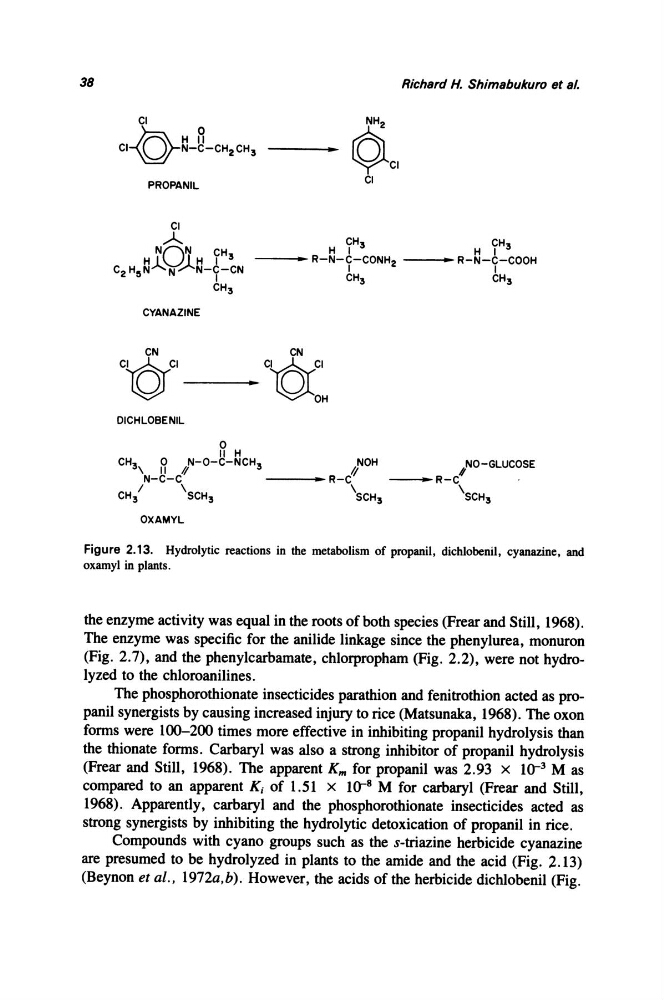
Figure 2.13. Hydrolytic reactions in the metabolism of propaniJ, dichlobenil, cyanazine, and
oxamyl in plants.
the enzyme activity was equal in the roots of both species (Frear and Still, 1968).
The enzyme was specific for the anilide linkage since the phenylurea, monuron
(Fig. 2.7), and the phenylcarbamate, chlorpropham (Fig. 2.2), were not hydrolyzed to the chloroanilines.
The phosphorothionate insecticides parathion and fenitrothion acted as propanil synergists by causing increased injury to rice (Matsunaka, 1968). The oxon
forms were 100-200 times more effective in inhibiting propanil hydrolysis than
the thionate forms. Carbaryl was also a strong inhibitor of propanil hydrolysis
(Frear and Still, 1968). The apparent Km for propanil was 2.93 x 10- 3 M as
compared to an apparent K; of 1.51 x 10- 8 M for carbaryl (Frear and Still,
1968). Apparently, carbaryl and the phosphorothionate insecticides acted as
strong synergists by inhibiting the hydrolytic detoxication of propanil in rice.
Compounds with cyano groups such as the s-triazine herbicide cyanazine
are presumed to be hydrolyzed in plants to the amide and the acid (Fig. 2.13)
(Beynon et at., 1972a,b). However, the acids of the herbicide dichlobenil (Fig.
Richard H. Shimabukuro et al.
CI
RHR
CIYN-C-CH2 CH 3
• ¢i,
PROPANIL
CI
CI
A
H 9 H3
H 9 H3
NON CH 3
HI\ JlH I
C H N""NY'-N-C-CN
2 5
I
--....,.- R-N-9-CONH2 - -....... R-N-9-COOH
CH 3
CH 3
CH3
CYANAZINE
C16fo
CN CI
C16(CN CI
--_. 0
OH
DICHLOBENIL
o
" H
CH 3 ,
~ l-O-C-NCH3
,-lNOH
lO-GLUCOSE
N-C-C
- - _ . - R_C V
-
R-C
'
CH/
'SCH 3
'sCH 3
'sCH3
OX AMYL
Figure 2.13. Hydrolytic reactions in the metabolism of propaniJ, dichlobenil, cyanazine, and
oxamyl in plants.
the enzyme activity was equal in the roots of both species (Frear and Still, 1968).
The enzyme was specific for the anilide linkage since the phenylurea, monuron
(Fig. 2.7), and the phenylcarbamate, chlorpropham (Fig. 2.2), were not hydrolyzed to the chloroanilines.
The phosphorothionate insecticides parathion and fenitrothion acted as propanil synergists by causing increased injury to rice (Matsunaka, 1968). The oxon
forms were 100-200 times more effective in inhibiting propanil hydrolysis than
the thionate forms. Carbaryl was also a strong inhibitor of propanil hydrolysis
(Frear and Still, 1968). The apparent Km for propanil was 2.93 x 10- 3 M as
compared to an apparent K; of 1.51 x 10- 8 M for carbaryl (Frear and Still,
1968). Apparently, carbaryl and the phosphorothionate insecticides acted as
strong synergists by inhibiting the hydrolytic detoxication of propanil in rice.
Compounds with cyano groups such as the s-triazine herbicide cyanazine
are presumed to be hydrolyzed in plants to the amide and the acid (Fig. 2.13)
(Beynon et at., 1972a,b). However, the acids of the herbicide dichlobenil (Fig.