

16
H. Wyman Dorough and Sue K. Ballard
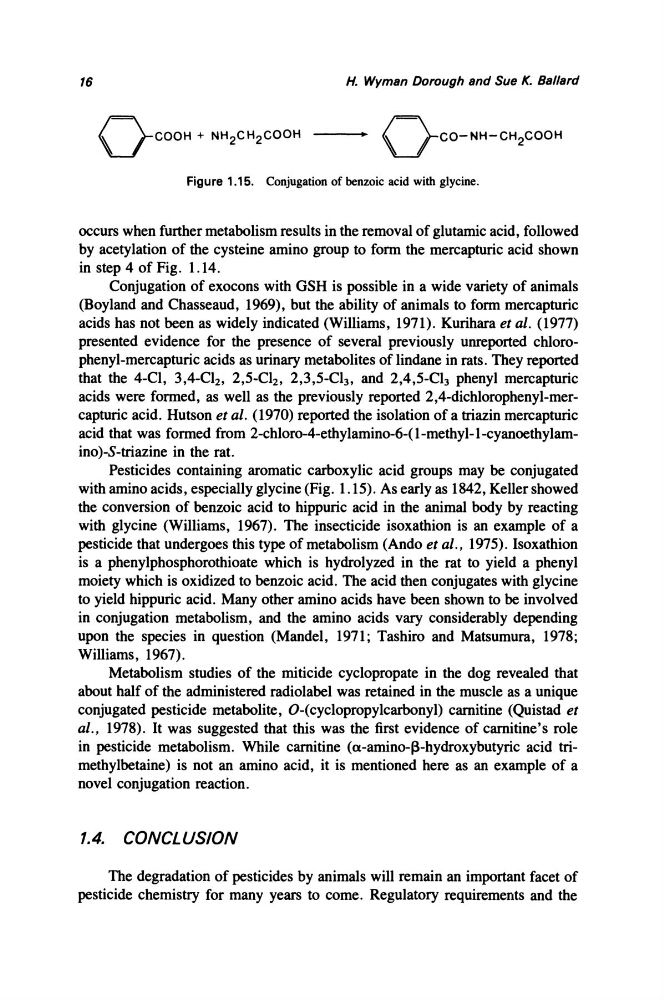
Figure 1.15. Conjugation of benzoic acid with glycine.
occurs when further metabolism results in the removal of glutamic acid, followed
by acetylation of the cysteine amino group to form the mercapturic acid shown
in step 4 of Fig. 1.14.
Conjugation of exocons with GSH is possible in a wide variety of animals
(Boyland and Chasseaud, 1969), but the ability of animals to form mercapturic
acids has not been as widely indicated (Williams, 1971). Kurihara et al. (1977)
presented evidence for the presence of several previously unreported chlorophenyl-mercapturic acids as urinary metabolites oflindane in rats. They reported
that the 4-CI, 3,4-Ch, 2,5-Ch, 2,3,5-CI3 , and 2,4,5-Ch phenyl mercapturic
acids were formed, as well as the previously reported 2,4-dichlorophenyl-mercapturic acid. Hutson et al. (1970) reported the isolation of a triazin mercapturic
acid that was formed from 2-chloro-4-ethylamino-6-( I-methyl-l-cyanoethylamino)-S-triazine in the rat.
Pesticides containing aromatic carboxylic acid groups may be conjugated
with amino acids, especially glycine (Fig. 1.15). As early as 1842, Keller showed
the conversion of benzoic acid to hippuric acid in the animal body by reacting
with glycine (Williams, 1967). The insecticide isoxathion is an example of a
pesticide that undergoes this type of metabolism (Ando et al., 1975). Isoxathion
is a phenylphosphorothioate which is hydrolyzed in the rat to yield a phenyl
moiety which is oxidized to benzoic acid. The acid then conjugates with glycine
to yield hippuric acid. Many other amino acids have been shown to be involved
in conjugation metabolism, and the amino acids vary considerably depending
upon the species in question (Mandel, 1971; Tashiro and Matsumura, 1978;
Williams, 1967).
Metabolism studies of the miticide cyclopropate in the dog revealed that
about half of the administered radiolabel was retained in the muscle as a unique
conjugated pesticide metabolite, O-(cyclopropylcarbonyl) carnitine (Quistad et
al., 1978). It was suggested that this was the first evidence of carnitine's role
in pesticide metabolism. While carnitine (a-amino-j3-hydroxybutyric acid trimethylbetaine) is not an amino acid, it is mentioned here as an example of a
novel conjugation reaction.
1.4. CONCLUSION
The degradation of pesticides by animals will remain an important facet of
pesticide chemistry for many years to come. Regulatory requirements and the
H. Wyman Dorough and Sue K. Ballard
Figure 1.15. Conjugation of benzoic acid with glycine.
occurs when further metabolism results in the removal of glutamic acid, followed
by acetylation of the cysteine amino group to form the mercapturic acid shown
in step 4 of Fig. 1.14.
Conjugation of exocons with GSH is possible in a wide variety of animals
(Boyland and Chasseaud, 1969), but the ability of animals to form mercapturic
acids has not been as widely indicated (Williams, 1971). Kurihara et al. (1977)
presented evidence for the presence of several previously unreported chlorophenyl-mercapturic acids as urinary metabolites oflindane in rats. They reported
that the 4-CI, 3,4-Ch, 2,5-Ch, 2,3,5-CI3 , and 2,4,5-Ch phenyl mercapturic
acids were formed, as well as the previously reported 2,4-dichlorophenyl-mercapturic acid. Hutson et al. (1970) reported the isolation of a triazin mercapturic
acid that was formed from 2-chloro-4-ethylamino-6-( I-methyl-l-cyanoethylamino)-S-triazine in the rat.
Pesticides containing aromatic carboxylic acid groups may be conjugated
with amino acids, especially glycine (Fig. 1.15). As early as 1842, Keller showed
the conversion of benzoic acid to hippuric acid in the animal body by reacting
with glycine (Williams, 1967). The insecticide isoxathion is an example of a
pesticide that undergoes this type of metabolism (Ando et al., 1975). Isoxathion
is a phenylphosphorothioate which is hydrolyzed in the rat to yield a phenyl
moiety which is oxidized to benzoic acid. The acid then conjugates with glycine
to yield hippuric acid. Many other amino acids have been shown to be involved
in conjugation metabolism, and the amino acids vary considerably depending
upon the species in question (Mandel, 1971; Tashiro and Matsumura, 1978;
Williams, 1967).
Metabolism studies of the miticide cyclopropate in the dog revealed that
about half of the administered radiolabel was retained in the muscle as a unique
conjugated pesticide metabolite, O-(cyclopropylcarbonyl) carnitine (Quistad et
al., 1978). It was suggested that this was the first evidence of carnitine's role
in pesticide metabolism. While carnitine (a-amino-j3-hydroxybutyric acid trimethylbetaine) is not an amino acid, it is mentioned here as an example of a
novel conjugation reaction.
1.4. CONCLUSION
The degradation of pesticides by animals will remain an important facet of
pesticide chemistry for many years to come. Regulatory requirements and the